ARTHROSCOPY & SPORTS INJURY ASSOCIATES

OVERVIEW
What Is Post-Traumatic Elbow Contracture?
Post-Traumatic Elbow Contracture is a medical condition where elbow joint loses its ability to move due to previous injury. This problem usually develops after elbow joint fractures, elbow dislocations, ligament injury, surgery or prolonged immobilization. Post-Traumatic Elbow Contracture happens due to development of scar tissue, capsule tightness, muscle tightness or formation of additional bones in the elbow joint. As a result, patients cannot bend or extend their elbows normally and it becomes more complicated to carry out their daily activities. Diagnosis and proper treatment can restore mobility of the elbow joint and normalize its function.
Here are some important facts about Post-Traumatic Elbow Contracture:
- Happens when elbow joint movement becomes limited due to injury or surgery
- Often leads to stiffness, reduced range of motion and functional restrictions
- Develops because of scar tissue, capsule tightness or additional bone formation
- Timely treatment helps to improve movement and function of the elbow joint
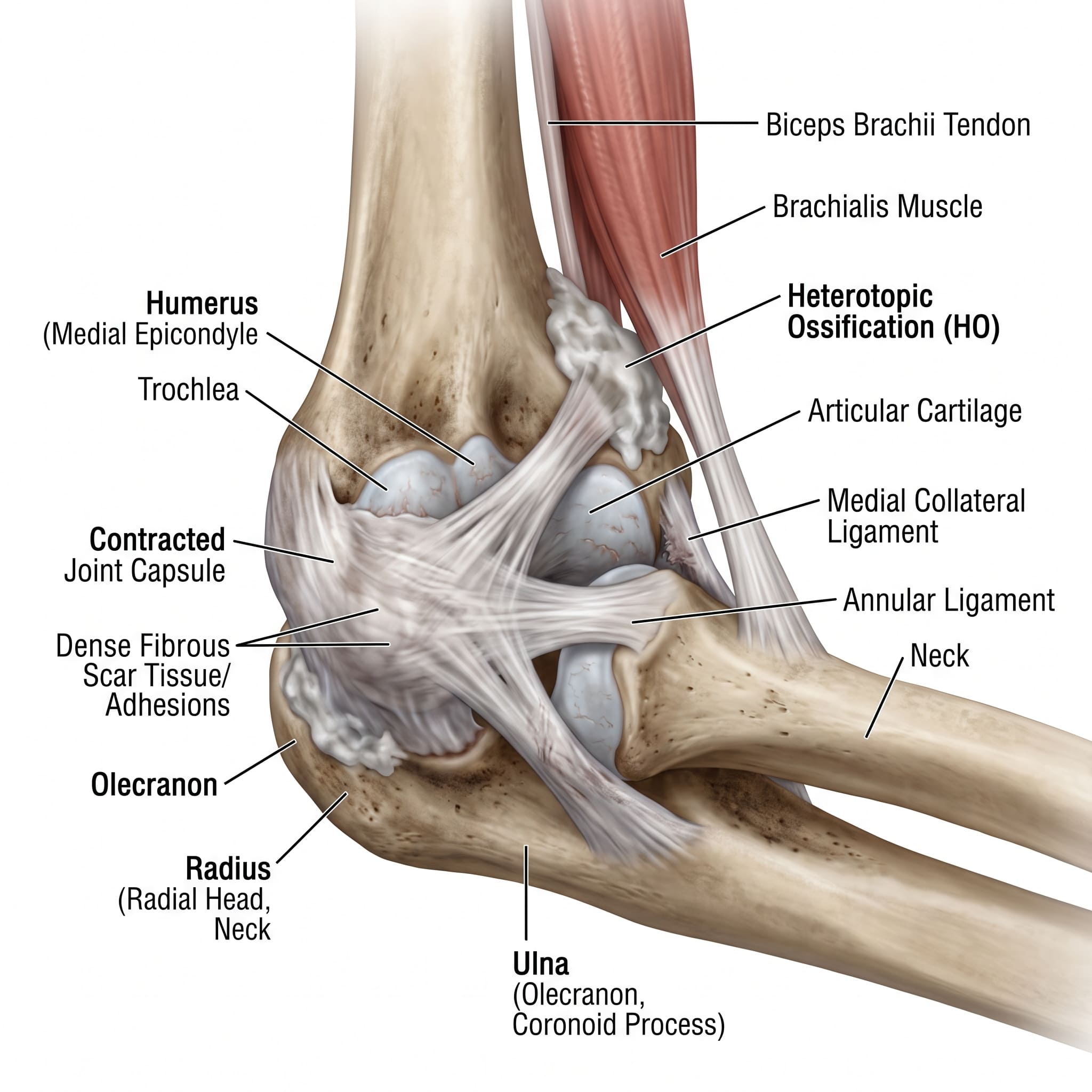
Post-Traumatic Elbow Contracture is a medical condition where elbow joint loses its ability to move due to previous injury. This problem usually develops after elbow joint fractures, elbow dislocations, ligament injury, surgery or prolonged immobilization. Post-Traumatic Elbow Contracture happens due to development of scar tissue, capsule tightness, muscle tightness or formation of additional bones in the elbow joint. As a result, patients cannot bend or extend their elbows normally and it becomes more complicated to carry out their daily activities. Diagnosis and proper treatment can restore mobility of the elbow joint and normalize its function.
Here are some important facts about Post-Traumatic Elbow Contracture:
- Happens when elbow joint movement becomes limited due to injury or surgery
- Often leads to stiffness, reduced range of motion and functional restrictions
- Develops because of scar tissue, capsule tightness or additional bone formation
- Timely treatment helps to improve movement and function of the elbow joint
Surgeons Available for Consultations

Dr. Karnav Panchal
M.B.B.S, M.S. (Orthopedics),
FAOS (South Korea)
Consultant Arthroscopist & Sports Injury Specialist Consultant Joint Replacement Surgeon

Dr. Aniket Gupta
M.B.B.S, M.S. (Orthopedics),
MRCS (Edinburgh)
Training & Qualifications Fellowship in MRCS (UK) Arthroscopy & Arthroplasty (Milan, Italy)
Consultant Physiotherapist

Dr. Aarsh Bhatt
B.P.T,M.P.T (Cardio-Respiratory Disorders) MIAP , HCPC (UK) , DHA (UAE)
Consultant Physiotherapist

Dr. Hetvi Dimothe
BPT , M.P.T (Rehabilitation) MIAP, HCPC (UK) , DHA (UAE)
Consultant Physiotherapist
Causes
What Causes Post-Traumatic Elbow Contracture?
Here are some important facts about Post-Traumatic Elbow Contracture: Happens when elbow joint movement becomes limited due to injury or surgery Often leads to stiffness, reduced range of motion and functional restrictions Develops because of scar tissue, capsule tightness or additional bone formation Timely treatment helps to improve movement and function of the elbow joint
Causes
What Causes Post-Traumatic Elbow Contracture?
Here are some important facts about Post-Traumatic Elbow Contracture: Happens when elbow joint movement becomes limited due to injury or surgery Often leads to stiffness, reduced range of motion and functional restrictions Develops because of scar tissue, capsule tightness or additional bone formation Timely treatment helps to improve movement and function of the elbow joint
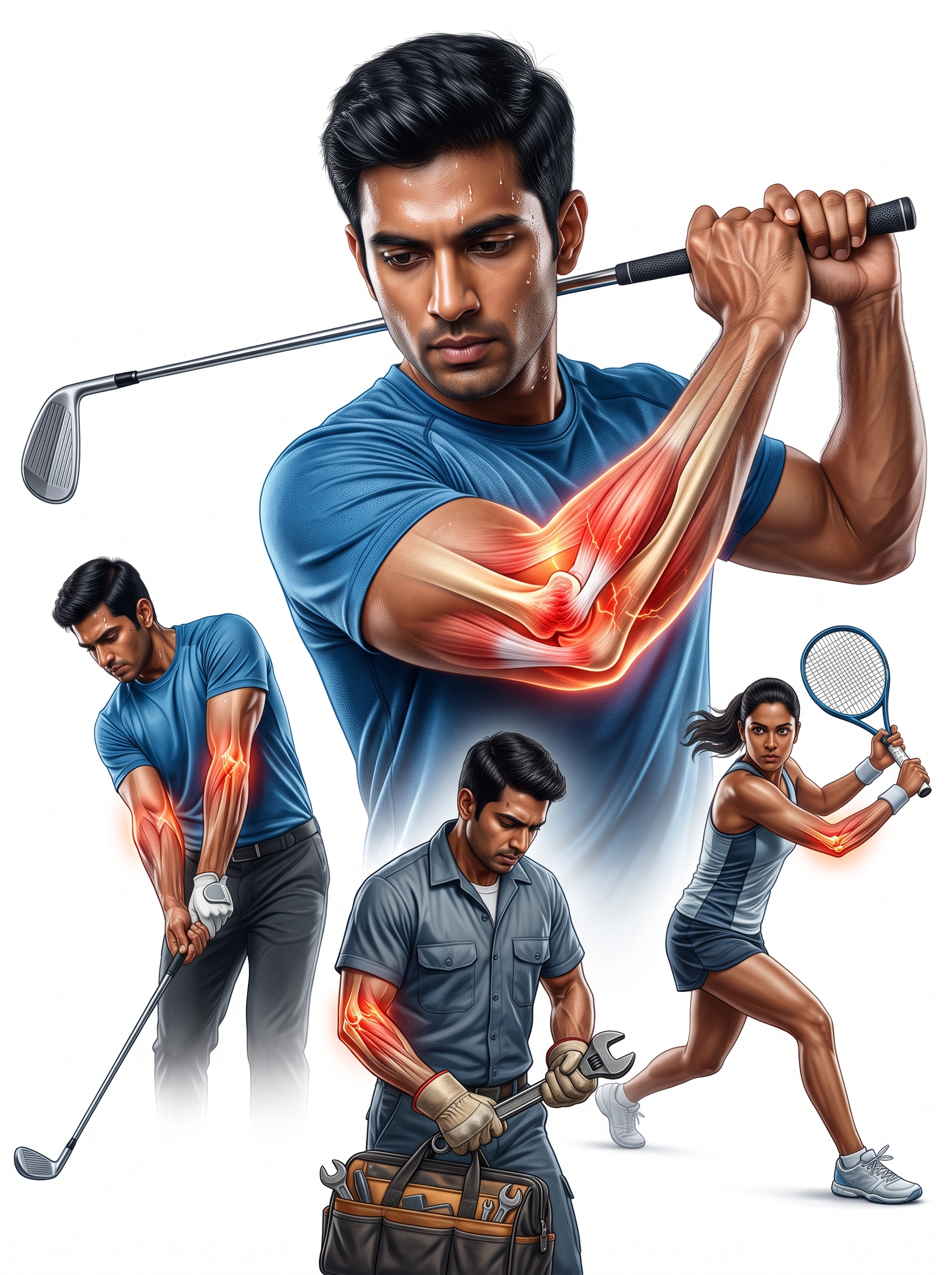
Post-Traumatic Elbow Contracture appears because of the following reasons:
- Elbow joint fractures
- Elbow joint dislocations
- Injuries of ligaments responsible for stability of the joint
- Surgery of the elbow joint
- Profound immobilization after the injury
- Increased formation of scar tissue during healing process
- Heterotopic ossification (abnormal bone formation in the joint)
What Other Structures Can Be Affected by Post-Traumatic Elbow Contracture?
Post-Traumatic Elbow Contracture not only limits joint movement but also affects some other surrounding tissues responsible for normal functioning of the elbow joint. Involvement of these structures may increase limitations of movement and pain.
- Joint capsule
- Cartilage
- Surrounding ligaments
- Tissues around the joint
- Muscles of the forearm
- Ulnar nerve
SYMPTOMS
What Are the Symptoms of Post-Traumatic Elbow Contracture?
The symptoms appear gradually as a consequence of the healing process after the elbow joint injury or surgery. Their severity can differ depending on the degree of tissue scarring, joint pathology and underlying cause of stiffness. Timely treatment can help to improve mobility of the joint and avoid long-term functional restrictions.

Elbow Stiffness
It becomes harder and harder to bend and extend the elbow.
Reduced Range of Motion
Elbow joint cannot be completely extended or flexed.
Pain During Movement
Pain may appear when you try to move the joint beyond the range.
Neglect of these symptoms can result in loss of elbow joint movement, persistent pain, reduced arm function and difficulties with carrying out your activities.
Connect with our experts and get the right guidance for your condition.
Difficulties with Everyday Activities
Such simple activities as eating, dressing, personal hygiene, driving or picking up something become difficult.
Elbow Joint Swelling
Some patients continue to feel swelling of the joint especially in early period after injury or surgery.
Weakness
Lack of movement and inactivity can lead to weakness of elbow and forearm muscles.
Feeling of Tightness
Most patients have the feeling of tightness when they try to move their elbow.
Connect with our experts and get the right guidance for your condition.
BOOK CONSULTATIONDIAGNOSIS
How Do Doctors Diagnose Post-Traumatic Elbow Contracture?
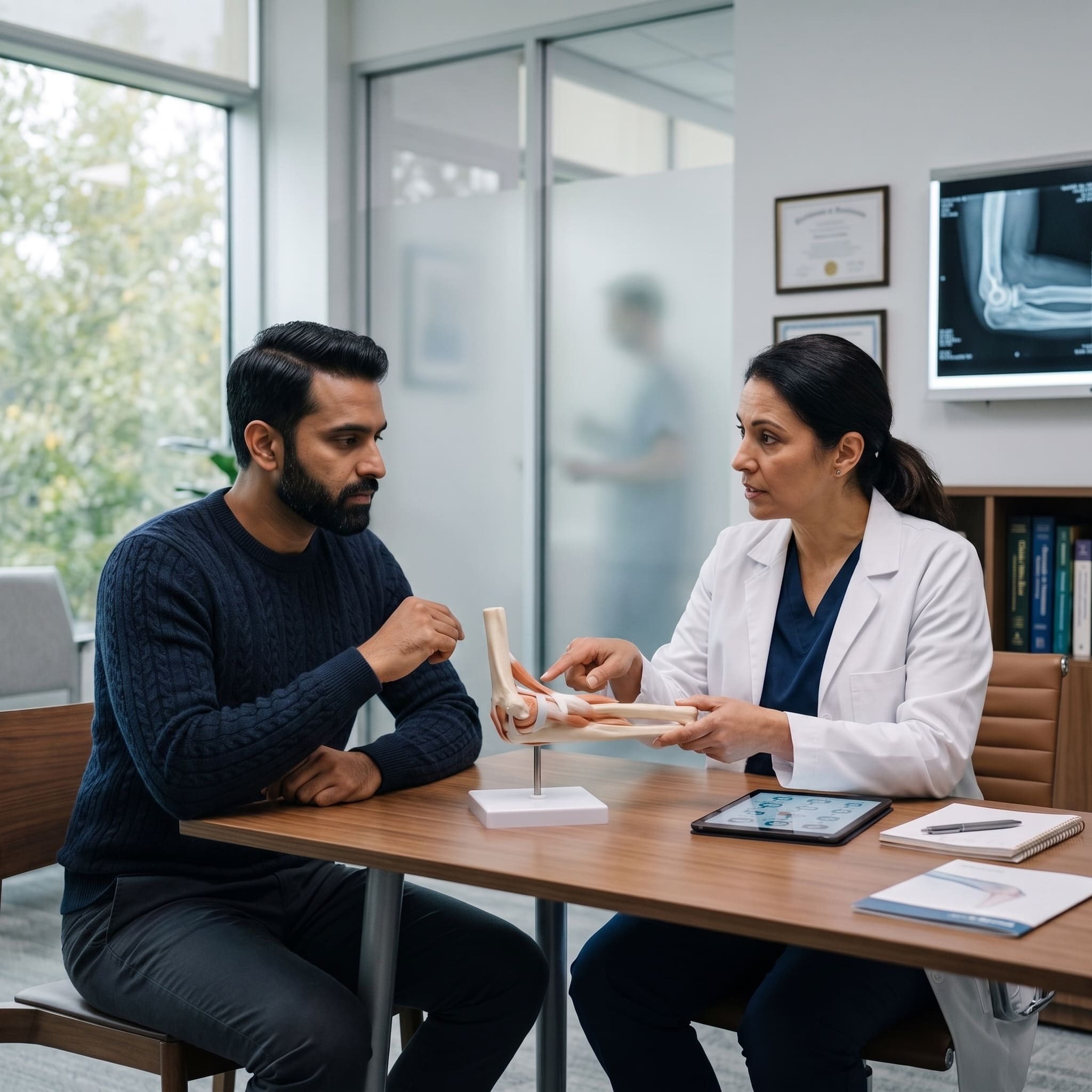
Diagnosis of Post-Traumatic Elbow Contracture is based on the patient's complaints, medical history and the information about the injury or surgery. Physical examination is carried out in order to evaluate the range of joint movement, its stiffness, pain and function of the upper limb. Imaging studies help to detect scar tissue, joint pathology, bone spurs or additional bone formations which limit the joint movement. In ALIGN ASIA Clinic, comprehensive evaluation helps to understand the underlying reason of the joint stiffness and develop individual treatment plan.
DIAGNOSIS
How Do Doctors Diagnose Post-Traumatic Elbow Contracture?
Diagnosis of Post-Traumatic Elbow Contracture is based on the patient's complaints, medical history and the information about the injury or surgery. Physical examination is carried out in order to evaluate the range of joint movement, its stiffness, pain and function of the upper limb. Imaging studies help to detect scar tissue, joint pathology, bone spurs or additional bone formations which limit the joint movement. In ALIGN ASIA Clinic, comprehensive evaluation helps to understand the underlying reason of the joint stiffness and develop individual treatment plan.
Post-Traumatic Elbow Contracture can be diagnosed with the help of the following methods:
- Physical examination which assesses the range of elbow joint movement, stiffness, pain, instability and upper limb function
- Imaging which detects changes in the joint and reason of the stiffness
- X-ray
- CT scan
- MRI
TREATMENT
What Is the Treatment for Post-Traumatic Elbow Contracture?
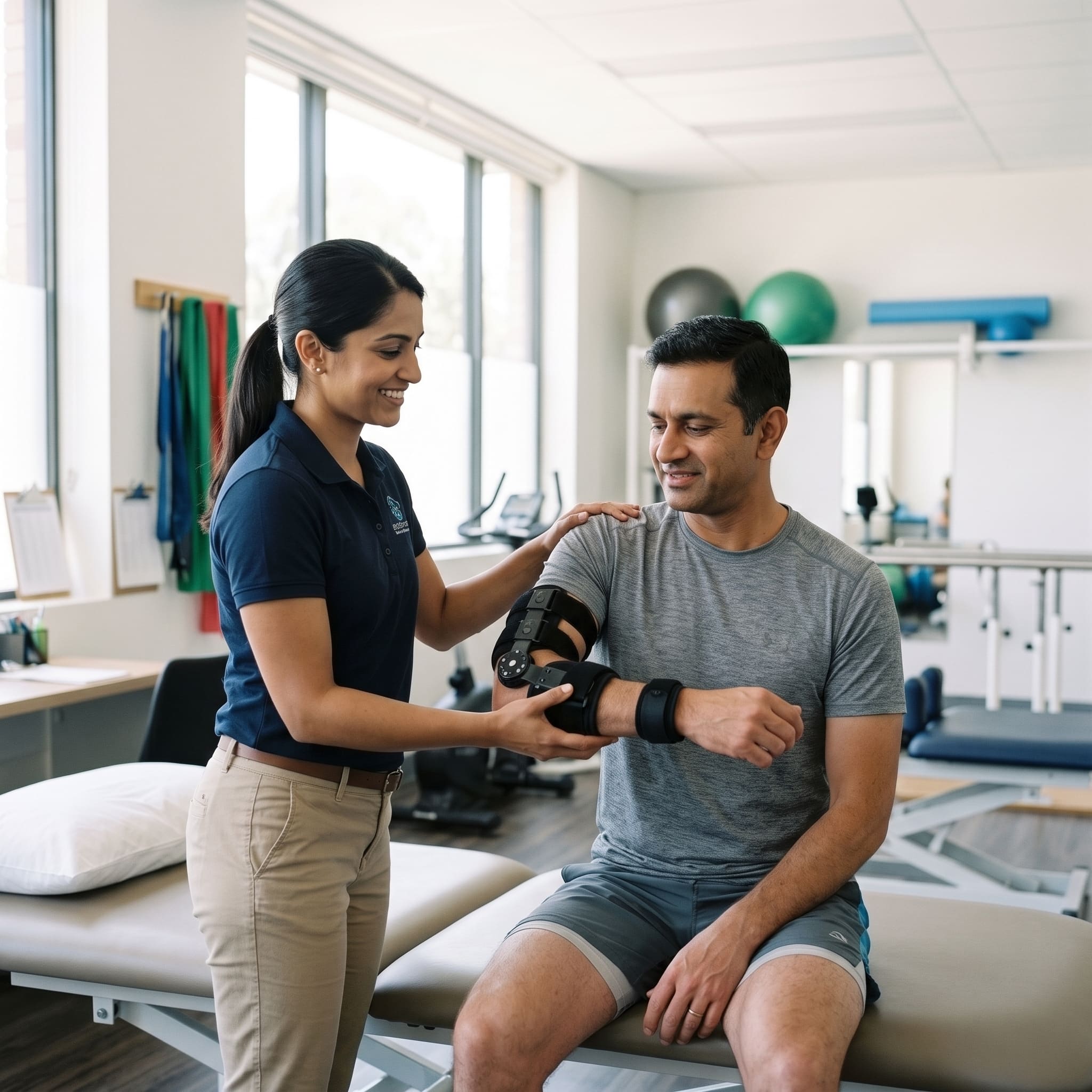
The treatment of this problem depends on the degree of joint stiffness, underlying cause of the pathology, duration of symptoms and patient's requirements. Most of the patients get better with the help of conservative therapy, however in case of persistent or severe stiffness surgery is needed to restore joint movement. Early treatment helps to improve mobility, reduce pain and avoid long-term functional limitations.
Pain Management
It helps to decrease pain and participate in rehabilitation.
Physiotherapy
It improves elbow flexibility, restores joint movement and strengthens muscles.
Splinting and Stretching
It uses special splints and stretching exercises in order to increase the range of joint movement.
Joint Rehabilitation
It improves flexibility, muscle strength and overall upper limb function.
Surgical Treatment
Surgery is required when non-invasive treatment fails to restore joint movement.
NON-SURGICAL CARE
How Is Post-Traumatic Elbow Contracture Treated Without Surgery?
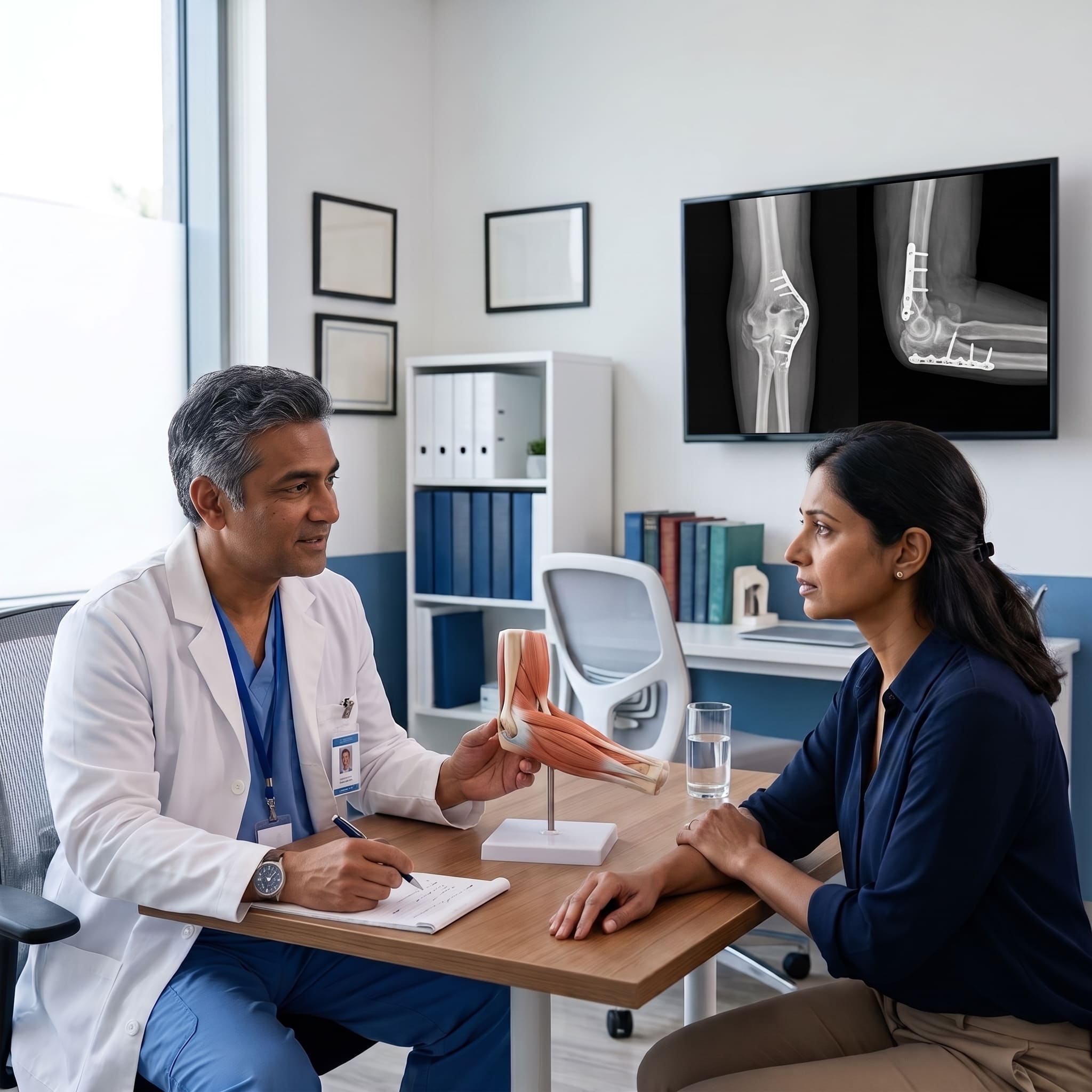
The majority of patients with mild or moderate elbow stiffness get significant improvement with the help of non-invasive treatment. Conservative treatment includes restoration of joint movement, reduction of stiffness, improving muscle flexibility and gradual increase of elbow joint function. Well-designed rehabilitation program plays a crucial role in achieving the best results.
NON-SURGICAL CARE
How Is Post-Traumatic Elbow Contracture Treated Without Surgery?
The majority of patients with mild or moderate elbow stiffness get significant improvement with the help of non-invasive treatment. Conservative treatment includes restoration of joint movement, reduction of stiffness, improving muscle flexibility and gradual increase of elbow joint function. Well-designed rehabilitation program plays a crucial role in achieving the best results.
Methods of non-surgical treatment of Post-Traumatic Elbow Contracture include:
- Physiotherapy programs which improve elbow joint mobility, flexibility and muscle strength
- Stretching exercises which help to increase range of motion of the elbow joint
- Splinting (static or dynamic) which helps to improve flexibility and decrease joint stiffness
- Pain relief and anti-inflammatory drugs which facilitate rehabilitation process
RISKS OF NO TREATMENT
When Is Surgery Required for Post-Traumatic Elbow Contracture?
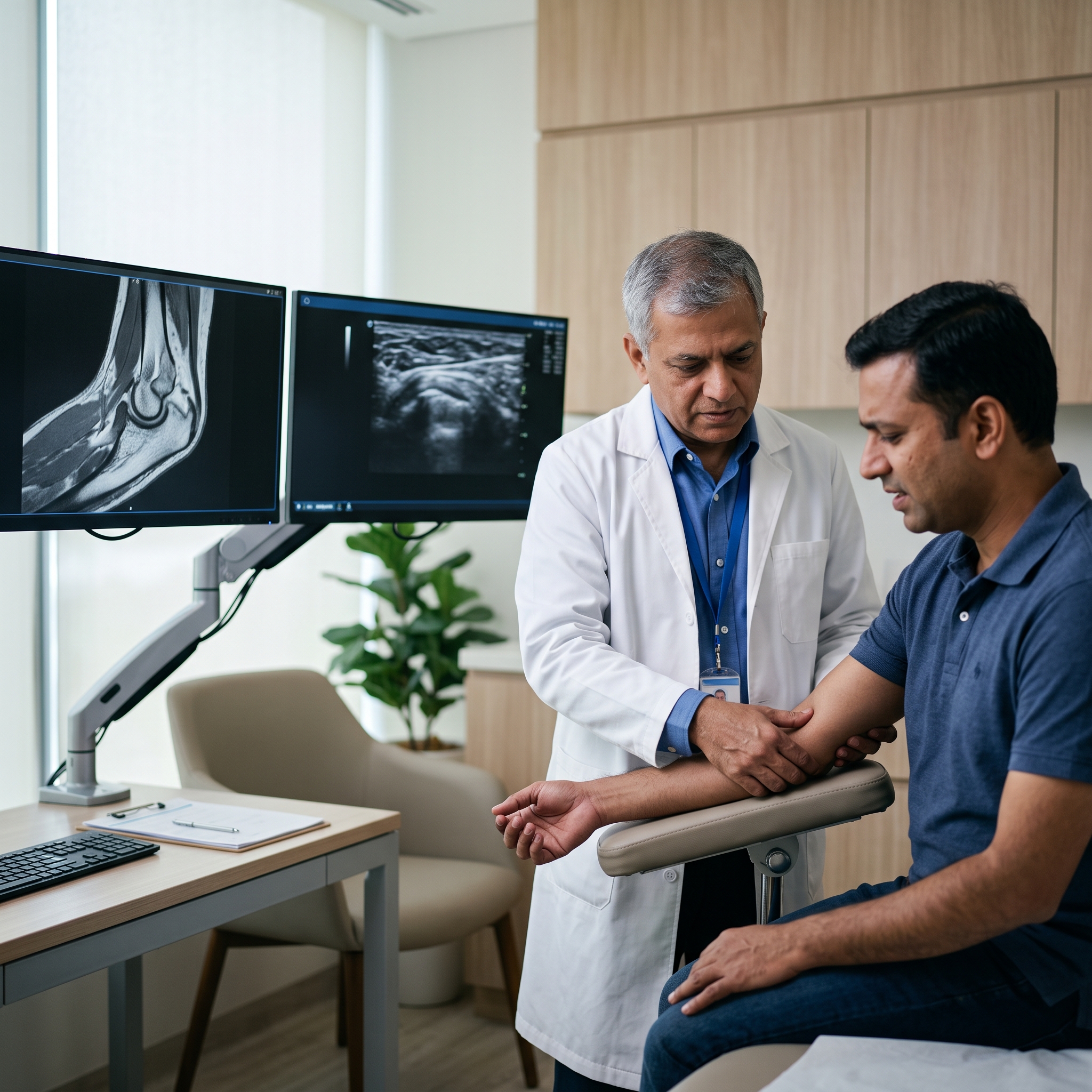
Despite the fact that the majority of patients can get better with non-invasive treatment, surgery may be required in cases of persisting elbow stiffness or inability to restore joint movement despite comprehensive rehabilitation program. The goal of surgical treatment is restoration of joint movement, reduction of pain and improvement of elbow joint function.
RISKS OF NO TREATMENT
When Is Surgery Required for Post-Traumatic Elbow Contracture?
Despite the fact that the majority of patients can get better with non-invasive treatment, surgery may be required in cases of persisting elbow stiffness or inability to restore joint movement despite comprehensive rehabilitation program. The goal of surgical treatment is restoration of joint movement, reduction of pain and improvement of elbow joint function.
Surgery for Post-Traumatic Elbow Contracture can be recommended in the following cases:
- Persisting elbow stiffness despite non-surgical treatment
- Significant loss of elbow joint movement which hinders daily activities
- Scar tissue and tight capsule which limit the joint movement significantly
- Bone spurs or heterotopic ossification which restrict the joint movement
SURGERY
What Surgical Methods Are Used for Post-Traumatic Elbow Contracture?
There are several types of surgeries which can be used for restoration of elbow joint movement when non-invasive treatment is ineffective. Choice of the surgery depends on the underlying cause of stiffness, degree of movement restriction, accompanying injuries and patient's needs. At ALIGN ASIA, individualized treatment approach helps to achieve the best results.
Common methods of surgical treatment of Post-Traumatic Elbow Contracture include:
Arthroscopic Elbow Contracture Release
It is a minimally invasive procedure which removes the scar tissue and releases tight structures in the joint.
Open Contracture Release
It is an open surgery which is required in case when joint stiffness cannot be treated with arthroscopy.
Capsular Release
Tight capsule is surgically cut off in order to restore elbow joint flexibility and increase the range of motion.
Removal of Bone Spurs or Heterotopic Ossification
Additional bones or bone spurs which limit the joint movement are removed to increase joint movement and remove mechanical blockages.
SURGERY
What Surgical Methods Are Used for Post-Traumatic Elbow Contracture?
There are several types of surgeries which can be used for restoration of elbow joint movement when non-invasive treatment is ineffective. Choice of the surgery depends on the underlying cause of stiffness, degree of movement restriction, accompanying injuries and patient's needs. At ALIGN ASIA, individualized treatment approach helps to achieve the best results.
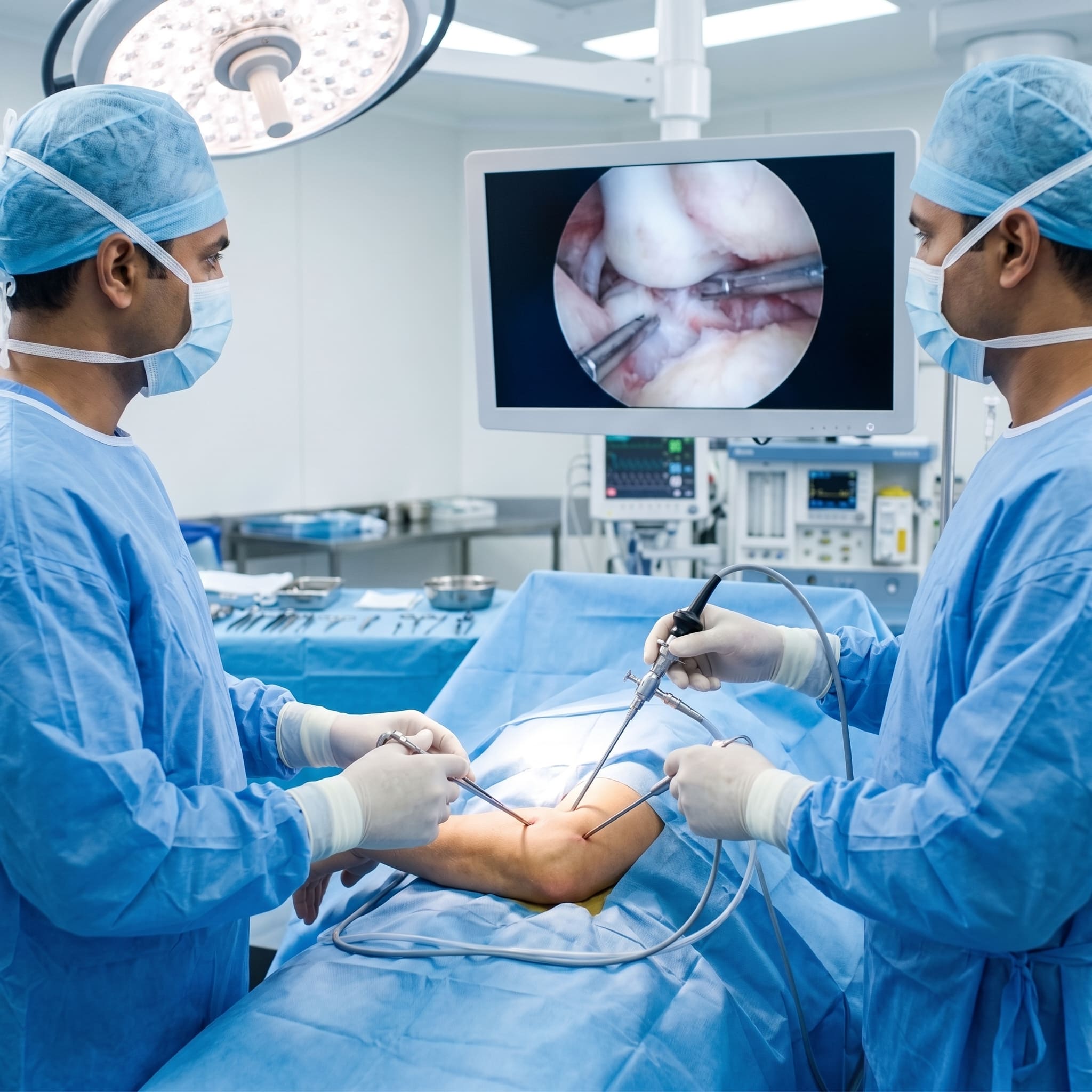
Common methods of surgical treatment of Post-Traumatic Elbow Contracture include:
Arthroscopic Elbow Contracture Release
It is a minimally invasive procedure which removes the scar tissue and releases tight structures in the joint.
Open Contracture Release
It is an open surgery which is required in case when joint stiffness cannot be treated with arthroscopy.
Capsular Release
Tight capsule is surgically cut off in order to restore elbow joint flexibility and increase the range of motion.
Removal of Bone Spurs or Heterotopic Ossification
Additional bones or bone spurs which limit the joint movement are removed to increase joint movement and remove mechanical blockages.
COMPLICATIONS
What Are Possible Complications of Post-Traumatic Elbow Contracture?
Despite the fact that most patients recover successfully with the help of adequate treatment, there are some potential complications which can develop if post-traumatic elbow contracture is left untreated or stiffness continues to progress. Early diagnosis, timely treatment and adherence to rehabilitation program help to minimize the risk of these problems. Follow-up appointments also allow to monitor the process of recovery, assess joint function and improve long-term prognosis.
Persistent Elbow Stiffness
Continued scar tissue formation or capsule tightening can limit joint movement even despite the treatment.
Permanent Reduction of Range of Motion
Severe and untreated stiffness can result in long-term restriction of elbow joint flexion or extension.
Chronic Elbow Pain
Continued stiffness and abnormal joint mechanics can cause pain during movements and during daily activities.
Reduced Arm Function
Restricted joint movement can make it difficult to lift, carry, reach, dress, take care of yourself and perform other activities.
Connect with our experts and get the right guidance for your condition.
RECOVERY & OUTCOMES
What Is the Process of Recovery after Treatment of Post-Traumatic Elbow Contracture?
RECOVERY & OUTCOMES
What Is the Process of Recovery after Treatment of Post-Traumatic Elbow Contracture?
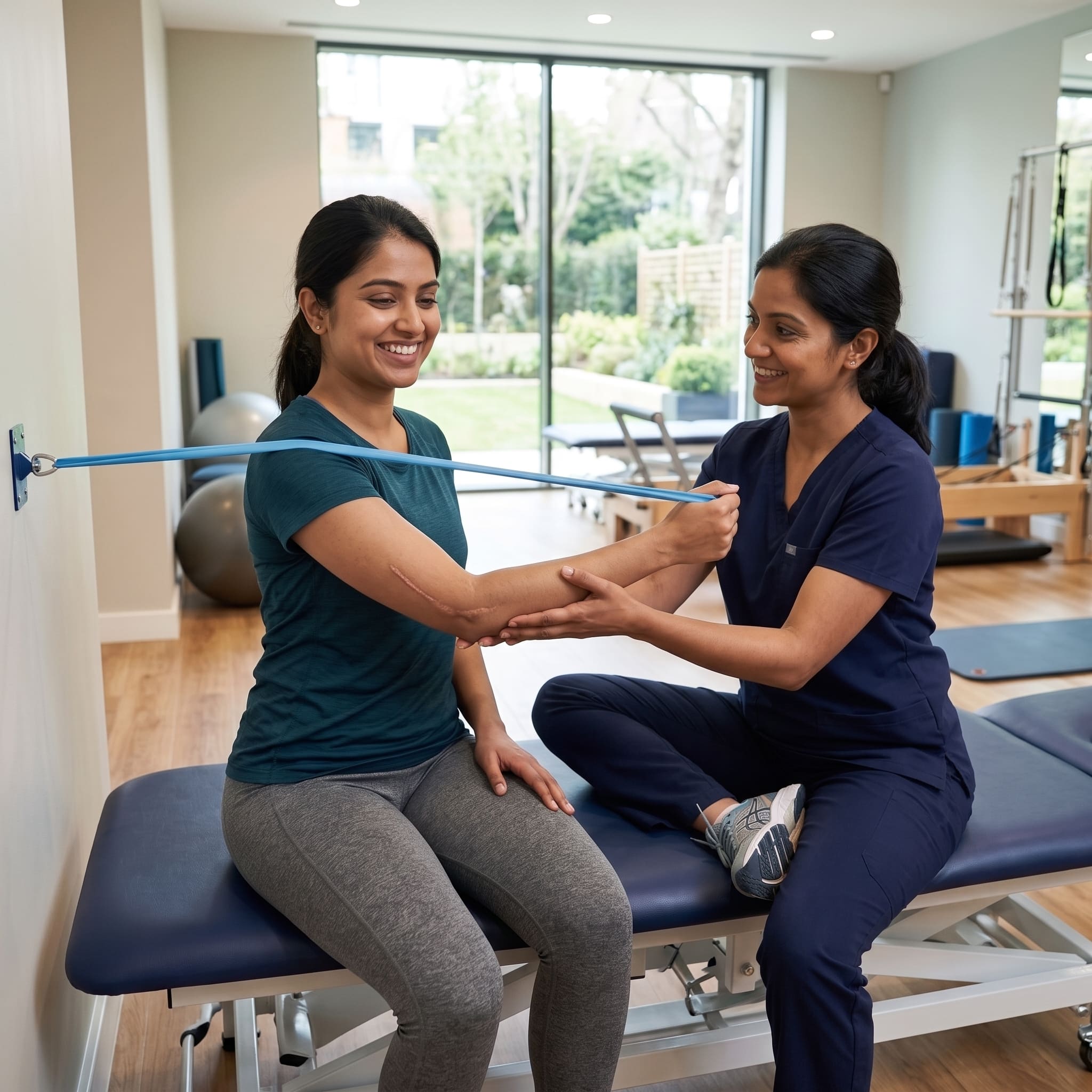
The process of recovery after Post-Traumatic Elbow Contracture treatment depends on the degree of stiffness, its underlying cause and method of treatment. Patients who were treated conservatively usually get better gradually with the help of rehabilitation, however those who underwent surgical treatment need a well-designed recovery program to restore joint movement, strength and function. Personalized rehabilitation program helps to get back to your daily activities and avoid stiffness again.
The process of recovery after treatment of Post-Traumatic Elbow Contracture includes the following steps:
- Gradual pain relief and inflammation reduction after surgery
- Range of motion exercises to improve elbow joint flexibility
- Strengthening exercises for the elbow, forearm and surrounding muscles
- Rehabilitation program to improve joint movement, function and strength of the upper limb
- Gradual return to work, sports and everyday activities depending on the process of recovery
AFTERCARE
Recovery & Aftercare after Post-Traumatic Elbow Contracture
AFTERCARE
Recovery & Aftercare after Post-Traumatic Elbow Contracture
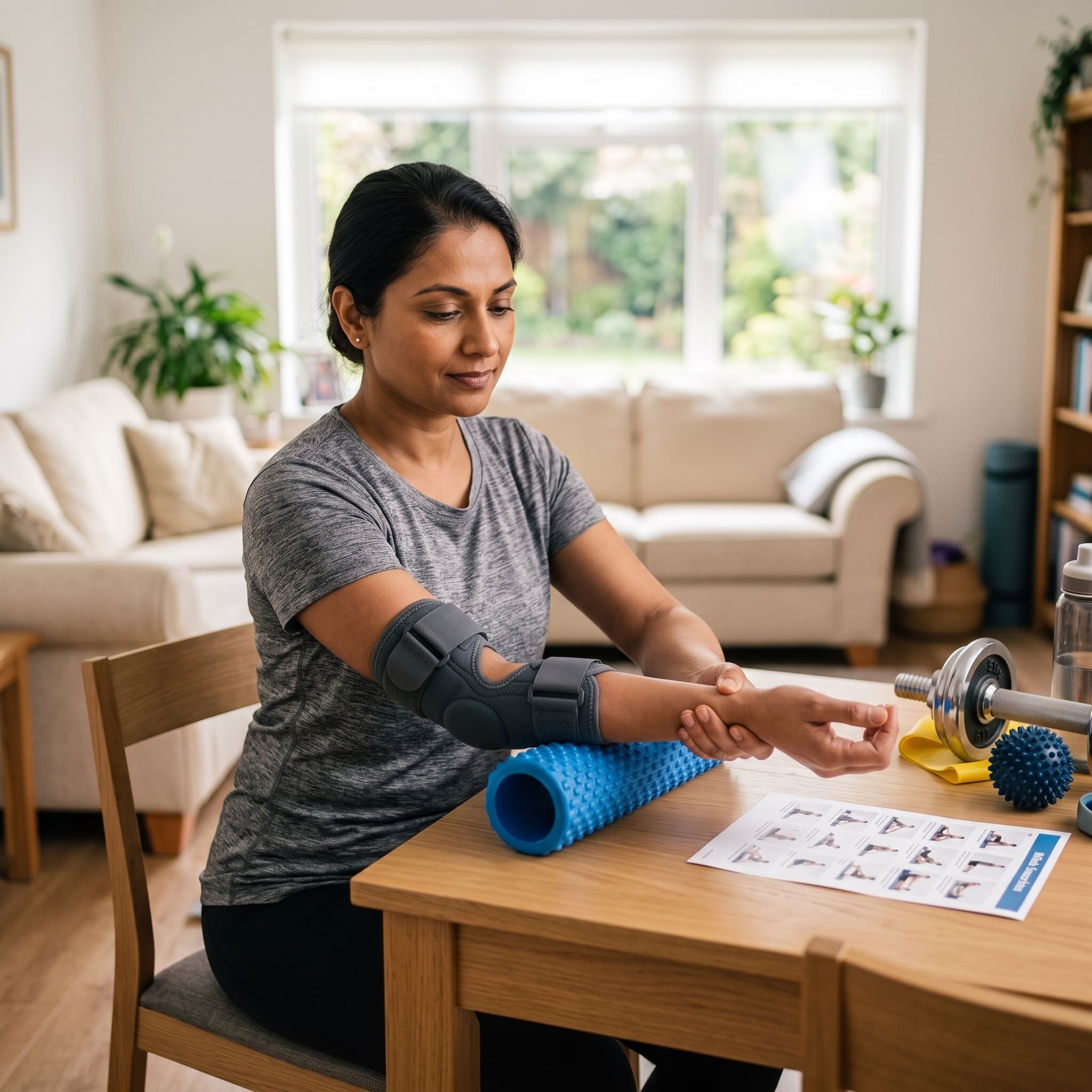
Successful recovery depends on maintenance of elbow joint range of motion and protection of healing tissues. Adherence to rehabilitation program, regular exercises and follow-up appointments can help to get the best joint function and prevent further stiffness. Regular rehabilitation is one of the key factors in recovery.
The following aftercare measures are recommended for successful recovery:
- Regular visits to physiotherapist in order to restore joint mobility and flexibility
- Consistent performance of prescribed range of motion and strengthening exercises
- Using of splints and braces if recommended by your health care providers to keep elbow joint movement
- Gradual return to daily activities avoiding any overload until being cleared by your health care provider
- Attending the scheduled follow-up appointments to monitor your recovery and prevent the recurrence of stiffness
FAQ'S
Do You Have Any Question?
Yes. Patients with mild or moderate elbow stiffness can get better with physiotherapy, stretching exercises, splinting and rehabilitation program. Surgery is usually recommended when non-invasive treatment cannot restore joint movement.
It depends on the degree of stiffness, treatment and individual healing. Your specialist will tell you about the expected recovery time individually.
Your return to work, sport or physically demanding activities depends on the joint movement, strength and rehabilitation completion. Your specialist will let you know when you can start these activities.
Surgery for post-traumatic elbow contracture is a standard orthopedic procedure and it is usually safe if it is carried out by experienced specialists and followed by appropriate rehabilitation.
Yes. Stiffness may reappear if rehabilitation was not completed or new scar tissue appeared. Regular exercises and physiotherapy will help to avoid this problem.