
ARTHROSCOPY & SPORTS INJURY ASSOCIATES

OVERVIEW
What is Distal Triceps Tendon Repair?
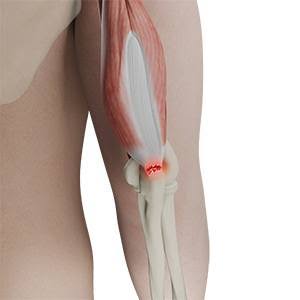
The Distal Triceps Tendon Repair is a surgical procedure aiming to reattach a torn distal triceps tendon to the olecranon located at the back of the elbow joint. The distal triceps tendon takes part in elbow extension and is involved in pushing movements. Patients may suffer from pain, weakness, swelling and problems with elbow extension in case of tendon tear. The procedure is used to restore the function of the tendon and improve the stability of the elbow joint.
Here are some important details about the Distal Triceps Tendon Repair:
- Tendon reattachment to the bone
- Improved strength of the elbow in pushing and arm extension
- Surgical treatment for a complete tendon tear or loss of function
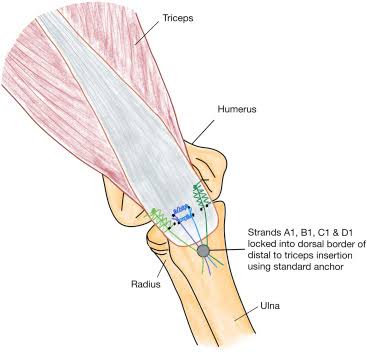
The Distal Triceps Tendon Repair is a surgical procedure aiming to reattach a torn distal triceps tendon to the olecranon located at the back of the elbow joint. The distal triceps tendon takes part in elbow extension and is involved in pushing movements. Patients may suffer from pain, weakness, swelling and problems with elbow extension in case of tendon tear. The procedure is used to restore the function of the tendon and improve the stability of the elbow joint.
Here are some important details about the Distal Triceps Tendon Repair:
- Tendon reattachment to the bone
- Improved strength of the elbow in pushing and arm extension
- Surgical treatment for a complete tendon tear or loss of function
Surgeons Available for Consultations

Dr. Karnav Panchal
M.B.B.S, M.S. (Orthopedics),
FAOS (South Korea)
Consultant Arthroscopist & Sports Injury Specialist Consultant Joint Replacement Surgeon

Dr. Aniket Gupta
M.B.B.S, M.S. (Orthopedics),
MRCS (Edinburgh)
Training & Qualifications Fellowship in MRCS (UK) Arthroscopy & Arthroplasty (Milan, Italy)
Consultant Physiotherapist

Dr. Aarsh Bhatt
B.P.T,M.P.T (Cardio-Respiratory Disorders) MIAP , HCPC (UK) , DHA (UAE)
Consultant Physiotherapist

Dr. Hetvi Dimothe
BPT , M.P.T (Rehabilitation) MIAP, HCPC (UK) , DHA (UAE)
Consultant Physiotherapist

Causes
What Causes a Distal Triceps Tendon Tear?
Distal Triceps Tendon Tears typically occur as a result of placing the excess strain on the triceps muscle while extending the elbow. The tear is caused by a fall, sports injury, excessive weight lifting or other trauma. Sometimes tendon tear may be related to tendon degeneration or certain diseases which reduce the resistance to injuries.
Causes
What Causes a Distal Triceps Tendon Tear?
Distal Triceps Tendon Tears typically occur as a result of placing the excess strain on the triceps muscle while extending the elbow. The tear is caused by a fall, sports injury, excessive weight lifting or other trauma. Sometimes tendon tear may be related to tendon degeneration or certain diseases which reduce the resistance to injuries.
Distal Triceps Tendon Tears occur due to the following reasons:
- Excessive strain placed on the triceps tendon while lifting heavy weights
- Fall with an outstretched arm or impact at the back of the elbow
- Rapid and powerful extension of the elbow
- Sports injury or trauma affecting the back of the elbow
- Age-related tendon degeneration
What Other Structures Can Be Affected Along with a Distal Triceps Tendon Tear?
Along with the damaged distal triceps tendon, other adjacent structures such as the surrounding muscles, ligaments, soft tissue and supportive tissues of the elbow joint may also get injured. The damage to these structures may cause pain, weakness, reduced movement and inability to perform regular tasks.
- Elbow stabilizing ligaments
- Surrounding muscles
- Adjacent tendons
- Joint capsule
- Surrounding nerves
- Adjacent soft tissues
SYMPTOMS
What are the Symptoms of a Distal Triceps Tendon Tear?
The symptoms may develop suddenly and significantly affect the ability of moving the elbow. Early consultation and diagnosis will allow to improve the chances of successful treatment and recovery.

Sudden Elbow Pain
The pain may appear immediately after the injury occurred and intensify with movements and elbow extension.
Loss of Strength
Torn distal triceps tendon may cause a loss of elbow extension strength, leading to inability to push or straighten the elbow.
Swelling and Bruising
Swelling and bruising may develop around the back of the elbow joint after the injury.
Neglecting the above-mentioned symptoms may lead to weakness and reduced elbow extension ability and make it harder to restore normal strength with the treatment.
Connect with our experts and get the right guidance for your condition.
Difficulty Straightening the Elbow
The patient may have difficulty or severe pain during straightening of the elbow.
Tenderness
The injured area may feel tender to touch or move.
Reduced Arm Function
The patient may have problems with pushing or lifting objects.
Changes in the Tendon Contour
If a complete rupture occurred, there may be a noticeable gap or change in the tendon contour.
Connect with our experts and get the right guidance for your condition.
BOOK CONSULTATIONDIAGNOSIS
How Do Doctors Diagnose a Distal Triceps Tendon Tear?
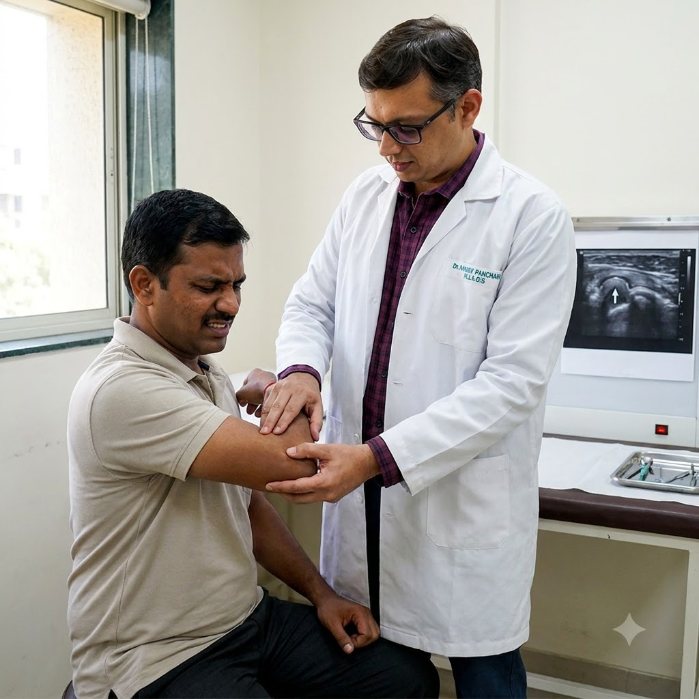
To diagnose a distal triceps tendon tear, the doctor should learn the history of the injury and examine the patient. The doctor will check the presence of pain, swelling, tenderness, elbow extension strength and arm movement to understand the extent of the injury. Additionally, imaging studies will be done to identify the location and size of the tear.
DIAGNOSIS
How Do Doctors Diagnose a Distal Triceps Tendon Tear?
To diagnose a distal triceps tendon tear, the doctor should learn the history of the injury and examine the patient. The doctor will check the presence of pain, swelling, tenderness, elbow extension strength and arm movement to understand the extent of the injury. Additionally, imaging studies will be done to identify the location and size of the tear.
Distal Triceps Tendon Tears can be diagnosed using the following approaches:
- Physical examination – checking tendon condition, pain, swelling, extension of the elbow
- Imaging studies – to find the tear and assess the extent of the damage
- MRI
- Ultrasound
- X-ray (to evaluate the bone injury when necessary)
TREATMENT
What is the Treatment for a Distal Triceps Tendon Tear?
Depending on the severity of the tendon tear, functional requirements of the patient and tendon damage, distal triceps tendon tear can be treated either surgically or non-surgically. Early treatment will allow to restore elbow extension and function and reduce pain.
Pain management
Activity modification
Physiotherapy
Tendon rehabilitation
Distal Triceps Tendon Repair surgery
NON-SURGICAL CARE
How is a Distal Triceps Tendon Tear Treated Without Surgery?
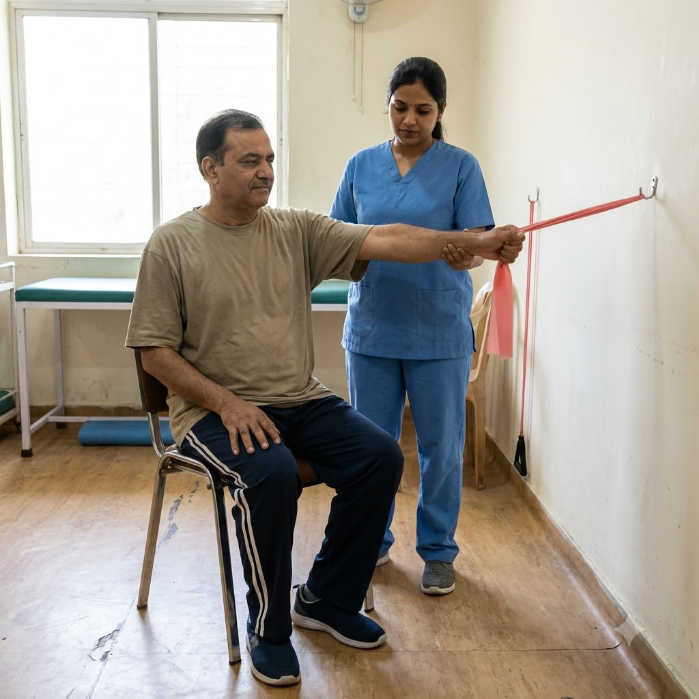
Distal triceps tendon tear can sometimes be successfully treated conservatively. Non-surgical treatment involves reduction of pain and swelling, improving the tendon condition and its healing. A rehabilitation program will help to restore arm function and minimize the risk of further injury.
NON-SURGICAL CARE
How is a Distal Triceps Tendon Tear Treated Without Surgery?
Distal triceps tendon tear can sometimes be successfully treated conservatively. Non-surgical treatment involves reduction of pain and swelling, improving the tendon condition and its healing. A rehabilitation program will help to restore arm function and minimize the risk of further injury.
Conservative treatment includes:
- Physiotherapy programs improving elbow movement and muscle strength
- Activity modification to protect the injured tendon
- Anti-inflammatory drugs to relieve pain
- Strengthening exercises to improve tendon condition
RISKS OF NO TREATMENT
When is Distal Triceps Tendon Repair Needed?
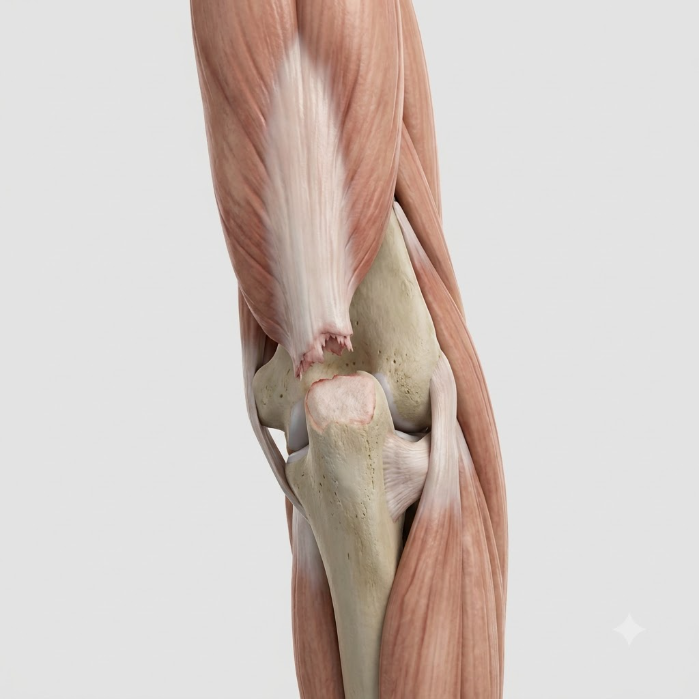
While some tears can be treated without surgery, operative treatment is usually preferred in cases of complete tendon tear and significant loss of elbow extension strength. Timely surgical treatment will help to restore arm function, especially for athletes and physically active individuals whose work involves arm strength.
RISKS OF NO TREATMENT
When is Distal Triceps Tendon Repair Needed?
While some tears can be treated without surgery, operative treatment is usually preferred in cases of complete tendon tear and significant loss of elbow extension strength. Timely surgical treatment will help to restore arm function, especially for athletes and physically active individuals whose work involves arm strength.
Distal triceps tendon repair may be required in the following cases:
- Complete tear of the tendon
- Significant loss of elbow extension strength
- Failure of conservative treatment
- High functional demands for work, sports or physical activity
SURGERY
What is Distal Triceps Tendon Repair Surgery?
The procedure aims to reattach the torn distal triceps tendon to the olecranon located at the back of the elbow joint. It will help to restore elbow extension strength and function and to relieve pain. Modern procedures are focused on tendon fixation and preservation of the surrounding structures. At ALIGN ASIA each surgical treatment plan is individually developed taking into consideration the injury and the requirements of the patient.
Distal Triceps Tendon Repair surgery is typically performed by the following steps and procedures:
- Incision is made to gain access to the distal triceps tendon
- Detached tendon is found, mobilized and prepared for repair
- Suture anchor fixation
- Transosseous bone tunnel repair
- Suture bridge fixation (if needed)
- The tendon is attached to the olecranon using the optimal technique
- Tendon tension, elbow movement and repair are checked
- The incision is closed and a rehabilitation program is started
SURGERY
What is Distal Triceps Tendon Repair Surgery?
The procedure aims to reattach the torn distal triceps tendon to the olecranon located at the back of the elbow joint. It will help to restore elbow extension strength and function and to relieve pain. Modern procedures are focused on tendon fixation and preservation of the surrounding structures. At ALIGN ASIA each surgical treatment plan is individually developed taking into consideration the injury and the requirements of the patient.
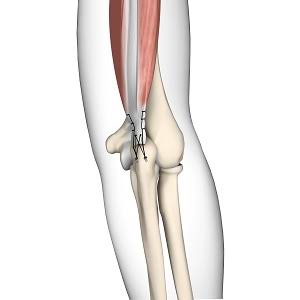
Distal Triceps Tendon Repair surgery is typically performed by the following steps and procedures:
- Incision is made to gain access to the distal triceps tendon
- Detached tendon is found, mobilized and prepared for repair
- Suture anchor fixation
- Transosseous bone tunnel repair
- Suture bridge fixation (if needed)
- The tendon is attached to the olecranon using the optimal technique
- Tendon tension, elbow movement and repair are checked
- The incision is closed and a rehabilitation program is started
COMPLICATIONS
What are the Possible Complications of a Distal Triceps Tendon Tear or Its Treatment?
Despite most of the cases are recovered with no problems, there may be complications in case of untreated distal triceps tendon tear or during healing period. Early diagnosis, timely surgical treatment and rehabilitation can help to avoid complications. Follow-up visits will also allow doctors to monitor the healing process and eliminate the potential risks.
Weakness
Incomplete healing of the tendon or delayed treatment may reduce the elbow extension strength.
Elbow stiffness
Reduced elbow movement may be the result of poor healing and may limit the range of movement and arm functions.
Tendon re-injury
Excessive load on the tendon while it still heals may result in a new tear.
Reduced arm function
Untreated injury or complication during the recovery period may reduce the arm strength and functions.
Connect with our experts and get the right guidance for your condition.
RECOVERY & OUTCOMES
What is the Recovery Process after Distal Triceps Tendon Repair?
RECOVERY & OUTCOMES
What is the Recovery Process after Distal Triceps Tendon Repair?
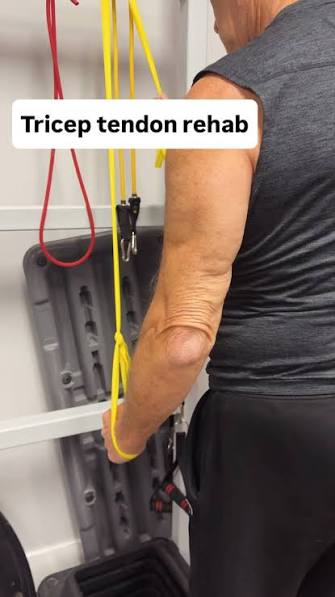
Restoration of function after distal triceps tendon repair is a gradual process which involves tendon protection and restoration of the elbow movement, strength and functions. Recovery period varies depending on the injury severity and surgical procedure performed. Rehabilitation program will help you to safely recover the strength of the elbow and return to normal activities.
Recovery period after Distal Triceps Tendon Repair usually includes the following steps:
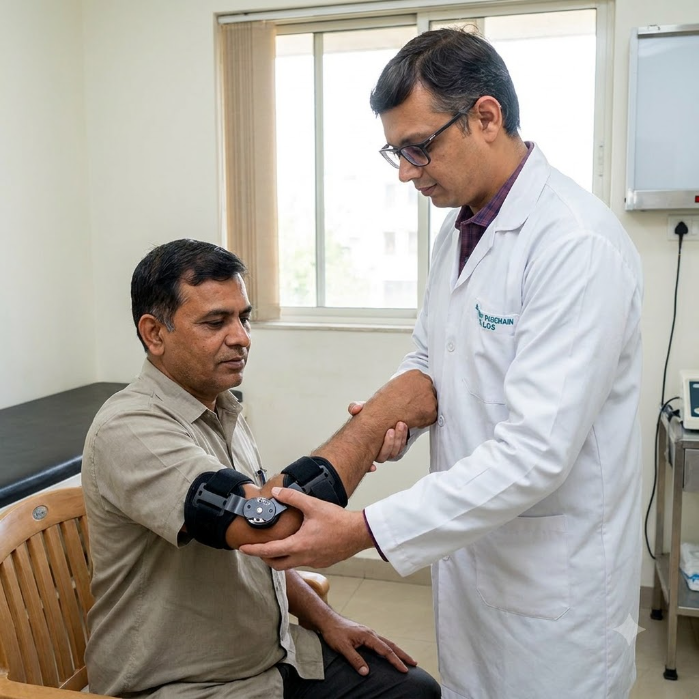
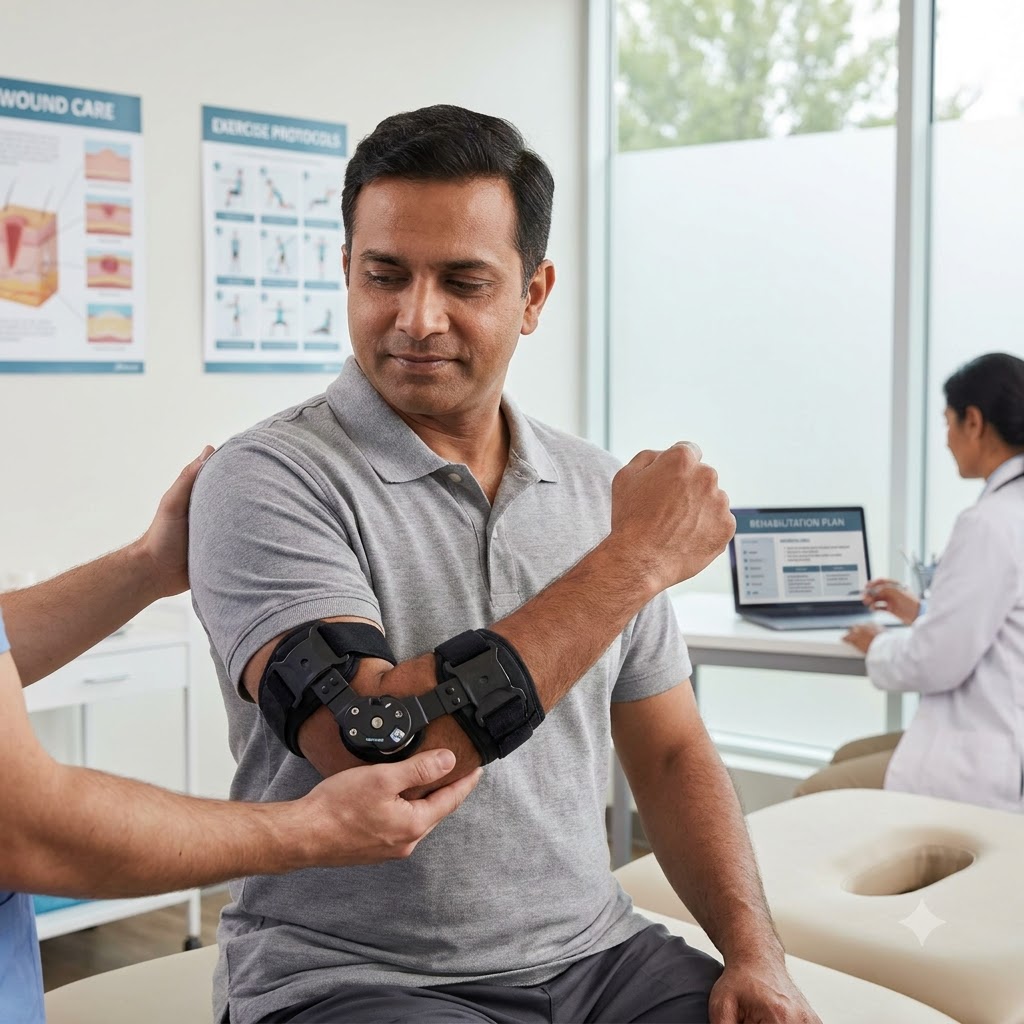
- Protection of the tendon in the early stages of healing using a brace or a splint
- Introduction of range of movement exercises under specialist supervision
- Progressive elbow muscle strengthening
- Physiotherapy improving elbow and arm function
- Return to work, sports and daily activities
AFTERCARE
Recovery & Aftercare for Distal Triceps Tendon Repair
AFTERCARE
Recovery & Aftercare for Distal Triceps Tendon Repair
Successful recovery requires proper protection of the tendon and compliance with a comprehensive rehabilitation program. Proper aftercare will help you to restore elbow extension strength and function, minimize the risks of injury and achieve optimal results of recovery. Follow-up visits will help to monitor the healing process and adjust the rehabilitation program to your needs.
The following aftercare measures will help you to recover successfully:
- Use of prescribed brace or support device during the early stages of healing
- Regular physiotherapy sessions to improve elbow movement and strength
- Proper execution of rehabilitation exercises prescribed by your healthcare team
- Gradual increase of activities and avoidance of lifting heavy objects
- Regular follow-up visits to monitor tendon healing
FAQ'S
Do You Have Any Question?
Partial tears of the distal triceps tendon may be successfully treated without surgery, while the complete tendon tears usually require surgical intervention.
Recovery period varies depending on the severity of the injury, the surgery procedure and individual healing period. Your specialist will provide an individualized recovery timeline.
Return to work or sports activities will depend on the tendon healing and restoration of strength. Your surgeon will inform you about the safe time to start normal activities.
The distal triceps tendon repair surgery is a commonly performed orthopedic procedure which is considered safe when performed by experienced specialists and followed by a rehabilitation program.
The reinjury of the tendon is rare but you can minimize this risk by following the postoperative instructions, completing rehabilitation program and gradually increasing physical activities.