ARTHROSCOPY & SPORTS INJURY ASSOCIATES

OVERVIEW
What is Open Contracture Release?
Open Contracture Release is a surgical technique for improving movement in the elbow joint affected by scar tissue formation, joint capsule tightening, bone spurs, or other structural changes caused by trauma or prior surgeries.
During the operation, the elbow is opened surgically and the structures limiting the movement are released. This procedure is considered when stiffness persists despite physiotherapy, stretching, splinting, and other conservative treatments.
Goals of the procedure:
- To improve movement in the elbow joint
- To improve functionality and return patients to everyday activities
Key points about Open Contracture Release:
- Releases scar tissue and tight structures that limit movement in the elbow
- Improves flexion and extension of the elbow
- Can treat bone spurs and other bone formation issues
- Generally considered when the conservative treatment was ineffective in restoring movement
- Requires proper rehabilitation after the surgery
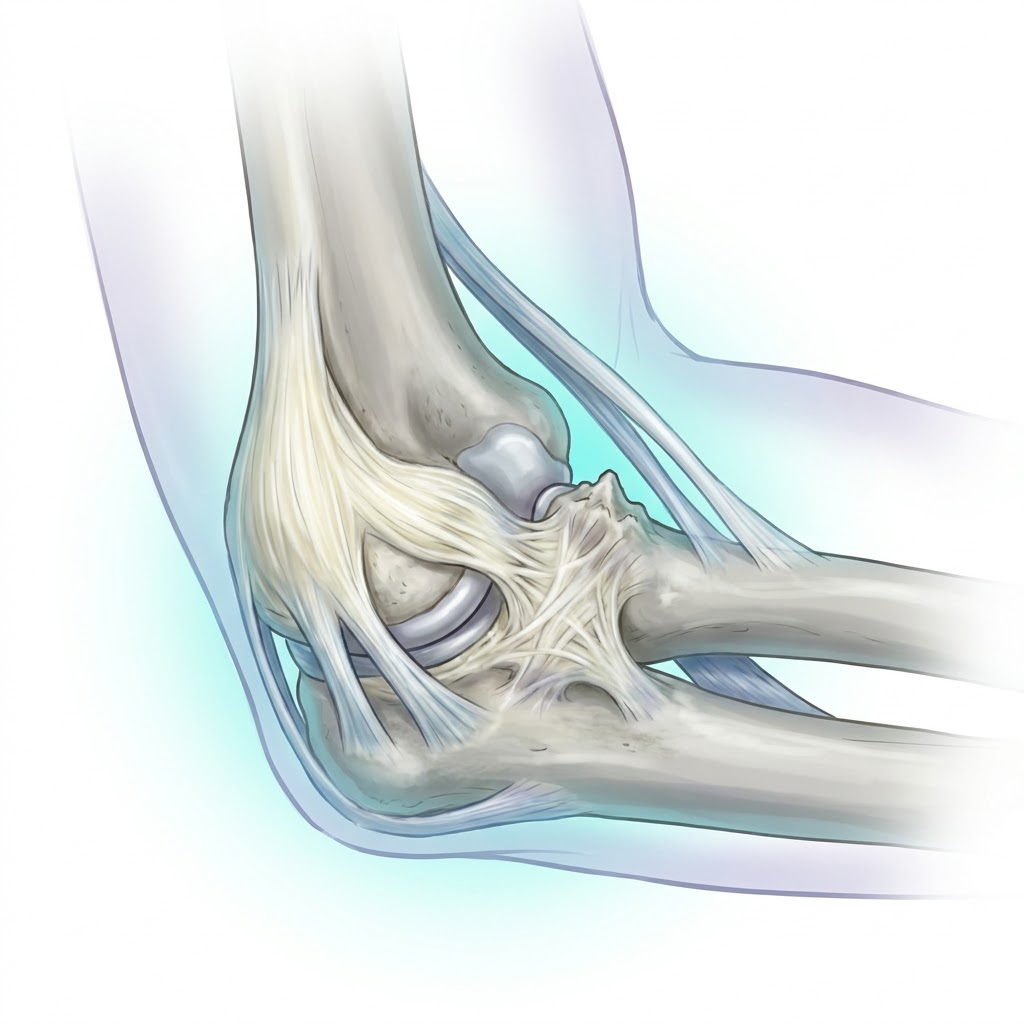
Open Contracture Release is a surgical technique for improving movement in the elbow joint affected by scar tissue formation, joint capsule tightening, bone spurs, or other structural changes caused by trauma or prior surgeries.
During the operation, the elbow is opened surgically and the structures limiting the movement are released. This procedure is considered when stiffness persists despite physiotherapy, stretching, splinting, and other conservative treatments.
Goals of the procedure:
- To improve movement in the elbow joint
- To improve functionality and return patients to everyday activities
Key points about Open Contracture Release:
- Releases scar tissue and tight structures that limit movement in the elbow
- Improves flexion and extension of the elbow
- Can treat bone spurs and other bone formation issues
- Generally considered when the conservative treatment was ineffective in restoring movement
- Requires proper rehabilitation after the surgery
Surgeons Available for Consultations

Dr. Karnav Panchal
M.B.B.S, M.S. (Orthopedics),
FAOS (South Korea)
Consultant Arthroscopist & Sports Injury Specialist Consultant Joint Replacement Surgeon

Dr. Aniket Gupta
M.B.B.S, M.S. (Orthopedics),
MRCS (Edinburgh)
Training & Qualifications Fellowship in MRCS (UK) Arthroscopy & Arthroplasty (Milan, Italy)
Consultant Physiotherapist

Dr. Aarsh Bhatt
B.P.T,M.P.T (Cardio-Respiratory Disorders) MIAP , HCPC (UK) , DHA (UAE)
Consultant Physiotherapist

Dr. Hetvi Dimothe
BPT , M.P.T (Rehabilitation) MIAP, HCPC (UK) , DHA (UAE)
Consultant Physiotherapist
CAUSES
What Causes Post-Traumatic Elbow Contracture?
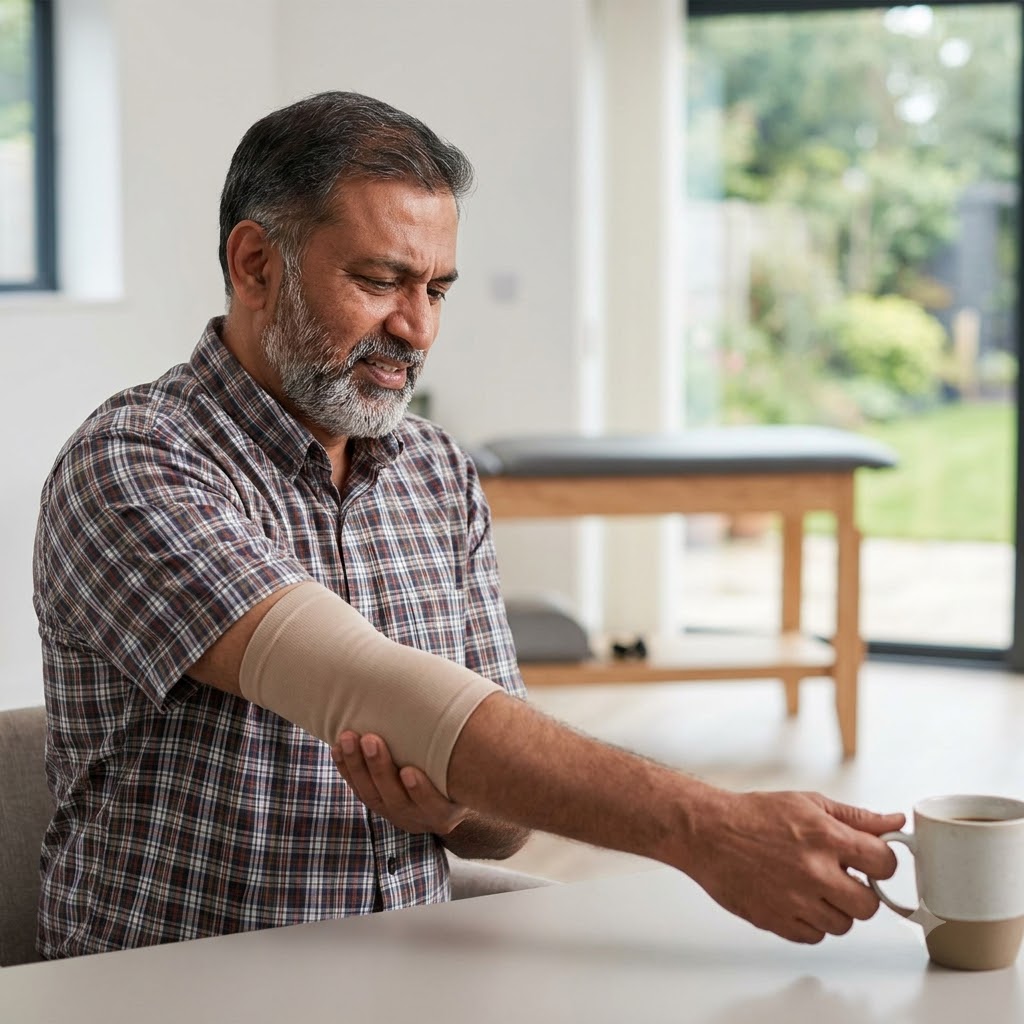
Post-Traumatic Elbow Contracture arises due to the process of healing after the elbow injury or surgery that results in excessive scar tissue formation, joint capsule tightening, muscle shortening, bone formation, or other structural changes.
CAUSES
What Causes Post-Traumatic Elbow Contracture?
Post-Traumatic Elbow Contracture arises due to the process of healing after the elbow injury or surgery that results in excessive scar tissue formation, joint capsule tightening, muscle shortening, bone formation, or other structural changes.
Common causes of post-traumatic elbow contracture include:
- Elbow fractures
- Dislocated elbow joint
- Ligament and soft tissues injuries
- Prior elbow surgery
- Immobilization
- Scar tissue formation
- Bone spurs formation
- Joint surface damage
What Structures May Limit Movement in the Elbow Joint?
Multiple structures around the elbow joint may be injured and result in limitation of movement after an elbow injury.
- Joint capsule
- Tendons
- Ligaments
- Articular cartilage
- Bone surfaces
- Surrounding soft tissues
SYMPTOMS
What are the Symptoms of Elbow Contracture?
Loss of elbow movement is a characteristic symptom of post-traumatic elbow contracture. The stiffness can arise during the period of healing after an elbow injury or surgery and interfere with daily activities.

Elbow Stiffness
The elbow joint feels tight and limited when you bend and straighten the arm.
Limited Range of Motion
The patient can find it difficult to bend or straighten the elbow joint.
Pain During Movement
Movement in the restricted range may cause pain.
Persistent stiffness can result in loss of elbow joint function and inability to perform work and other daily tasks.
Connect with our experts and get the right guidance for your condition.
Problems Performing Daily Activities
Eating, dressing, grooming, driving, reaching, lifting and other everyday activities become problematic.
Weakness
Limited movement may lead to muscle weakness around the elbow joint and forearm.
Weakness
Limited movement may lead to muscle weakness around the elbow joint and forearm.
Mechanical Blockage
Some patients may feel that the movement is mechanically blocked, especially when the cause is bone abnormalities. Persistent stiffness can result in loss of elbow joint function and inability to perform work and other daily tasks.
Connect with our experts and get the right guidance for your condition.
BOOK CONSULTATIONDIAGNOSIS
How Do Doctors Diagnose Elbow Contracture?
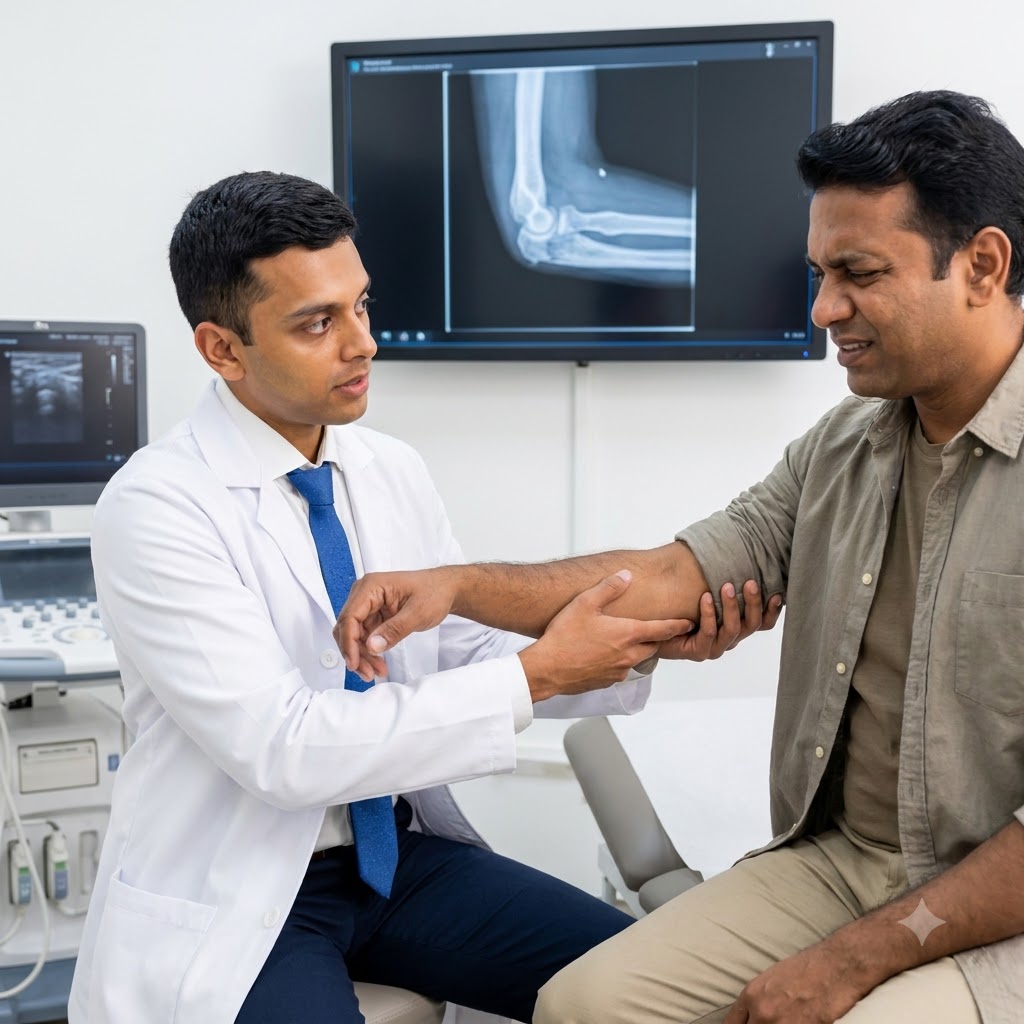
Doctors diagnose elbow contracture through review of the patient's history of injury or surgery and thorough physical examination. The specialist examines range of motion, pain, stiffness, muscle strength, and functional limitations.
DIAGNOSIS
How Do Doctors Diagnose Elbow Contracture?
Doctors diagnose elbow contracture through review of the patient's history of injury or surgery and thorough physical examination. The specialist examines range of motion, pain, stiffness, muscle strength, and functional limitations.
Diagnosis of the elbow contracture usually includes:
- Physical examination of the movement in the elbow joint, muscle strength, and joint function
- Measuring the range of motion of the elbow joint
- X-ray to evaluate bone abnormalities and joint damage
- CT-scan to examine bone abnormalities
- MRI to evaluate soft tissue damage and joint involvement
Thorough diagnosis helps to determine the nature of the restriction – whether the problem is caused by scar tissue, soft tissue contracture, bone abnormalities, joint damage, or their combination.
TREATMENT
What is the Treatment for Post-Traumatic Elbow Contracture?
The treatment plan depends on the severity and duration of the stiffness, its cause, previous treatments, and influence on everyday activities of the patient.

The treatment plan depends on the severity and duration of the stiffness, its cause, previous treatments, and influence on everyday activities of the patient.
Physiotherapy
Improves flexibility and maintains joint movement and strength of the surrounding muscles.
Stretching and Range of Motion Exercises
Gradual exercises help to improve the elbow joint flexion and extension.
Splinting
Static and dynamic splints may help to improve restricted elbow movement in certain cases.
Pain management
Pain relievers can be used to make rehabilitation easier.
Surgical treatment
In case of persistent significant stiffness despite proper conservative treatment, Open Contracture Release surgery can be considered.
NON-SURGICAL CARE
How is Elbow Contracture Treated without Surgery?
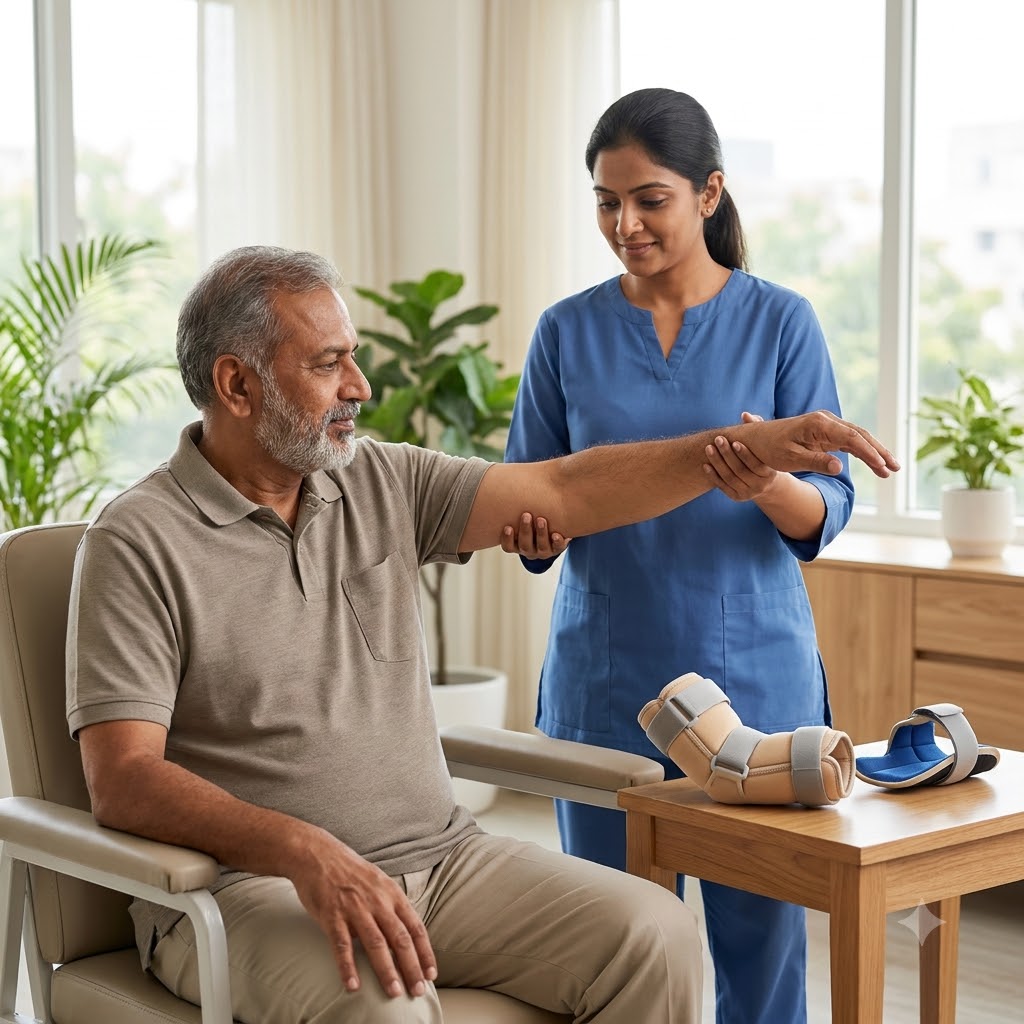
Many patients achieve improvement through rehabilitation therapy, especially if treatment is started early. Conservative treatment of the elbow joint allows gradual restoration of movement with pain control and protection of the healing elbow joint.
NON-SURGICAL CARE
How is Elbow Contracture Treated without Surgery?
Many patients achieve improvement through rehabilitation therapy, especially if treatment is started early. Conservative treatment of the elbow joint allows gradual restoration of movement with pain control and protection of the healing elbow joint.
Methods of non-surgical treatment of the elbow joint contracture include:
- Physiotherapy
- Progressive range of motion exercises
- Static or dynamic splinting
- Modification of daily activities to avoid painful movements
- Pain management to facilitate the rehabilitation process
When the above treatment does not provide sufficient improvement and stiffness continues to interfere with daily activities, surgery is considered.
RISKS OF NO TREATMENT
When is Open Contracture Release Needed?
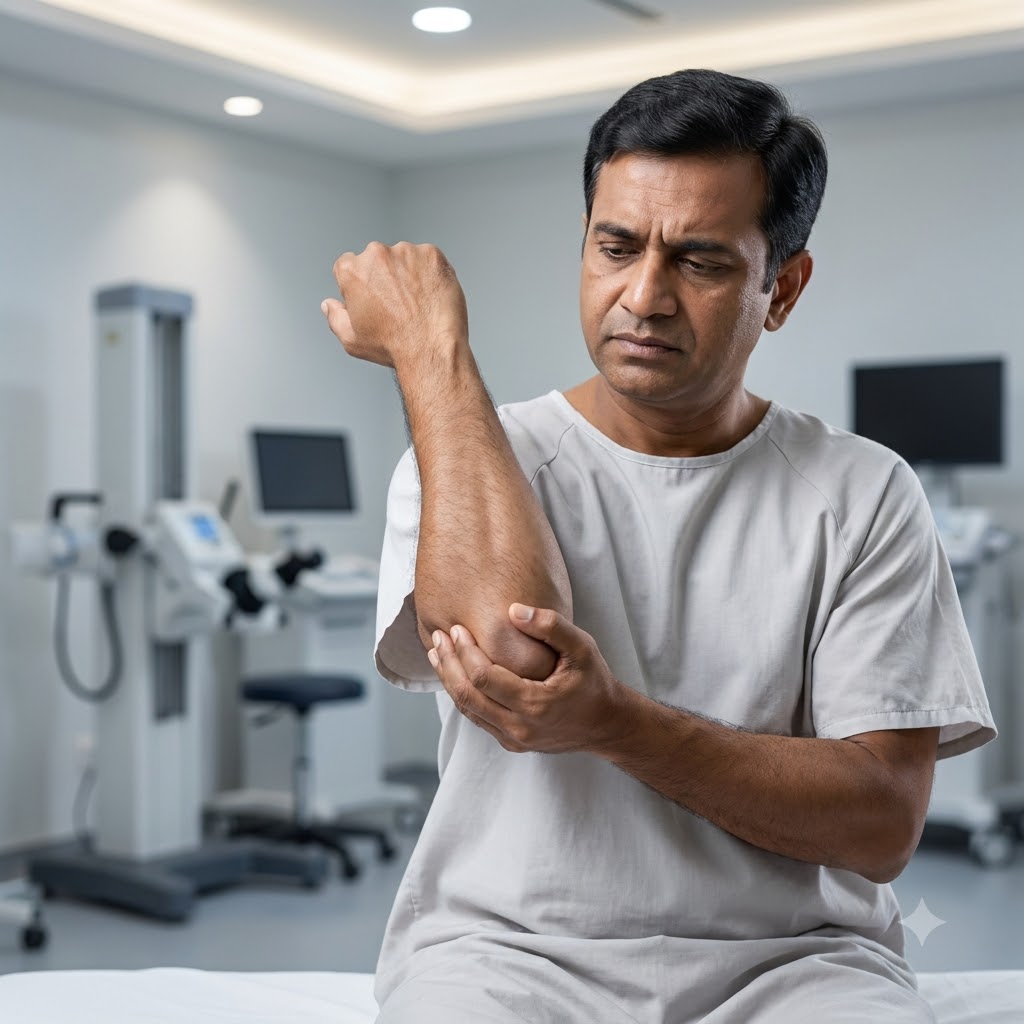
Open Contracture Release is considered when the stiffness persists despite appropriate non-surgical treatment.
RISKS OF NO TREATMENT
When is Open Contracture Release Needed?
Open Contracture Release is considered when the stiffness persists despite appropriate non-surgical treatment.
The surgery can be required when there is:
- Persistence of lost elbow joint movement despite rehabilitation
- Significant stiffness influencing on working ability or everyday activities
- Extensive scar tissue or joint capsule tightening
- Bone spurs or heterotopic ossification
- Other structural abnormalities that cannot be managed conservatively
Goal of the surgery is to release the structures that limit movement and restore as much movement as possible safely.
SURGERY
What Happens During Open Contracture Release Surgery?
Open Contracture Release is performed using a surgical incision that gives access to the structures restricting movement of the elbow joint. The structures are released, and other obstructing structures are removed, if needed.
Open Contracture Release surgery usually involves:
- Making a surgical incision around the elbow to access the contracted structures
- Identifying and releasing scar tissue and joint structures
- Releasing of the contracted structures to restore movement
- Removing bone spurs or abnormal bone formation when necessary
- Evaluation of elbow joint movement after the release
- Closure of the incision and starting the personalized rehabilitation program
Early rehabilitation is especially important because the scar tissue can reform during the healing process.
SURGERY
What Happens During Open Contracture Release Surgery?
Open Contracture Release is performed using a surgical incision that gives access to the structures restricting movement of the elbow joint. The structures are released, and other obstructing structures are removed, if needed.
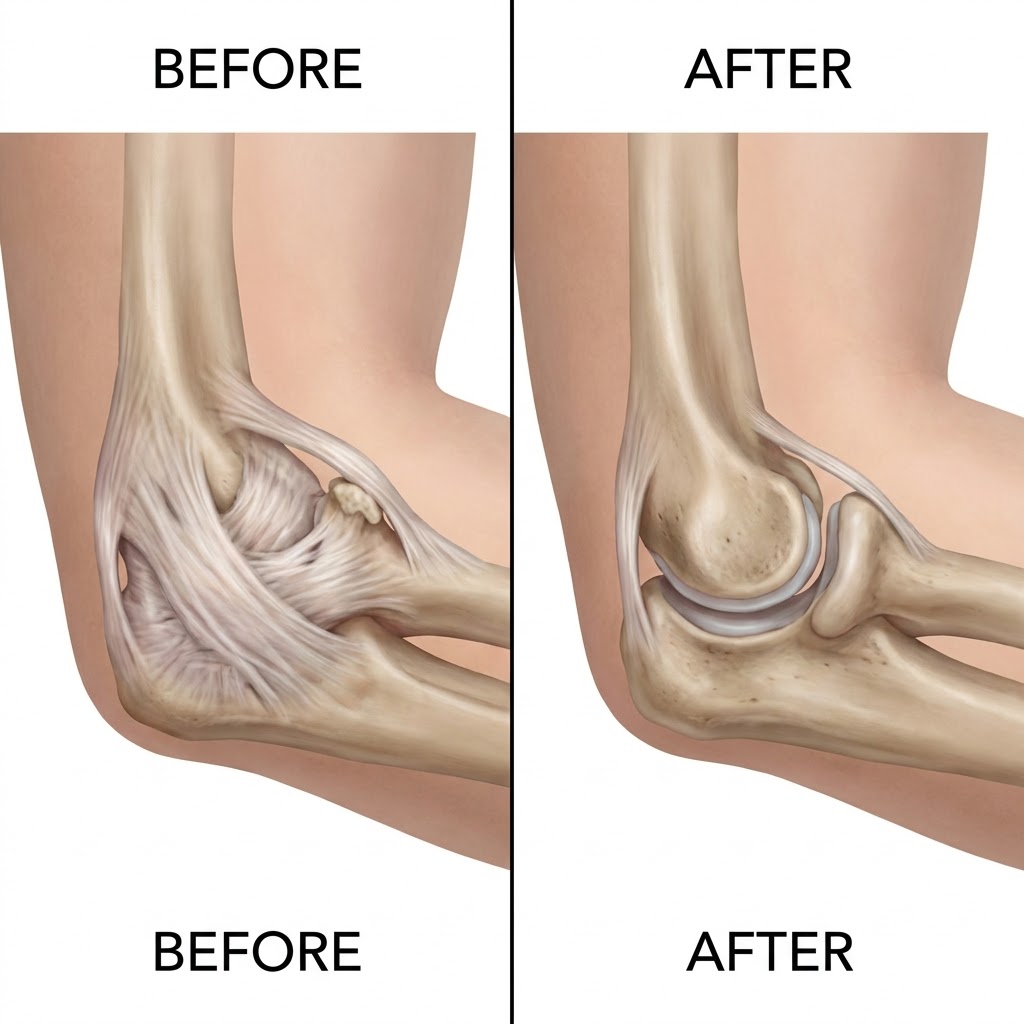
Open Contracture Release surgery usually involves:
- Making a surgical incision around the elbow to access the contracted structures
- Identifying and releasing scar tissue and joint structures
- Releasing of the contracted structures to restore movement
- Removing bone spurs or abnormal bone formation when necessary
- Evaluation of elbow joint movement after the release
- Closure of the incision and starting the personalized rehabilitation program
Early rehabilitation is especially important because the scar tissue can reform during the healing process.
COMPLICATIONS
What are the Possible Complications of Open Contracture Release?
Open Contracture Release helps to restore movement in the elbow joint, but some complications may happen during the period of recovery. Your surgeon discusses all possible risks in your individual case.
Recurrent Elbow Stiffness
Scar tissue may reform and cause the loss of the gained movement.
Persistent Pain
Some patients may continue to experience pain due to underlying joint damage or trauma.
Nerve Irritation or Injury
The nerves around the elbow joint may get irritated or damaged during the surgery causing numbness, tingling, or weakness.
Infection or Wound Problems
These are common complications of any surgery, including infection, bleeding, or delayed wound healing.
Connect with our experts and get the right guidance for your condition.
RECOVERY & OUTCOMES
What is the Recovery Process after Open Contracture Release?
RECOVERY & OUTCOMES
What is the Recovery Process after Open Contracture Release?
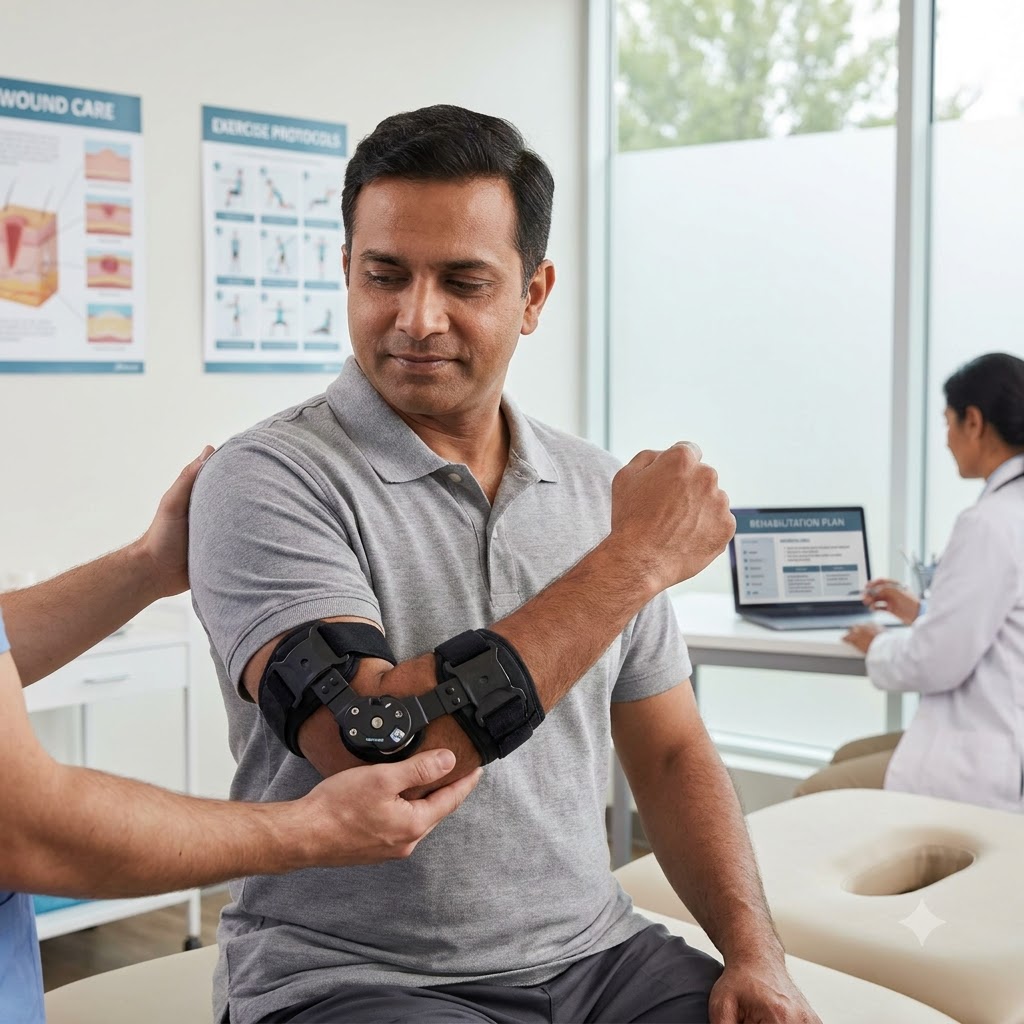
The recovery focuses on the maintenance of the gained joint movement while ensuring safe healing of the structures. Rehabilitation is an important stage of recovery since the immobility of the elbow joint during the healing process can cause recurrent stiffness.
The recovery process usually includes:
- Early management of pain and swelling
- Early controlled range of motion exercises
- Progressive stretching and mobility exercises
- Gradual strengthening exercises
- Therapeutic physiotherapy
- Gradual return to work and everyday activities
Recovery time varies according to the severity and cause of the stiffness and individual healing process
AFTERCARE
Recovery & Aftercare for Open Contracture Release
AFTERCARE
Recovery & Aftercare for Open Contracture Release
Adherence to the prescribed rehabilitation program is necessary to ensure the achieved improvement after the surgery and prevent recurrent stiffness.
Aftercare includes:
- Attending physiotherapy sessions
- Regularly performing prescribed range of motion exercises
- Wearing splints or braces as advised
- Gradually increasing activity level
- Following wound care instructions
- Attending the scheduled follow-up appointments
Proper rehabilitation and follow-up are important in order to ensure the elbow joint mobility and function in the long term.
FAQ'S
Do You Have Any Question?
It may be considered when significant stiffness persists to interfere with daily activities despite physiotherapy, stretching, splinting and other conservative treatment.
Yes. This procedure aims to release the structures limiting movement in the elbow joint and to improve its range of motion. The improvement level depends on the severity and cause of the contracture.
Recovery time depends on the stiffness severity, the structures treated and the individual healing. Your specialist provides individual rehabilitation program and recovery timeline.
Physiotherapy helps to maintain the gained movement after the surgery, to rebuild the muscle strength and prevent the recurrent stiffness.
Yes. The scar tissue may reform during the healing process. Adherence to the prescribed rehabilitation program and maintaining of appropriate movement of the elbow joint can help to reduce this risk.
The return time depends on the type of work, degree of surgery and individual recovery process. Your specialist advises when it is safe to return to specific activities.