
ARTHROSCOPY & SPORTS INJURY ASSOCIATES

OVERVIEW
What is LUCL Repair and Reconstruction?
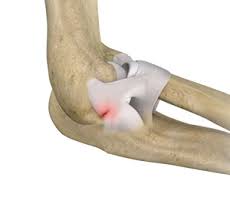
LUCL repair and reconstruction is an operation conducted to stabilise the outside area of the elbow joint by either repairing or reconstructing the damaged LUCL ligament. The LUCL ligament is crucial in stabilising the elbow joint while performing lifting, pushing, rotating and weight-bearing actions. An injury to this ligament leads to instability, pain and inability to perform daily activities. Surgery helps restore ligament functions, stabilisation, alleviate symptoms, and facilitate safe return to work, sports and everyday activities.
Some facts you should know about Lateral Ulnar Collateral Ligament (LUCL) Repair and Reconstruction:
- Stabilisation of the outside elbow joint by repairing/reconstructing the ligament
- Helps in improved elbow joint function while performing specific activities
- Often suggested to people with severe ligament injuries leading to instability
- Early diagnosis and treatment increases the chances of recovery and joint stability
LUCL repair and reconstruction is an operation conducted to stabilise the outside area of the elbow joint by either repairing or reconstructing the damaged LUCL ligament. The LUCL ligament is crucial in stabilising the elbow joint while performing lifting, pushing, rotating and weight-bearing actions. An injury to this ligament leads to instability, pain and inability to perform daily activities. Surgery helps restore ligament functions, stabilisation, alleviate symptoms, and facilitate safe return to work, sports and everyday activities.
Some facts you should know about Lateral Ulnar Collateral Ligament (LUCL) Repair and Reconstruction:
- Stabilisation of the outside elbow joint by repairing/reconstructing the ligament
- Helps in improved elbow joint function while performing specific activities
- Often suggested to people with severe ligament injuries leading to instability
- Early diagnosis and treatment increases the chances of recovery and joint stability
Overview
Weakness
Loss of ligament strength decreases arm strength during performing activities.
Discomfort during Weight-Bearing
Putting body weight through the affected arm may become very painful or difficult.
Loss of Joint Mobility
Because of pain and instability the movement of the elbow joint may be limited.
Difficulty Performing Daily Activities
Difficulties performing activities such as pushing, lifting, and repeating motions.
Surgeons Available for Consultations

Dr. Karnav Panchal
M.B.B.S, M.S. (Orthopedics),
FAOS (South Korea)
Consultant Arthroscopist & Sports Injury Specialist Consultant Joint Replacement Surgeon

Dr. Aniket Gupta
M.B.B.S, M.S. (Orthopedics),
MRCS (Edinburgh)
Training & Qualifications Fellowship in MRCS (UK) Arthroscopy & Arthroplasty (Milan, Italy)
Consultant Physiotherapist

Dr. Aarsh Bhatt
B.P.T,M.P.T (Cardio-Respiratory Disorders) MIAP , HCPC (UK) , DHA (UAE)
Consultant Physiotherapist

Dr. Hetvi Dimothe
BPT , M.P.T (Rehabilitation) MIAP, HCPC (UK) , DHA (UAE)
Consultant Physiotherapist

Causes
What causes LUCL Injury of the Elbow?
An injury to the Lateral Ulnar Collateral Ligament (LUCL) happens when excessive force or trauma occurs to the ligament responsible for maintaining the elbow joint stability on the outside. Such injuries usually develop as a result of elbow dislocation, falls, sports-related accidents, or activities that cause excessive stress on the ligament. Depending on the severity of the injury, the ligament becomes strained, partially or completely torn leading to pain, instability, and loss of function.
Causes
What causes LUCL Injury of the Elbow?
An injury to the Lateral Ulnar Collateral Ligament (LUCL) happens when excessive force or trauma occurs to the ligament responsible for maintaining the elbow joint stability on the outside. Such injuries usually develop as a result of elbow dislocation, falls, sports-related accidents, or activities that cause excessive stress on the ligament. Depending on the severity of the injury, the ligament becomes strained, partially or completely torn leading to pain, instability, and loss of function.
Lateral Ulnar Collateral Ligament (LUCL) Injuries of the Elbow develop as a result of the following reasons:
- Elbow dislocation causing damage to the lateral ligament complex
- Fall on the outstretched hand causing excessive stress on the joint
- Sports injury where there was twisting or direct impact to the joint
- Repeated strain from activities causing excessive strain on the lateral elbow
- Injury to the ligament caused by strain or tear
What other structures can be affected together with Lateral Ulnar Collateral Ligament (LUCL) Injury?
An injury to LUCL ligament may also affect surrounding structures that assist in joint stability and movement. Depending on the severity of the injury, nearby ligaments, tendons, muscles, cartilage and nerves may become injured.
- Lateral collateral ligament complex
- Joint cartilage
- Neighbouring tendons
- Forearm muscles
- Joint capsule
- Nerves near the joint
SYMPTOMS
What are the Symptoms of Lateral Ulnar Collateral Ligament (LUCL) Injury of the Elbow?
Symptoms may depend on the severity of the ligament injury and the degree of instability in the joint. Patients may have symptoms only during stressful activities, while in other cases patients develop chronic instability that affects their daily activities. Early diagnosis allows avoiding further damage to the joint and positive treatment outcomes.

Pain on the Outside of the Elbow
The patient usually experiences pain in the outer part of the elbow and gets worse when performing activities like pushing, lifting, or rotating motions.
Instability of the Elbow Joint
Patient feels that his/her elbow is unstable and tends to "give away" during certain activities.
Joint Clicking/Catching
Some patients may report clicking or abnormal sensation in the elbow while moving it.
Delaying treatment may lead to chronic instability of the joint, episodes of instability, joint damage and reduced upper limb functionality.
Connect with our experts and get the right guidance for your condition.
Weakness
Loss of ligament strength decreases arm strength during performing activities.
Discomfort during Weight-Bearing
Putting body weight through the affected arm may become very painful or difficult.
Loss of Joint Mobility
Because of pain and instability the movement of the elbow joint may be limited.
Difficulty Performing Daily Activities
Difficulties performing activities such as pushing, lifting, and repeating motions.
Connect with our experts and get the right guidance for your condition.
BOOK CONSULTATIONDIAGNOSIS
How do doctors diagnose Lateral Ulnar Collateral Ligament (LUCL) Injury of the Elbow?
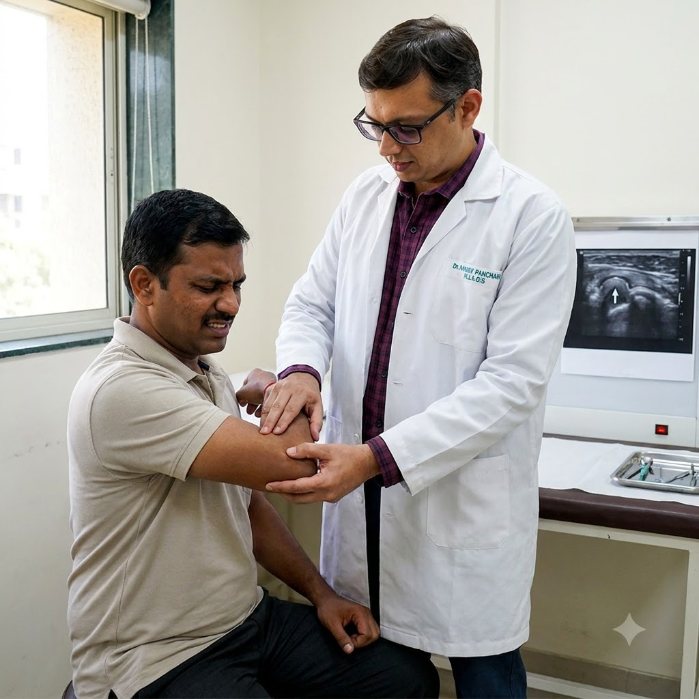
Lateral Ulnar Collateral Ligament (LUCL) injury of the elbow is diagnosed by the physician after analysing the patient's symptoms, the way the injury occurred, and conducting a detailed physical examination. Physicians evaluate joint stability, ligament integrity, range of motion, and instability during performing certain motions. Imaging studies are usually recommended to confirm the diagnosis, evaluate the severity of ligament damage and presence of other injuries. At ALIGN ASIA, a thorough evaluation helps make the proper diagnosis and develop the treatment plan.
DIAGNOSIS
How do doctors diagnose Lateral Ulnar Collateral Ligament (LUCL) Injury of the Elbow?
Lateral Ulnar Collateral Ligament (LUCL) injury of the elbow is diagnosed by the physician after analysing the patient's symptoms, the way the injury occurred, and conducting a detailed physical examination. Physicians evaluate joint stability, ligament integrity, range of motion, and instability during performing certain motions. Imaging studies are usually recommended to confirm the diagnosis, evaluate the severity of ligament damage and presence of other injuries. At ALIGN ASIA, a thorough evaluation helps make the proper diagnosis and develop the treatment plan.
Lateral Ulnar Collateral Ligament (LUCL) Injuries of the Elbow can be diagnosed by the following ways:
- Physical examination to assess joint stability, ligament integrity, joint motion and upper limb function
- Imaging studies to evaluate ligament damage and other injuries
- MRI
- Ultrasound
- X-ray (when bone injury is suspected)
TREATMENT
What is the Treatment for Lateral Ulnar Collateral Ligament (LUCL) Injury of the Elbow?
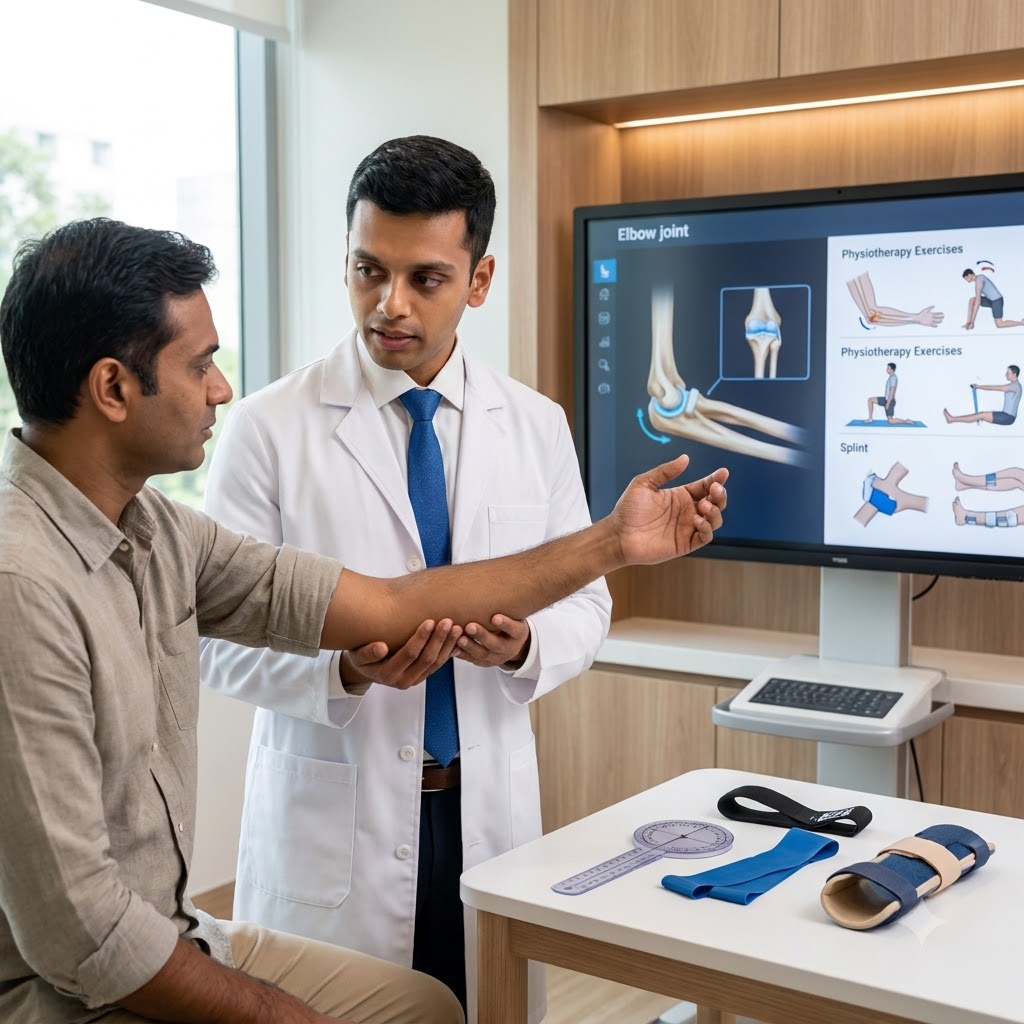
The treatment usually depends on the severity of the ligament injury, degree of joint instability, the activity level of the patient, and functional requirements. Mild or partial injuries may be successfully treated by conservative methods while severe ligament tears require surgical repair or reconstruction. Early treatment helps achieve joint stability and relief of pain and other symptoms.
Pain Management
Provides relief from pain and inflammation during recovery.
Activity Modification
Protection of the ligament while allowing recovery.
Physiotherapy
Improves joint strength, flexibility, and stability.
Ligament Rehabilitation
Assists in ligament recovery and gradual joint restoration.
LUCL Repair or Reconstruction
Recovery of ligament stability and improvement in joint function in case of surgery.
NON-SURGICAL CARE
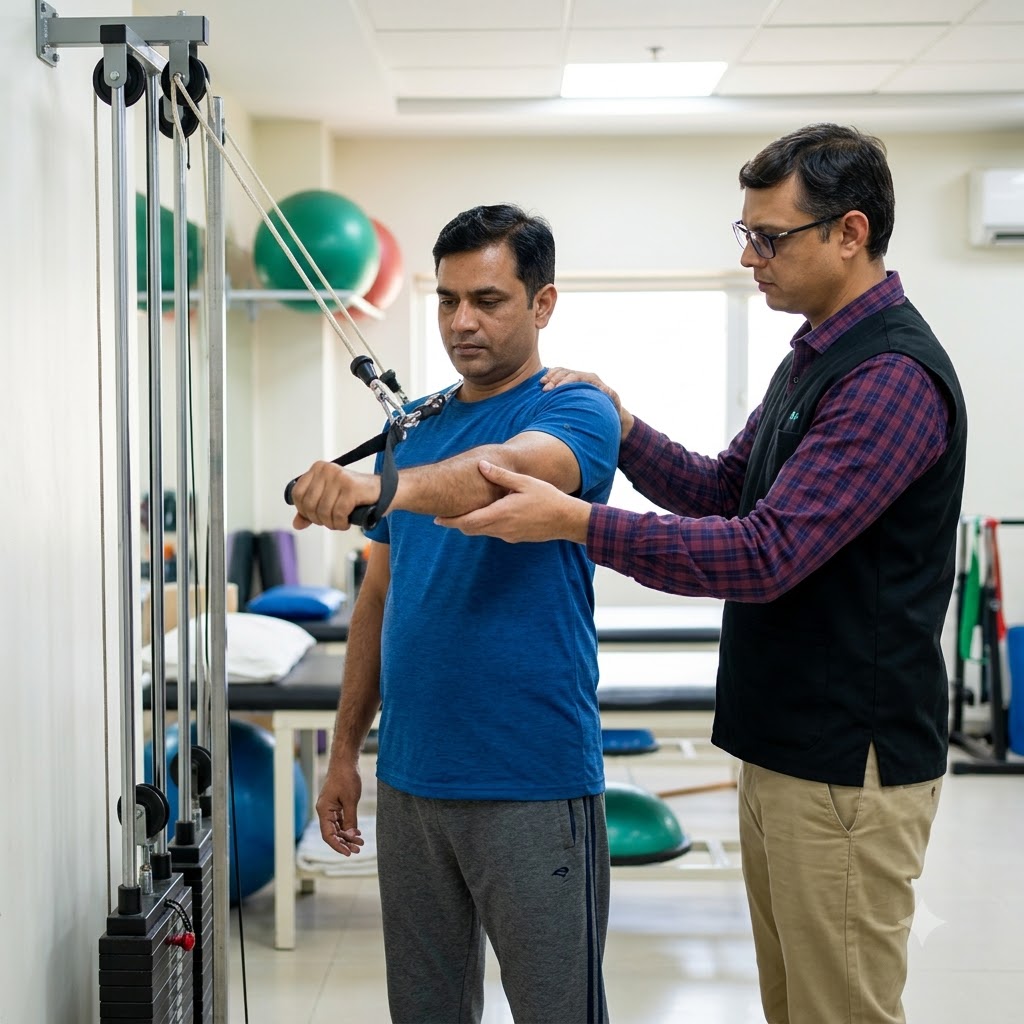
How is Lateral Ulnar Collateral Ligament (LUCL) Injury of the Elbow Treated without Surgery?
Many patients suffering from mild ligament injury or partial tear can be successfully treated without surgery. Conservative management involves pain relief, improving joint stability, strengthening the muscles surrounding the joint, and restoring joint function. A well-designed rehabilitation program allows patients to return to their daily activities and reduces the chance of ligament injury.
NON-SURGICAL CARE
How is Lateral Ulnar Collateral Ligament (LUCL) Injury of the Elbow Treated without Surgery?
Many patients suffering from mild ligament injury or partial tear can be successfully treated without surgery. Conservative management involves pain relief, improving joint stability, strengthening the muscles surrounding the joint, and restoring joint function. A well-designed rehabilitation program allows patients to return to their daily activities and reduces the chance of ligament injury.
Non-surgical treatment options include:
- Physiotherapy programs strengthening the muscles around the joint and improve joint stability.
- Modification of the activity to avoid stressing the ligament during recovery.
- Anti-inflammatory medication helps to reduce pain during rehabilitation.
RISKS OF NO TREATMENT
When is Lateral Ulnar Collateral Ligament (LUCL) Repair or Reconstruction Needed?
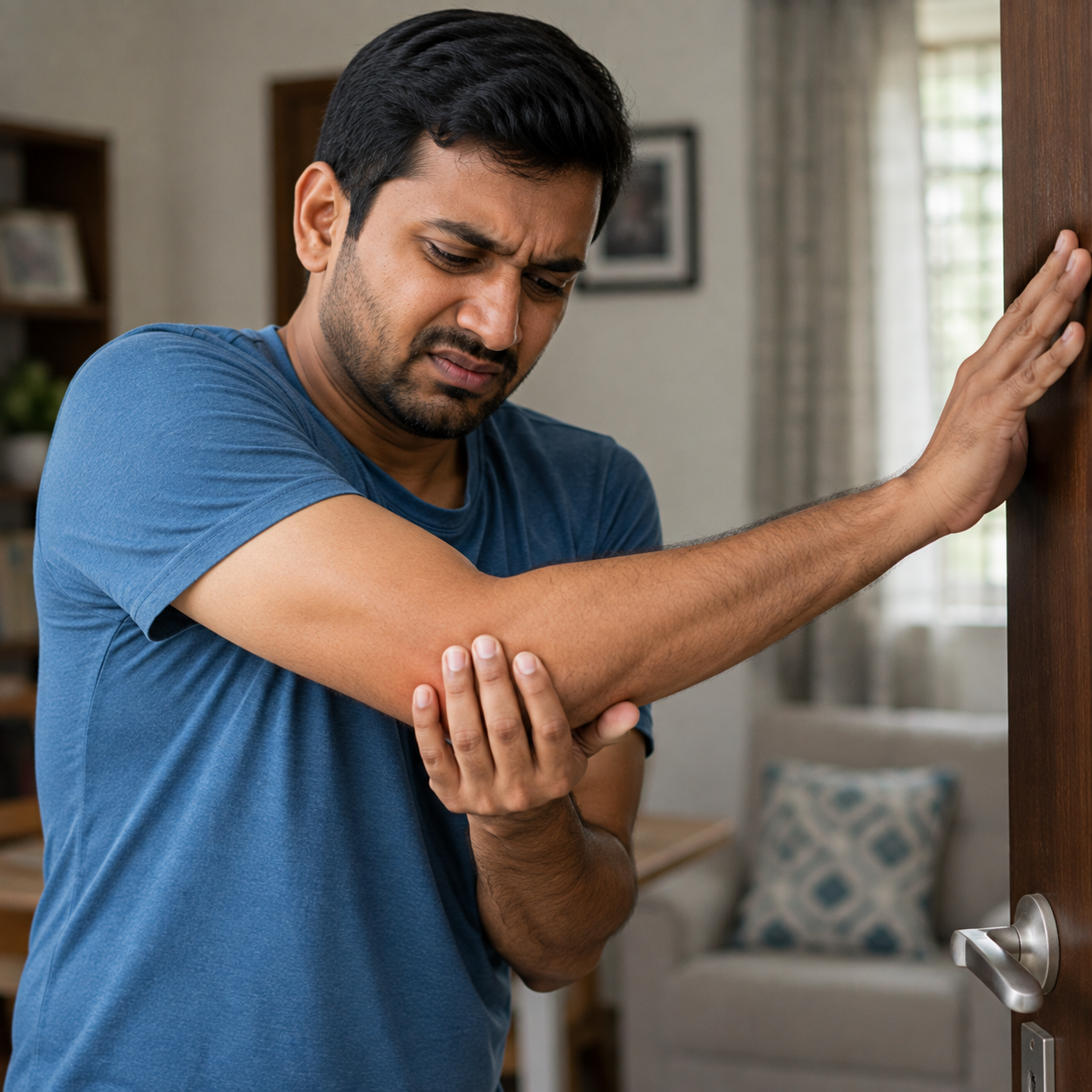
While many ligament injuries are successfully treated by conservative therapy, surgery may be required in cases of joint instability, ligament damage or symptoms persisting despite conservative therapy. Early surgical intervention helps to improve joint stability, restore function and return safely to work, sport and other physical activities.
RISKS OF NO TREATMENT
When is Lateral Ulnar Collateral Ligament (LUCL) Repair or Reconstruction Needed?
While many ligament injuries are successfully treated by conservative therapy, surgery may be required in cases of joint instability, ligament damage or symptoms persisting despite conservative therapy. Early surgical intervention helps to improve joint stability, restore function and return safely to work, sport and other physical activities.
Lateral Ulnar Collateral Ligament (LUCL) Repair or Reconstruction may be required in the following cases:
- Severe or complete ligament tear causing joint instability
- Persistent pain or instability despite conservative treatment
- Recurrent instability during daily activities or sports
- High functional demand for optimal joint stability and strength
Early surgery helps restore ligament function, improve joint stability, and avoid future ligament dysfunction.
SURGERY
What Happens During Lateral Ulnar Collateral Ligament (LUCL) Repair or Reconstruction Surgery?
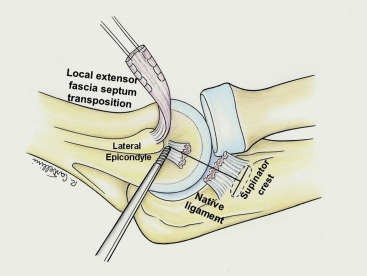
Lateral Ulnar Collateral Ligament (LUCL) Repair or Reconstruction is a surgery performed to stabilise the outside of the elbow joint by repairing the damaged ligament or reconstruction of it in case of a ligament tear with the help of a tendon graft. Surgery is aimed at improving joint stability, restoring its function, relieving pain and assisting in recovery. Nowadays surgical methods focus on preservation of other joint structures and successful ligament recovery. At ALIGN ASIA, every surgical plan is created individually based on the severity of the injury, activity of the patient, and his/her recovery requirements.
Lateral Ulnar Collateral Ligament (LUCL) Repair or Reconstruction surgery is performed using the following steps and techniques:
- An accurately planned incision gives access to the damaged lateral ulnar collateral ligament.
- The damaged ligament is carefully examined to determine which technique – repair or reconstruction – is more suitable for the patient.
- Primary ligament repair
- Tendon graft reconstruction
- Suture anchor fixation
- The ligament is secured to restore joint stability.
- Joint motion, ligament tightness and joint stability are carefully checked before finishing the procedure.
- The incision is closed and a personalised rehabilitation program is started.
SURGERY
What Happens During Lateral Ulnar Collateral Ligament (LUCL) Repair or Reconstruction Surgery?
Lateral Ulnar Collateral Ligament (LUCL) Repair or Reconstruction is a surgery performed to stabilise the outside of the elbow joint by repairing the damaged ligament or reconstruction of it in case of a ligament tear with the help of a tendon graft. Surgery is aimed at improving joint stability, restoring its function, relieving pain and assisting in recovery. Nowadays surgical methods focus on preservation of other joint structures and successful ligament recovery. At ALIGN ASIA, every surgical plan is created individually based on the severity of the injury, activity of the patient, and his/her recovery requirements.
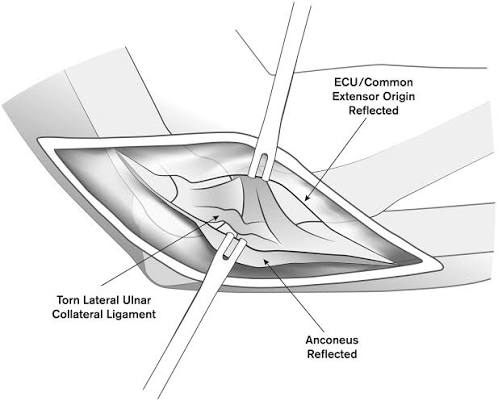
Lateral Ulnar Collateral Ligament (LUCL) Repair or Reconstruction surgery is performed using the following steps and techniques:
- An accurately planned incision gives access to the damaged lateral ulnar collateral ligament.
- The damaged ligament is carefully examined to determine which technique – repair or reconstruction – is more suitable for the patient.
- Primary ligament repair
- Tendon graft reconstruction
- Suture anchor fixation
- The ligament is secured to restore joint stability.
- Joint motion, ligament tightness and joint stability are carefully checked before finishing the procedure.
- The incision is closed and a personalised rehabilitation program is started.
COMPLICATIONS
What are the Possible Complications of Lateral Ulnar Collateral Ligament (LUCL) Injury or Its Treatment?
Although many patients have favourable results after treatment of Lateral Ulnar Collateral Ligament (LUCL) injury, complications may arise in case of untreated injury or during recovery period. Early diagnosis, timely treatment and adherence to rehabilitation programs help to avoid these complications. Regular follow-up visits also allow specialists to monitor recovery, joint stability, and address any concerns, providing the best recovery result.
Persistent Elbow Instability
Incomplete ligament recovery or severe ligament damage may lead to the instability of the joint, making it loose or unstable during joint motion.
Elbow Joint Stiffness
Restriction in elbow joint motion may arise during recovery, especially after prolonged immobilisation or surgery.
Chronic Lateral Elbow Pain
Persistent pain may arise in case of incomplete ligament recovery or persistent instability that causes additional stress on the joint.
Reduced Upper Limb Function
Untreated ligament injury or complications during recovery may negatively influence joint stability and upper limb function.
Connect with our experts and get the right guidance for your condition.
RECOVERY & OUTCOMES
What is the Recovery Process after Lateral Ulnar Collateral Ligament (LUCL) Repair or Reconstruction?
RECOVERY & OUTCOMES
What is the Recovery Process after Lateral Ulnar Collateral Ligament (LUCL) Repair or Reconstruction?
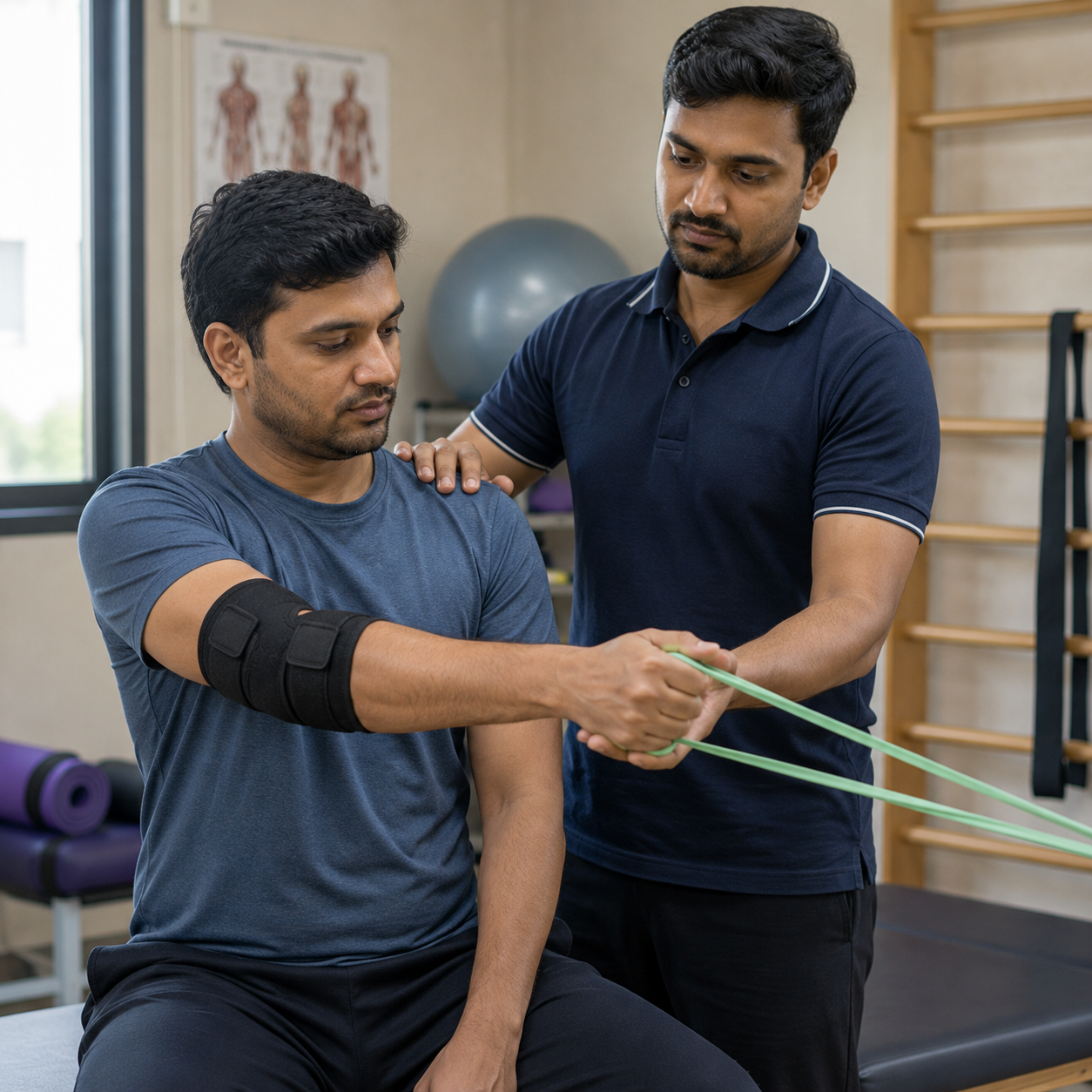
Recovery after Lateral Ulnar Collateral Ligament (LUCL) Repair or Reconstruction is a process focusing on protection of the healed or newly formed ligament and restoration of joint stability, joint motion and strength. Time of recovery depends on the severity of the injury, surgical method used, and individual recovery speed. Proper rehabilitation program helps to safely return to work, sports and activities after the surgery while avoiding recurrent joint instability.
Recovery process after Lateral Ulnar Collateral Ligament (LUCL) Repair or Reconstruction usually consists of the following stages:
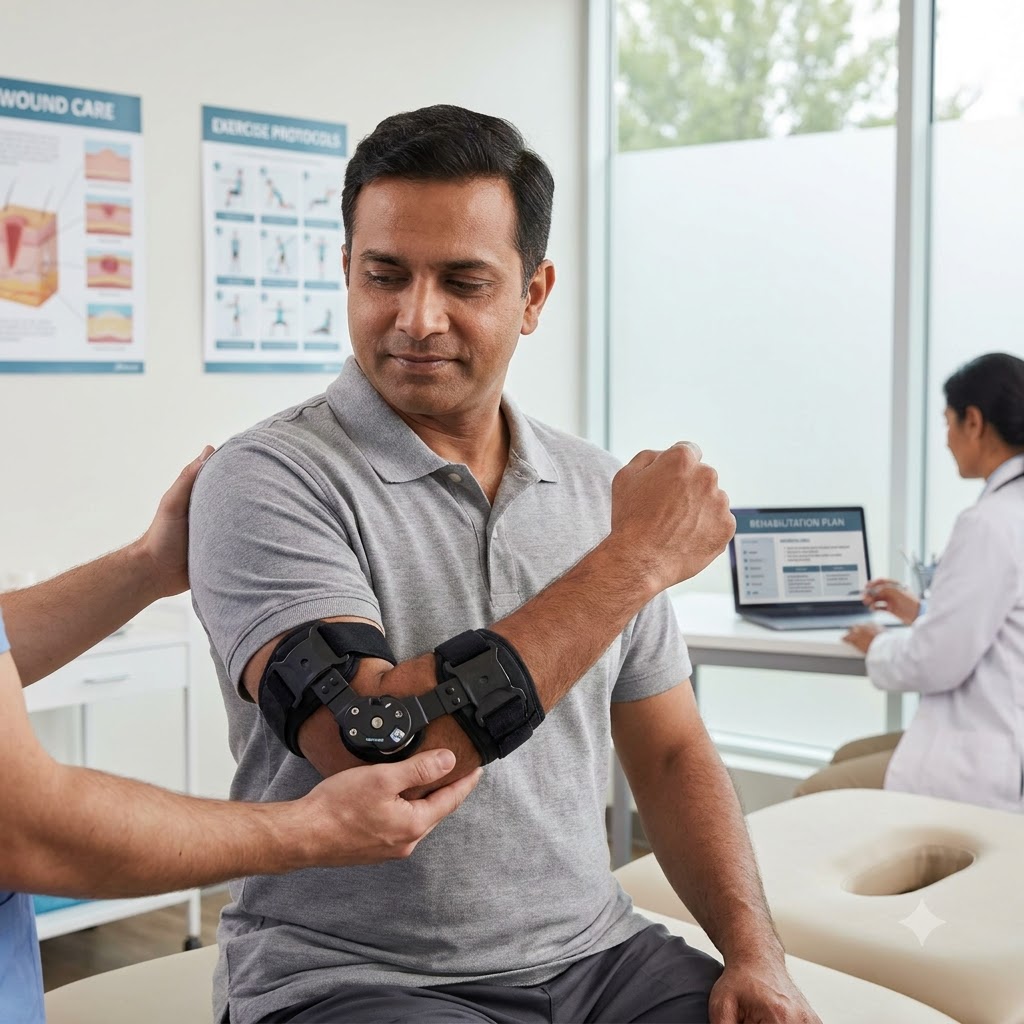
- Proper protection of the ligament by using a brace
- Gentle exercise for restoration of joint motion supervised by a doctor
- Strengthening exercises for the elbow, forearm, shoulder and neighbouring muscles
- Rehabilitation program for improved joint stability, flexibility and upper limb function
- Safe return to work, sports and weight-bearing activities depending on the recovery speed
AFTERCARE
Recovery & Aftercare for Lateral Ulnar Collateral Ligament (LUCL) Repair or Reconstruction
AFTERCARE
Recovery & Aftercare for Lateral Ulnar Collateral Ligament (LUCL) Repair or Reconstruction
Successful recovery requires protection of the healing ligament and adherence to rehabilitation programs. Proper aftercare helps in restoration of joint stability, improved joint strength and minimises the risk of joint recurrent instability. Follow-up visits allow monitoring the recovery process and adjusting the rehabilitation program to the individual needs of a patient.
The following aftercare recommendations are advised for proper recovery:
- Wearing prescribed elbow brace or support device during healing
- Attending physiotherapy sessions regularly to improve joint mobility and stability
- Performing rehabilitation exercises as prescribed by the healthcare professionals
- Gentle increase in activity levels and avoiding pushing, lifting and weight-bearing activities until medical clearance
- Attending follow-up appointments to monitor ligament healing and recovery process
FAQ'S
Do You Have Any Question?
Yes. Partial injuries of LUCL ligament may be treated without surgery using physiotherapy, bracing and activity modification. However, complete ligament tears or instability of the joint usually require surgical repair or reconstruction.
Time of recovery depends on the severity of the ligament injury, performed surgical technique and individual healing. Your surgeon will provide you with the rehabilitation schedule based on your recovery speed.
Returning to sports, work or weight-bearing activities depends on ligament healing, restoration of strength and rehabilitation process. Your surgeon will inform you about safe resuming of these activities.
LUCL Repair or Reconstruction is a common orthopaedic surgery and is considered to be a safe procedure in hands of experienced surgeons with proper rehabilitation program afterwards.
Although re-injury is uncommon, adherence to postoperative instructions, rehabilitation program and gradual resuming of physical activities help avoid future injuries.