ARTHROSCOPY & SPORTS INJURY ASSOCIATES

OVERVIEW
What is Radial Head Replacement?
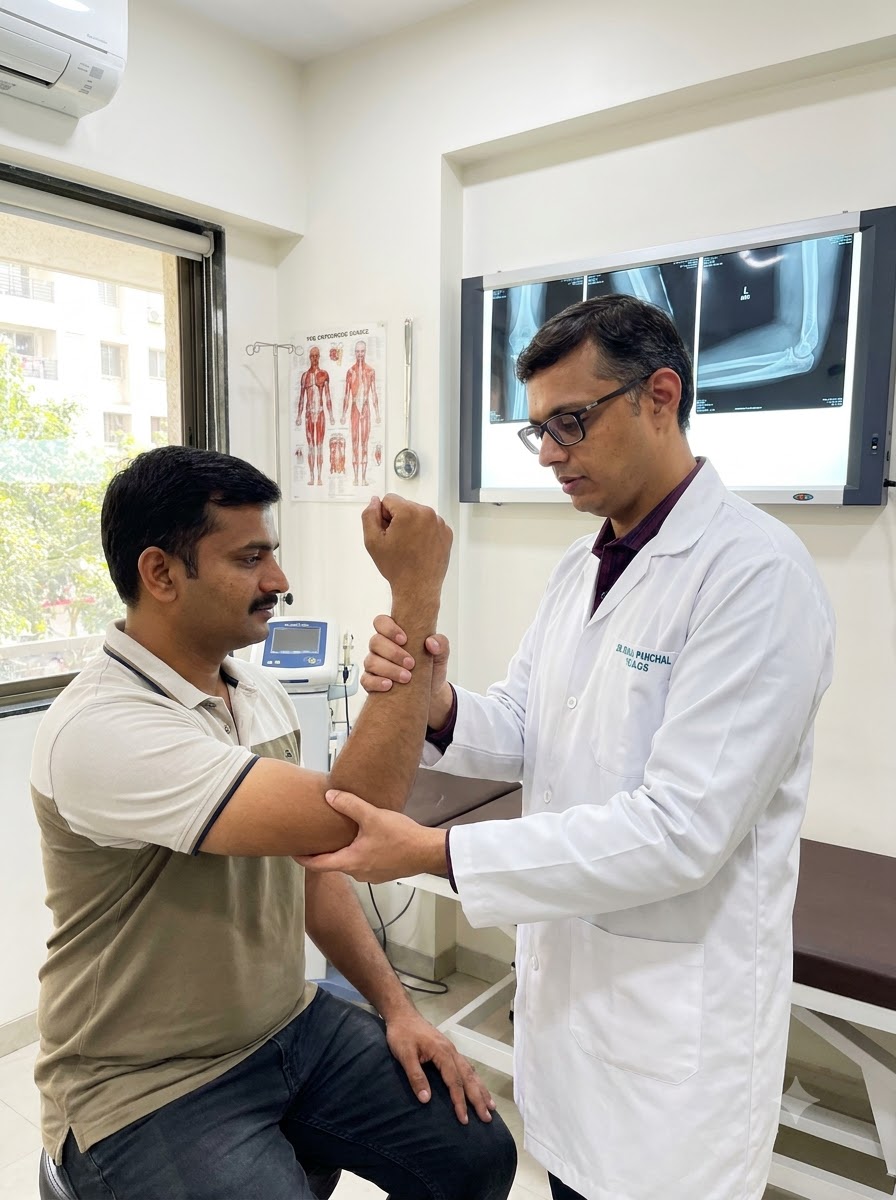
Get relief from constant elbow pain, restore joint movement and elbow function with advanced Radial Head Replacement for elbow joint arthritis and degenerative damage.
What is Radial Head Replacement?
Radial Head Replacement is a surgical procedure during which a damaged radial head is removed and replaced with an artificial joint implant. The radial head is the upper extremity of the radius bone and is an essential element of the elbow joint. It affects elbow joint stability, forearm rotation, and smooth force transmission.
If arthritis and degeneration damage the radial head and articular surfaces, the patient may suffer from constant pain, stiffness, limited movement, and impaired functioning of the arm. If conservative treatment no longer provides adequate results, replacement surgery may be used to relieve pain, restore movement and forearm function.
Here are some important facts about Radial Head Replacement:
- Replaces a damaged radial head with an artificial joint
- Reduces pain caused by degenerative changes
- Restores elbow joint movement and forearm rotation
- Recommended in case of arthritis that significantly impairs function
- Helps restore elbow joint function
Get relief from constant elbow pain, restore joint movement and elbow function with advanced Radial Head Replacement for elbow joint arthritis and degenerative damage.
What is Radial Head Replacement?
Radial Head Replacement is a surgical procedure during which a damaged radial head is removed and replaced with an artificial joint implant. The radial head is the upper extremity of the radius bone and is an essential element of the elbow joint. It affects elbow joint stability, forearm rotation, and smooth force transmission.
If arthritis and degeneration damage the radial head and articular surfaces, the patient may suffer from constant pain, stiffness, limited movement, and impaired functioning of the arm. If conservative treatment no longer provides adequate results, replacement surgery may be used to relieve pain, restore movement and forearm function.
Here are some important facts about Radial Head Replacement:
- Replaces a damaged radial head with an artificial joint
- Reduces pain caused by degenerative changes
- Restores elbow joint movement and forearm rotation
- Recommended in case of arthritis that significantly impairs function
- Helps restore elbow joint function
Surgeons Available for Consultations

Dr. Karnav Panchal
M.B.B.S, M.S. (Orthopedics),
FAOS (South Korea)
Consultant Arthroscopist & Sports Injury Specialist Consultant Joint Replacement Surgeon

Dr. Aniket Gupta
M.B.B.S, M.S. (Orthopedics),
MRCS (Edinburgh)
Training & Qualifications Fellowship in MRCS (UK) Arthroscopy & Arthroplasty (Milan, Italy)
Consultant Physiotherapist

Dr. Aarsh Bhatt
B.P.T,M.P.T (Cardio-Respiratory Disorders) MIAP , HCPC (UK) , DHA (UAE)
Consultant Physiotherapist

Dr. Hetvi Dimothe
BPT , M.P.T (Rehabilitation) MIAP, HCPC (UK) , DHA (UAE)
Consultant Physiotherapist

Causes
What Causes Arthritis and Degenerative Damage to the Elbow Joint?
Development of arthritis in the elbow joint occurs as a result of destruction and progressive loss of articular cartilage covering the joint surface. Such a process can occur due to age-related degeneration, previous elbow injuries, inflammatory processes or mechanical stresses. With the destruction of articular cartilage, the joint surfaces become rough, which leads to additional friction, pain and restriction in joint movements.
Causes
What Causes Arthritis and Degenerative Damage to the Elbow Joint?
Development of arthritis in the elbow joint occurs as a result of destruction and progressive loss of articular cartilage covering the joint surface. Such a process can occur due to age-related degeneration, previous elbow injuries, inflammatory processes or mechanical stresses. With the destruction of articular cartilage, the joint surfaces become rough, which leads to additional friction, pain and restriction in joint movements.
Arthritis and degenerative damage to the radial head may be caused by:
- Degeneration of joint cartilage
- Previous fractures and injuries involving the radial head
- Post-traumatic arthritis caused by previous joint injury
- Rheumatoid arthritis and other joint diseases
- Repeated loads on the joint
- Degenerative changes in the radiocapitellar joint
What Other Structures are Affected by Arthritis Around the Elbow Joint?
Advanced arthritis may affect other joint structures, which causes joint pain, stiffness and dysfunction.
- Radial head
- Joint of the radius head
- Articular cartilage
- Capitellum
- Joint capsule
- Ligaments
- Forearm muscles and tendons
SYMPTOMS
What are the Symptoms of Arthritis Around the Radial Head?
With gradual deterioration of cartilage and joint surfaces, symptoms gradually develop and become more severe. In addition to joint pain and restriction of movement, stiffness and other problems arise that interfere with work, sport and daily activities of the patient.

Elbow Joint Pain
The patient feels pain at the outer part of the elbow joint, which increases with lifting objects, gripping and forearm movement.
Joint Stiffness
The patient experiences difficulty bending and straightening the elbow joint.
Pain During Forearm Rotation
Pain and discomfort during turning the hand up and down.
Connect with our experts and get the right guidance for your condition.
Limited Range of Movement
Restriction of the normal range of movement of the elbow joint and forearm.
Grinding and Clicking
Grinding or clicking sound during joint movement.
Weakness
As a result of pain and reduced range of movement, weakness may develop in the arm and elbow.
Impairment of Daily Activities
Difficulty in lifting and moving objects, opening doors and turning hands. Igoring persistent symptoms may lead to progression of degeneration, chronic stiffness, pain and limitation of elbow joint and forearm function.
Connect with our experts and get the right guidance for your condition.
BOOK CONSULTATIONDIAGNOSIS
How Do Doctors Diagnose Arthritis Around the Radial Head?
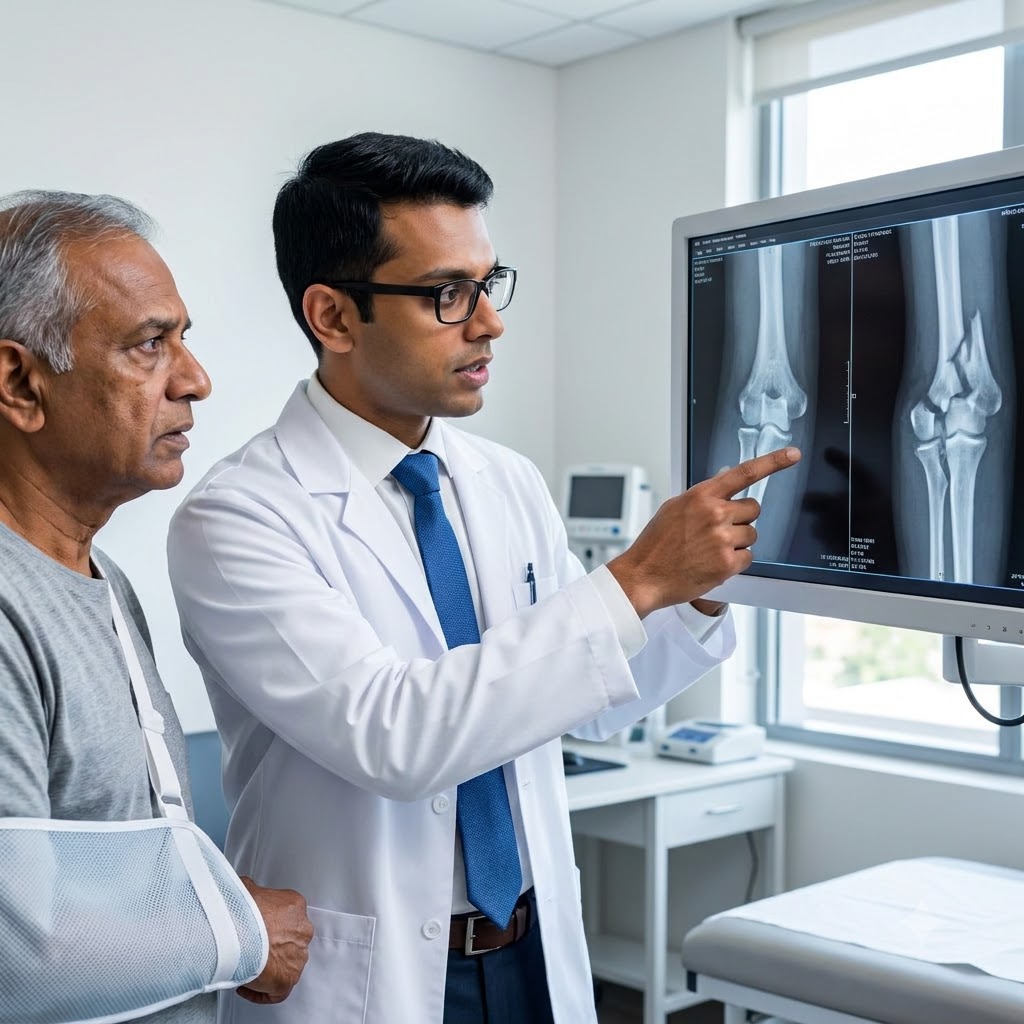
Doctors diagnose arthritis affecting the radial head by conducting a detailed examination of the patient's symptoms, medical history and previous injuries of the elbow joint. The patient's pain, stiffness, range of movement, forearm rotation, stability and arm function are assessed. Additional imaging studies allow to evaluate the degree of cartilage loss, narrowing of the joint space, the condition of the bone and other joint structures. A comprehensive diagnosis at ALIGN ASIA allows to assess the degree of joint damage and the possibility of Radial Head Replacement.
DIAGNOSIS
How Do Doctors Diagnose Arthritis Around the Radial Head?
Doctors diagnose arthritis affecting the radial head by conducting a detailed examination of the patient's symptoms, medical history and previous injuries of the elbow joint. The patient's pain, stiffness, range of movement, forearm rotation, stability and arm function are assessed. Additional imaging studies allow to evaluate the degree of cartilage loss, narrowing of the joint space, the condition of the bone and other joint structures. A comprehensive diagnosis at ALIGN ASIA allows to assess the degree of joint damage and the possibility of Radial Head Replacement.
Arthritis of the radial head may be diagnosed by the following means:
- Physical examination that includes assessment of pain, tenderness, range of movement, forearm rotation, strength and elbow joint function.
- Imaging studies of the joint to evaluate its condition.
- X-rays
- CT
- MRI, if detailed assessment of joint cartilage and other soft tissues is needed.
TREATMENT
What is the Treatment for Arthritis of the Radial Head?
The treatment method depends on the degree of joint damage, cause of arthritis, pain and restriction of movement and impact on daily activities. Many patients can cope with their symptoms with conservative treatment, while severe degenerative changes with persistent pain and restrictions may require surgical treatment.
Pain Management
This is necessary to reduce pain and inflammation, allowing the patient to perform daily tasks.
Activity Restriction
Restricting the activities that involve significant mechanical stress on the elbow joint.
Physical Therapy
It helps maintain joint mobility and strength.
Joint Rehabilitation
Such program helps in rehabilitation.
Surgical Treatment
Surgery should be considered when advanced joint damage continues to cause significant symptoms in spite of non-surgical treatment. Radial Head Replacement is one of the surgical methods.
NON-SURGICAL CARE
How is Radial Head Arthritis Treated without Surgery?
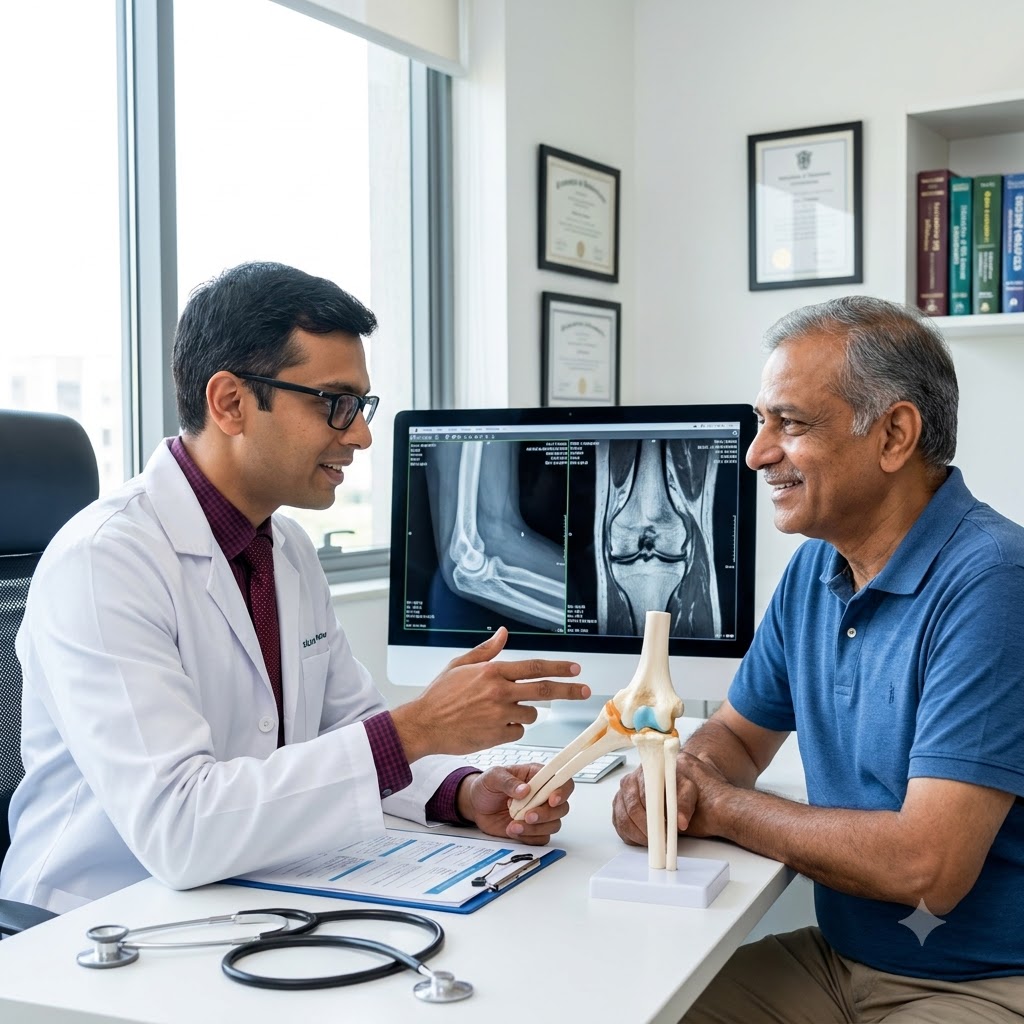
Non-surgical treatment is often effective in alleviating the symptoms of arthritis. In this case, the main objective is to alleviate pain, preserve joint mobility, increase strength, and reduce load on the joint.
NON-SURGICAL CARE
How is Radial Head Arthritis Treated without Surgery?
Non-surgical treatment is often effective in alleviating the symptoms of arthritis. In this case, the main objective is to alleviate pain, preserve joint mobility, increase strength, and reduce load on the joint.
Methods of non-surgical treatment include:
- Physical therapy programs that help improve elbow joint and forearm rotation.
- Activity restrictions reduce the mechanical stress on the joint.
- Analgesics and anti-inflammatory drugs to alleviate pain and reduce inflammation.
- Exercises of stretching and strengthening to maintain joint mobility and muscle strength.
- In some cases, injections can be considered to reduce persistent symptoms.
RISKS OF NO TREATMENT
When is Radial Head Replacement Required?
Radial Head Replacement is indicated in the presence of persistent pain and significant functional limitations caused by severe arthritis of the elbow joint that have not been alleviated by non-surgical treatment. This is influenced by the degree of joint damage, symptoms, range of movement and individual needs of the patient.
RISKS OF NO TREATMENT
When is Radial Head Replacement Required?
Radial Head Replacement is indicated in the presence of persistent pain and significant functional limitations caused by severe arthritis of the elbow joint that have not been alleviated by non-surgical treatment. This is influenced by the degree of joint damage, symptoms, range of movement and individual needs of the patient.
The indications for Radial Head Replacement include:
- Persistent pain that continues despite appropriate non-surgical treatment
- Advanced degenerative changes of the radial head or radiocapitellar joint
- Significant stiffness or loss of joint movement
- Persistent difficulties in performing everyday activities as a result of degenerative changes
- Degeneration after previous joint injury or inflammatory arthritis
The aim of this surgery is to reduce pain, restore joint movement and preserve function of the elbow joint and the whole upper limb.
SURGERY
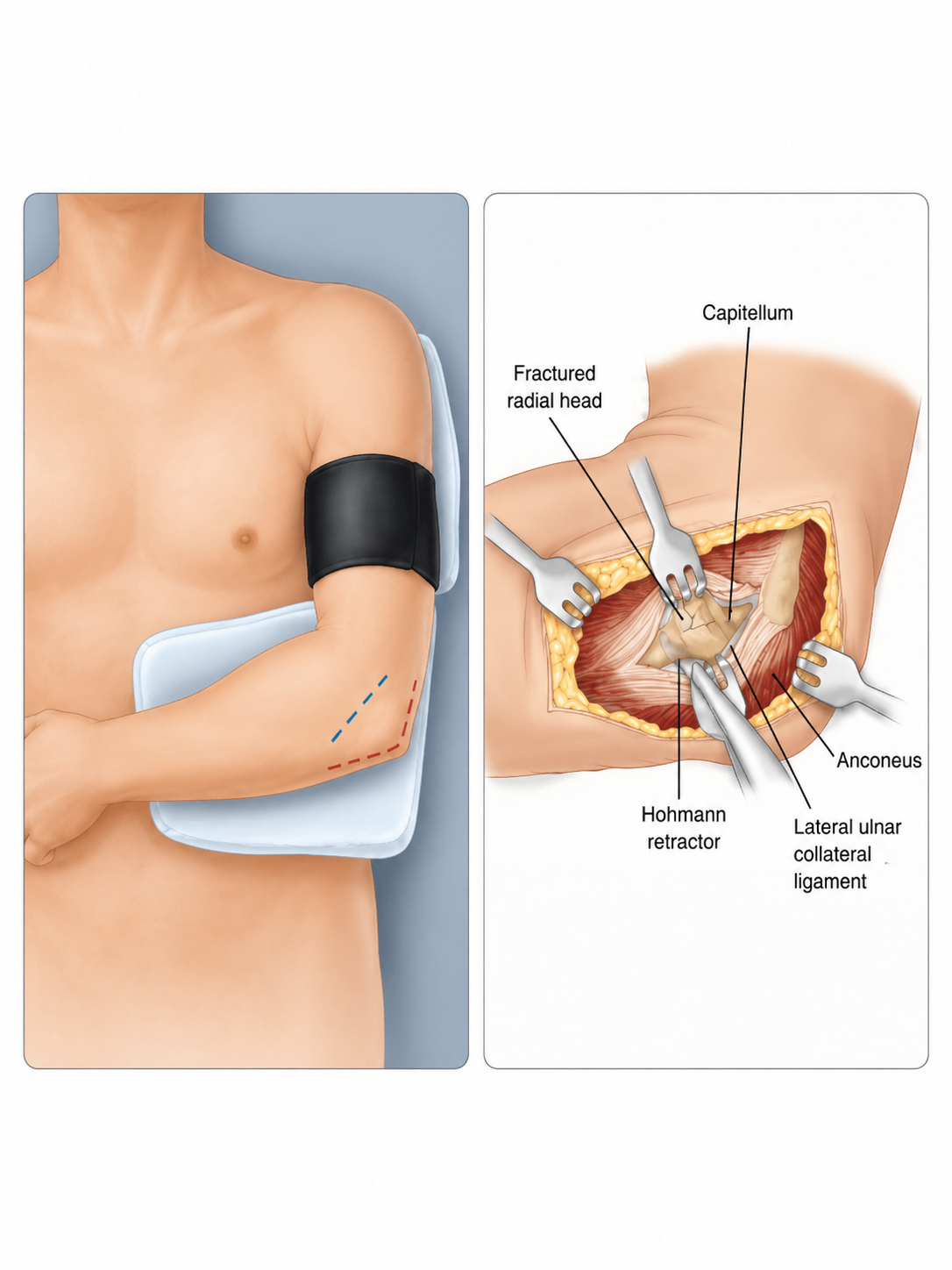
What Happens During Radial Head Replacement Surgery?
Radial Head Replacement is a surgical procedure during which the damaged joint head is removed and replaced with an artificial joint. The procedure is performed with the aim of restoring the geometry and joint function while maintaining joint movement and forearm rotation. The appropriate implant is selected depending on the anatomical features of the patient and the degree of joint damage. At ALIGN ASIA, each procedure is individualized taking into account the underlying condition, joint damage, needs of the patient and his recovery goals.
During Radial Head Replacement surgery the following operations are performed:
- The doctor makes the skin incision on the lateral side of the elbow to gain access to the damaged joint head.
- The damaged joint head is removed carefully while preserving adjacent structures.
- The preparation of the bone for receiving the new joint head implant.
- Placement of the appropriately sized implant for restoration of the joint relationships.
- Checking the function of the elbow and forearm before the closure of the wound.
SURGERY
What Happens During Radial Head Replacement Surgery?
Radial Head Replacement is a surgical procedure during which the damaged joint head is removed and replaced with an artificial joint. The procedure is performed with the aim of restoring the geometry and joint function while maintaining joint movement and forearm rotation. The appropriate implant is selected depending on the anatomical features of the patient and the degree of joint damage. At ALIGN ASIA, each procedure is individualized taking into account the underlying condition, joint damage, needs of the patient and his recovery goals.
During Radial Head Replacement surgery the following operations are performed:
- The doctor makes the skin incision on the lateral side of the elbow to gain access to the damaged joint head.
- The damaged joint head is removed carefully while preserving adjacent structures.
- The preparation of the bone for receiving the new joint head implant.
- Placement of the appropriately sized implant for restoration of the joint relationships.
- Checking the function of the elbow and forearm before the closure of the wound.
COMPLICATIONS
What are the Possible Complications of Radial Head Arthritis or Its Treatment?
Despite the fact that many patients recover well with proper treatment, there may be complications related to the degree of joint damage and treatment process. Correct diagnosis, appropriate treatment and adherence to postoperative and rehabilitation recommendations reduce these risks. Follow-up consultations allow specialists to monitor the condition of the joint and the recovery process.
Persistent Elbow Joint Pain
This may be observed if the arthritis or other joint diseases are not eliminated.
Joint Stiffness
Restricted elbow joint movement may be observed as a result of severe arthritis or surgery, especially if rehabilitation is delayed and movement of the joint is not gradually restored.
Limitation of Forearm Rotation
The presence of degenerative changes in the joint area may limit the ability of the joint to rotate the hand.
Complications Related to Implant
After the implantation of the prosthesis during the Radial Head Replacement, implant loosening, wear, instability or infection may be observed in some patients.
Connect with our experts and get the right guidance for your condition.
RECOVERY & OUTCOMES
What is the Recovery after Radial Head Replacement?

RECOVERY & OUTCOMES
What is the Recovery after Radial Head Replacement?
Recovery after Radial Head Replacement is a gradual process aimed at protection of the healing joint, recovery of movement, strength and forearm rotation. The recovery period depends on the degree of joint damage, surgery and individual recovery characteristics. Rehabilitation program helps to gradually return to daily activities while ensuring long-term joint function.
Steps in recovery after Radial Head Replacement:
- Protection of the joint in the first stage with the use of a brace or a sling.
- Gradual joint movements are restored under the supervision of the specialist.
- Gradual restoration of forearm rotation and joint movement.
- Strengthening of the muscles of the elbow joint and forearm.
- Therapy to restore the mobility, strength and functional movements of the elbow joint.
- Gradual return to daily activities and work depending on the healing process and recommendations of doctors.
AFTERCARE
Postoperative Care after Radial Head Replacement
AFTERCARE
Postoperative Care after Radial Head Replacement
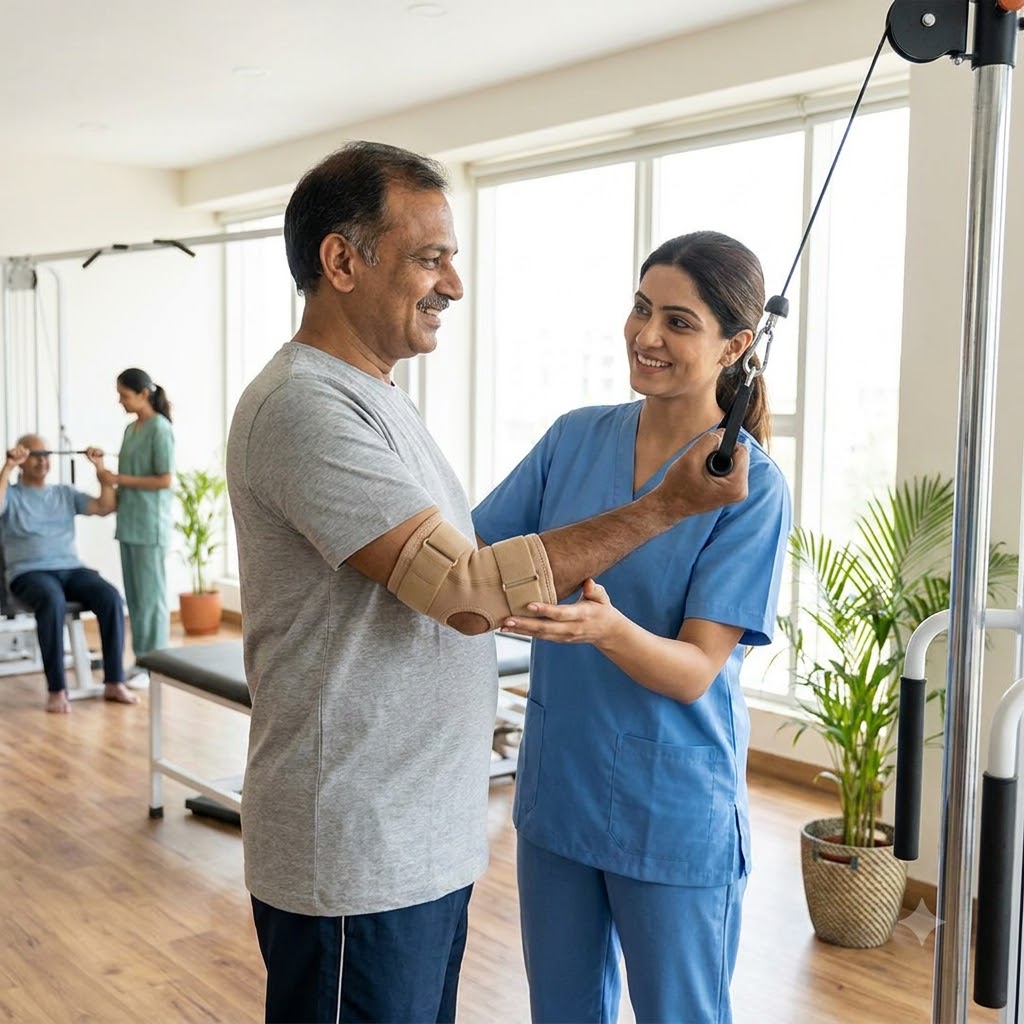
Proper postoperative care is necessary for successful recovery and restoration of elbow joint function. Proper postoperative care helps to restore joint movement, improve the forearm rotation, eliminate pain and ensure long-term function of the implant. Regular follow-up consultations allow to monitor the condition of the joint and the implant.
The following recommendations are needed for successful recovery:
- Use of the prescribed sling or brace during the recovery period.
- Regular attendance at physiotherapy consultations to improve joint mobility, rotation and function of the elbow joint.
- Performance of the prescribed exercises while observing the limitations of movement and activities.
- Avoidance of lifting weights, high impact activities and overload of the joint until the clearance from the doctor.
- Gradual return to work and everyday activities based on the recovery.
FAQ'S
Do you have any questions?
Radial Head Replacement is recommended in case of persistent pain and severe limitations in functionality of the joint caused by degenerative damage to the radial head despite non-surgical treatment.
The duration of recovery after Radial Head Replacement depends on the degree of joint damage, surgical intervention and individual characteristics. The doctor provides personalized rehabilitation program and the expected recovery period.
It depends on the individual recovery process and type of activities. The doctor will inform you about returning to work and other activities.
Weight lifting and other high impact activities may overload the joint and lead to implant loosening or other complications. The doctor gives recommendations regarding long-term activities for you.
The procedure is designed to maintain or improve the functionality of the joint when there is a significant damage of the radial head. The effectiveness of the procedure depends on the condition of the joint and the rehabilitation.
The life of a prosthesis may vary in different patients and depend on the type of the implant, the level of activities, underlying condition and joint health. The regular checkups will help to monitor the condition of the implant and joint.
Radial Head Replacement is an advanced procedure that can relieve pain and restore joint function of the joint in properly selected patients. There is a risk of possible complications and the doctor informs about expected results.