
ARTHROSCOPY & SPORTS INJURY ASSOCIATES

OVERVIEW
Reverse Bankart Repair Overview
Reverse Bankart Repair is a surgical procedure performed in case of a Reverse Bankart lesion – tear of the labrum occurring at the back bottom area of the shoulder socket (posterior-inferior glenoid). The injury typically occurs as a result of posterior shoulder dislocation or recurrent posterior shoulder instability. During the procedure the torn posterior labrum is reattached to the shoulder socket using special suture anchors, thereby ensuring shoulder stability and reducing the risk of recurrent posterior shoulder instability. Timely surgical intervention helps to avoid further shoulder damage and ensure safe return to work and sports.
The following information is essential for a better understanding of Reverse Bankart Repair:
- Repair of a torn posterior shoulder labrum as a result of a Reverse Bankart lesion
- Restoration of shoulder stability
- Commonly used for recurrent posterior shoulder instability
- Reduces the risk of future dislocations and improves shoulder function
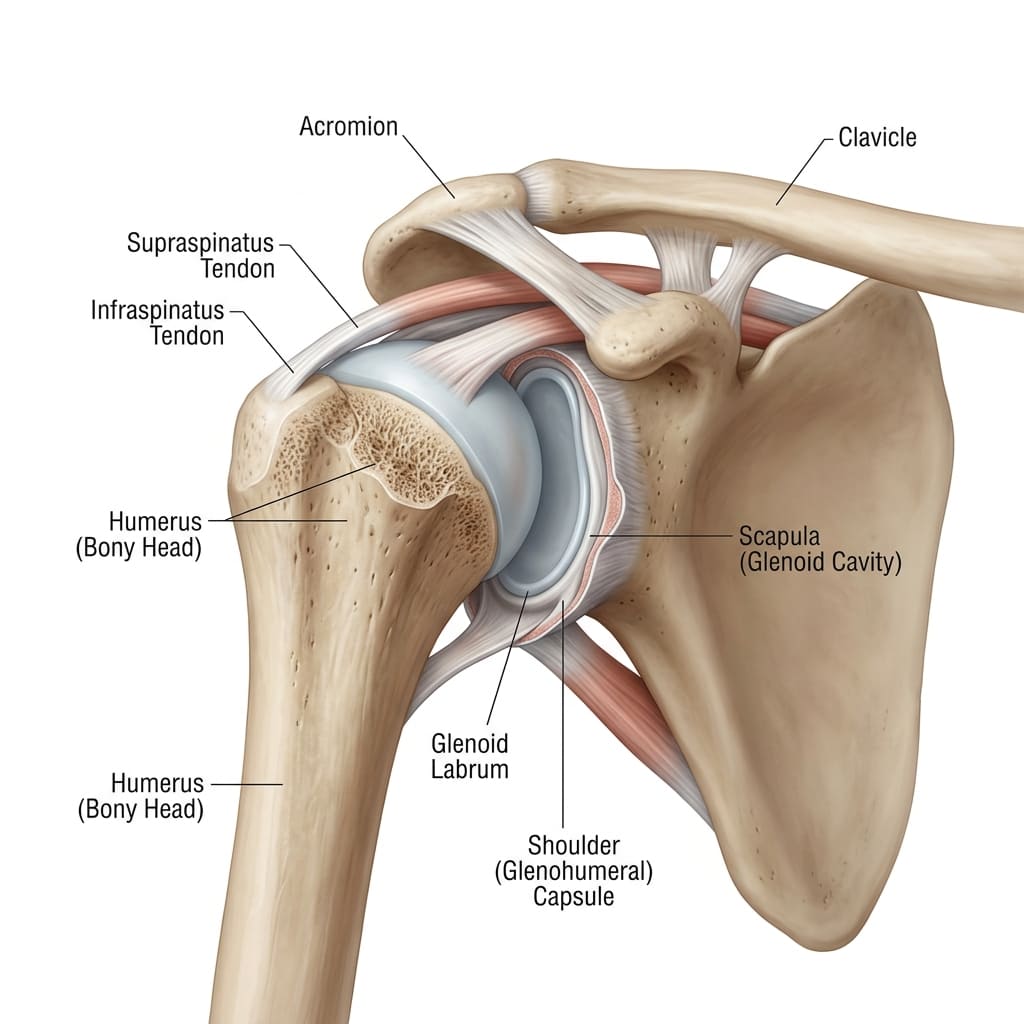
Reverse Bankart Repair is a surgical procedure performed in case of a Reverse Bankart lesion – tear of the labrum occurring at the back bottom area of the shoulder socket (posterior-inferior glenoid). The injury typically occurs as a result of posterior shoulder dislocation or recurrent posterior shoulder instability. During the procedure the torn posterior labrum is reattached to the shoulder socket using special suture anchors, thereby ensuring shoulder stability and reducing the risk of recurrent posterior shoulder instability. Timely surgical intervention helps to avoid further shoulder damage and ensure safe return to work and sports.
The following information is essential for a better understanding of Reverse Bankart Repair:
- Repair of a torn posterior shoulder labrum as a result of a Reverse Bankart lesion
- Restoration of shoulder stability
- Commonly used for recurrent posterior shoulder instability
- Reduces the risk of future dislocations and improves shoulder function
Surgeons Available for Consultations

Dr. Karnav Panchal
M.B.B.S, M.S. (Orthopedics),
FAOS (South Korea)
Consultant Arthroscopist & Sports Injury Specialist Consultant Joint Replacement Surgeon

Dr. Aniket Gupta
M.B.B.S, M.S. (Orthopedics),
MRCS (Edinburgh)
Training & Qualifications Fellowship in MRCS (UK) Arthroscopy & Arthroplasty (Milan, Italy)
Consultant Physiotherapist

Dr. Aarsh Bhatt
B.P.T,M.P.T (Cardio-Respiratory Disorders) MIAP , HCPC (UK) , DHA (UAE)
Consultant Physiotherapist

Dr. Hetvi Dimothe
BPT , M.P.T (Rehabilitation) MIAP, HCPC (UK) , DHA (UAE)
Consultant Physiotherapist

Causes
What Are the Causes of a Reverse Bankart Lesion?
In most cases, the Reverse Bankart lesion occurs as a result of shoulder dislocation to the back leading to the tear of the posterior labrum from the shoulder socket edge. Even though less common than anterior shoulder instability, the posterior shoulder instability may occur due to trauma, repetitive shoulder load or sports injury. If left untreated, the torn labrum causes persistent instability, pain and decreased shoulder function.
Causes
What Are the Causes of a Reverse Bankart Lesion?
In most cases, the Reverse Bankart lesion occurs as a result of shoulder dislocation to the back leading to the tear of the posterior labrum from the shoulder socket edge. Even though less common than anterior shoulder instability, the posterior shoulder instability may occur due to trauma, repetitive shoulder load or sports injury. If left untreated, the torn labrum causes persistent instability, pain and decreased shoulder function.
The following factors may cause a Reverse Bankart lesion:
- Posterior shoulder dislocation
- Traumatic shoulder injury
- Fall on an outstretched arm
- Repetitive shoulder loading during contact or overhead sports
- Recurrent posterior shoulder instability resulting in labral tear
What Other Structures May Also Be Damaged Along with a Reverse Bankart Lesion?
Apart from the shoulder labrum, a Reverse Bankart lesion may be associated with an injury to other shoulder structures responsible for maintaining stability of the joint and normal shoulder movement. These injuries may influence the choice of treatment as well as the course of the rehabilitation process.
- Posterior glenoid labrum
- Shoulder capsule
- Glenohumeral ligaments
- Rotator cuff tendons
- Glenoid cartilage
- Humeral head
SYMPTOMS
What Are the Symptoms of a Reverse Bankart Lesion?
The symptoms depend on the severity of the labral tear and posterior shoulder instability. While some patients experience symptoms during specific shoulder movements only, others may have persistent instability while performing everyday activities or playing sports. Timely identification of symptoms allows for prevention of recurrent shoulder instability and further damage to the shoulder joint.

Posterior Shoulder Pain
The pain may be experienced at the back of the shoulder during pushing or overhead movements.
Shoulder Instability
The patient experiences a feeling of shoulder looseness, slipping backwards or instability during movements.
Recurrent Posterior Shoulder Subluxation or Dislocation
After the primary shoulder injury the shoulder may repeatedly partially or completely dislocate.
If neglected, the above mentioned symptoms may cause recurrent posterior shoulder instability, progressive labral damage, joint cartilage wear, chronic pain and poor shoulder function.
Connect with our experts and get the right guidance for your condition.
Clicking or Catching Feeling
The patient may notice the clicking or catching sensation in the shoulder during movements.
Limited Range of Motion
As a result of pain and instability, the shoulder movement is limited, in particular, during pushing or internal rotation of the shoulder.
Shoulder Weakness
Weakness of the shoulder may negatively affect lifting, pushing, throwing and sporting activities.
Difficulty With Everyday Tasks
Activities such as opening doors, lifting objects, exercising or playing sports may become painful or difficult.
Connect with our experts and get the right guidance for your condition.
BOOK CONSULTATIONDIAGNOSIS
How Do Doctors Diagnose a Reverse Bankart Lesion?
In order to diagnose a Reverse Bankart lesion, doctors need to review patients' symptoms, understand how the injury occurred and perform a thorough physical examination of the shoulder. In addition, imaging studies are usually recommended to confirm the presence of a Reverse Bankart lesion and detect any associated bone or soft tissues injuries. At ALIGN ASIA a complete diagnostic assessment allows for the proper diagnosis as well as for developing a personalised treatment plan.
DIAGNOSIS
How Do Doctors Diagnose a Reverse Bankart Lesion?
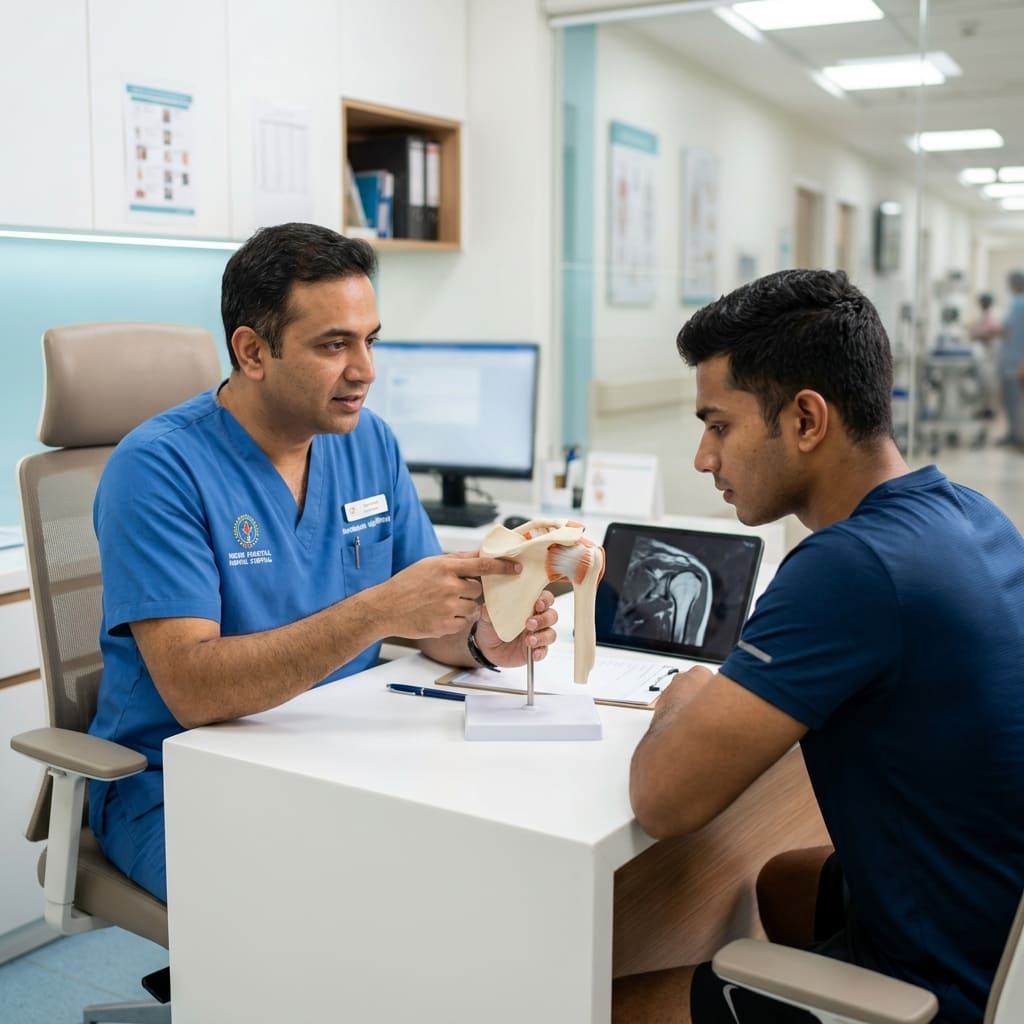
In order to diagnose a Reverse Bankart lesion, doctors need to review patients' symptoms, understand how the injury occurred and perform a thorough physical examination of the shoulder. In addition, imaging studies are usually recommended to confirm the presence of a Reverse Bankart lesion and detect any associated bone or soft tissues injuries. At ALIGN ASIA a complete diagnostic assessment allows for the proper diagnosis as well as for developing a personalised treatment plan.
The following procedures may be used to diagnose a Reverse Bankart Lesion:
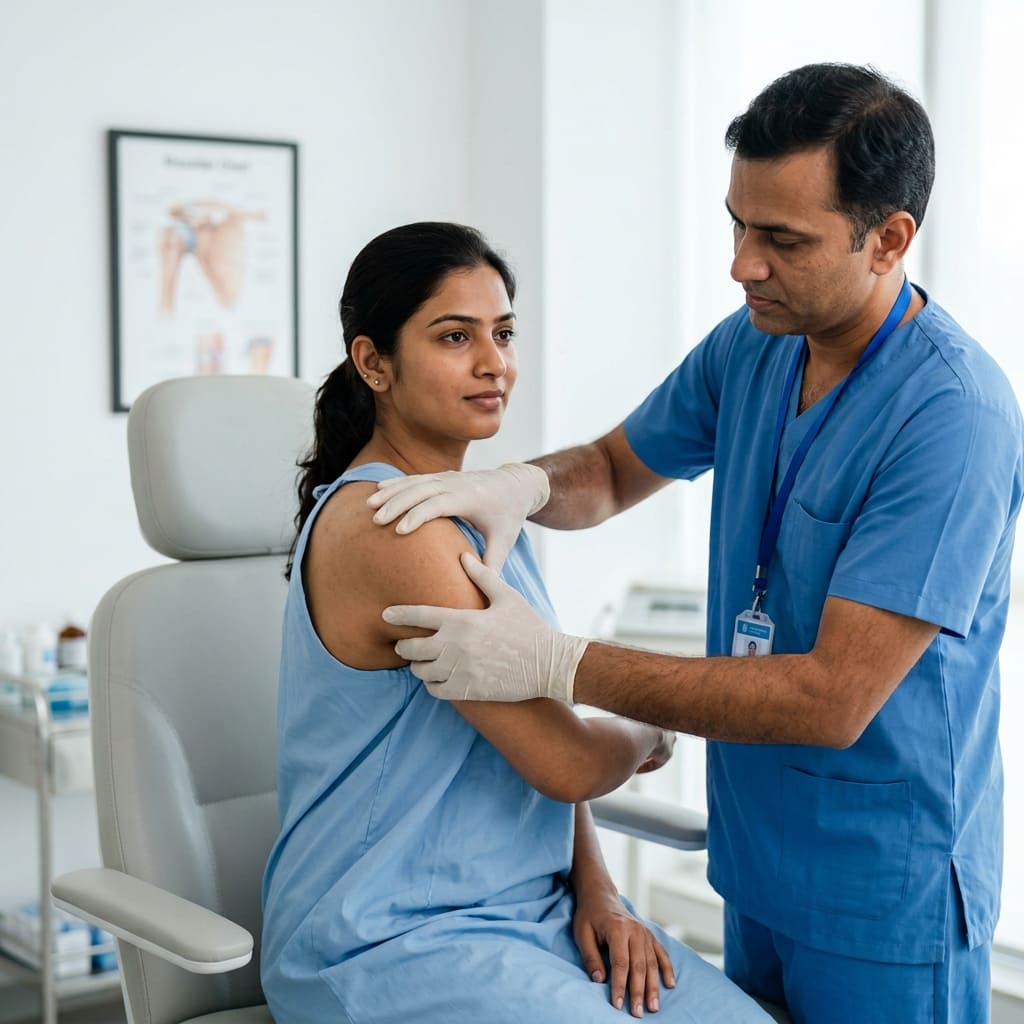
- Physical examination that includes checking shoulder stability, range of motion, muscle strength and signs of posterior instability
- Imaging studies assessing posterior labrum and associated shoulder injuries
- MRI or MR Arthrogram
- X-ray
- CT scan (in case the assessment of bone loss or associated fractures is needed)
TREATMENT
What Is the Treatment of a Reverse Bankart Lesion?
Treatment depends on the severity of the labral tear, degree of the posterior shoulder instability, age and activity level of the patient. While some patients with mild posterior shoulder instability may be successfully treated without surgery, more severe injuries require a surgical intervention. Timely treatment allows for stabilising the shoulder, relief of pain and prevention of shoulder joint damage.
Pain Management
It helps to relieve pain and inflammation as a result of the injury and allows for participating in the rehabilitation programme.
Activity Modification
By avoiding activities that put extra strain on the shoulder, the patient protects the damaged labrum during the recovery period.
Physiotherapy
It strengthens the shoulder muscles, increases shoulder stability and improves shoulder movements.
Shoulder Rehabilitation
It allows for improvement of flexibility, strength, control and shoulder function.
Reverse Bankart Repair
This procedure allows for repairing the torn posterior labrum and improves shoulder stability.
NON-SURGICAL CARE
What Is the Treatment for a Reverse Bankart Lesion Without Surgery?
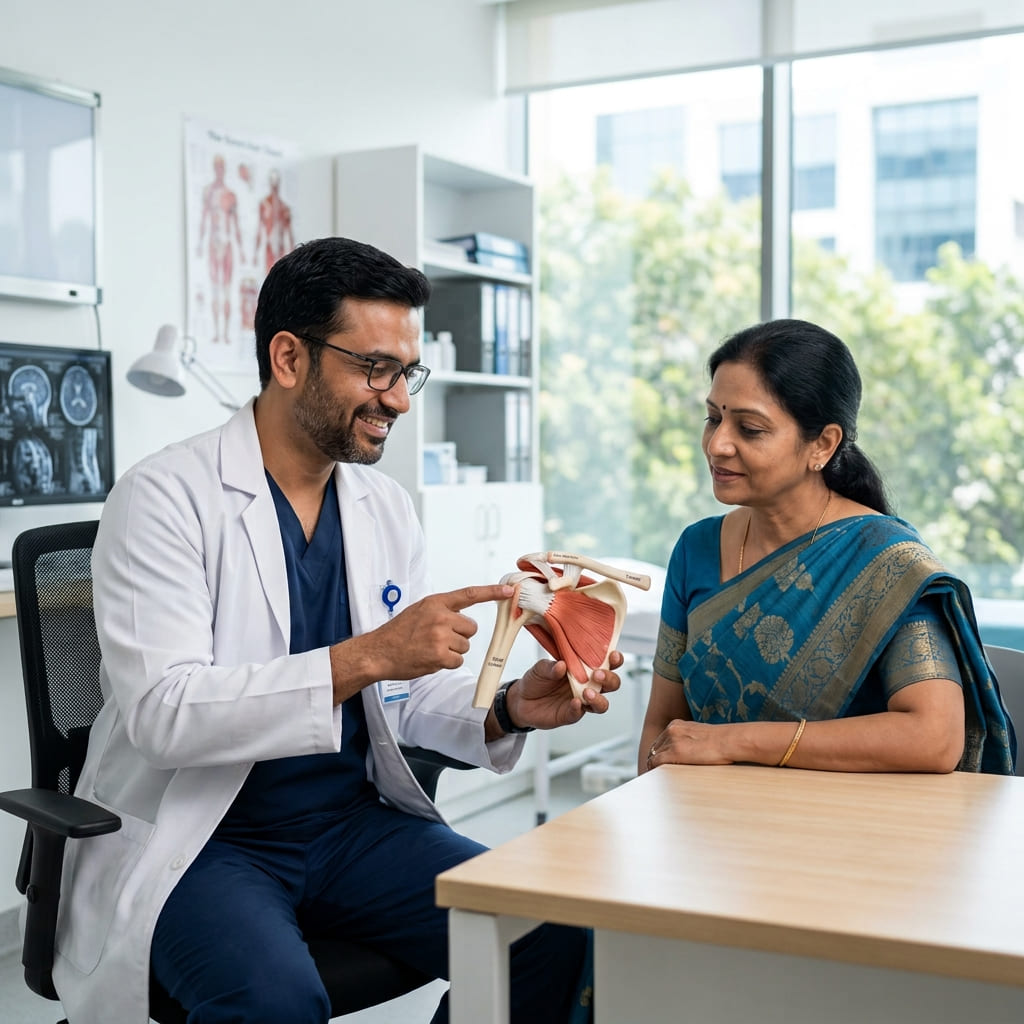
There are patients suffering from mild shoulder posterior instability or from primary shoulder instability who may be successfully treated without surgery. The treatment is aimed at alleviation of pain, restoration of shoulder mobility, strengthening the stabilising muscles of the shoulder joint and prevention of recurrent shoulder instability. The important role in the shoulder treatment is played by rehabilitation.
NON-SURGICAL CARE
What Is the Treatment for a Reverse Bankart Lesion Without Surgery?
There are patients suffering from mild shoulder posterior instability or from primary shoulder instability who may be successfully treated without surgery. The treatment is aimed at alleviation of pain, restoration of shoulder mobility, strengthening the stabilising muscles of the shoulder joint and prevention of recurrent shoulder instability. The important role in the shoulder treatment is played by rehabilitation.
The following non-surgical treatment options are available:
- Physiotherapy helps in strengthening of the rotator cuff and shoulder stabilising muscles.
- Activity modification helps in decreasing shoulder stress.
- Pain-relief and anti-inflammatory drugs may be used to alleviate pain.
- Rehabilitation exercises improve shoulder flexibility, strength and function.
RISKS OF NO TREATMENT
When Is the Reverse Bankart Repair Required?
Even though some Reverse Bankart lesions may be managed without surgery, the surgery may become necessary in case of persistent shoulder posterior instability or the high risk of recurrent shoulder dislocations. The purpose of the Reverse Bankart Repair is to repair the injured posterior labrum and restore shoulder stability. This allows for restoring the normal shoulder function and preventing recurrent instability. At ALIGN ASIA, each treatment plan is individual and takes into account the severity of the injury and functional needs of the patient.

RISKS OF NO TREATMENT
When Is the Reverse Bankart Repair Required?
Even though some Reverse Bankart lesions may be managed without surgery, the surgery may become necessary in case of persistent shoulder posterior instability or the high risk of recurrent shoulder dislocations. The purpose of the Reverse Bankart Repair is to repair the injured posterior labrum and restore shoulder stability. This allows for restoring the normal shoulder function and preventing recurrent instability. At ALIGN ASIA, each treatment plan is individual and takes into account the severity of the injury and functional needs of the patient.
The Reverse Bankart Repair surgery may be recommended in the following cases:
- Recurrent posterior shoulder dislocation or persistent shoulder instability
- Severe Reverse Bankart lesion causing shoulder dysfunction
- High demand athletes or physically active individuals who require optimum shoulder stability
- Failure of conservative treatment
SURGERY
How Is a Reverse Bankart Repair Performed?
Reverse Bankart Repair is a surgical procedure used for repairing the torn posterior labrum and restoring the shoulder stability. Most commonly, the surgery is performed arthroscopically. By repairing the posterior labrum and associated structures, the procedure decreases the risk of recurrent posterior shoulder instability, improves shoulder function and allows for preserving shoulder joint health. At ALIGN ASIA, the treatment is individualised based on the severity of the injury and associated shoulder damages.
The Reverse Bankart Repair surgery is usually performed using the following steps and techniques:
- Arthroscope is inserted via small incisions in order to access the shoulder joint.
- Torn posterior labrum and surrounding structures are carefully examined and prepared for repair.
- Specialised suture anchors are used for the reattachment of the labrum to the posterior edge of the shoulder socket.
- Proper labral repair and shoulder stability are carefully checked before the completion of the procedure.
- The incisions are closed, the post-operative rehabilitation programme is designed.
SURGERY
How Is a Reverse Bankart Repair Performed?
Reverse Bankart Repair is a surgical procedure used for repairing the torn posterior labrum and restoring the shoulder stability. Most commonly, the surgery is performed arthroscopically. By repairing the posterior labrum and associated structures, the procedure decreases the risk of recurrent posterior shoulder instability, improves shoulder function and allows for preserving shoulder joint health. At ALIGN ASIA, the treatment is individualised based on the severity of the injury and associated shoulder damages.
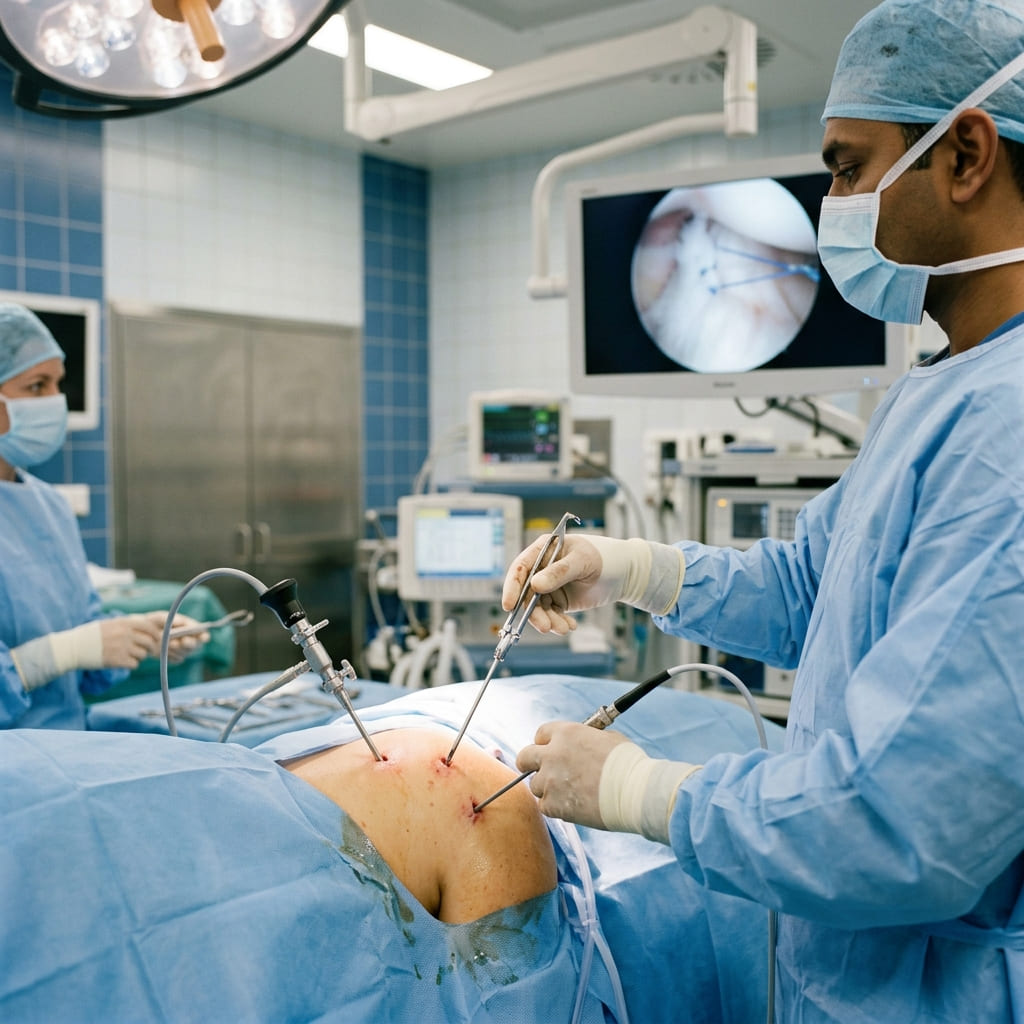
The Reverse Bankart Repair surgery is usually performed using the following steps and techniques:
- Arthroscope is inserted via small incisions in order to access the shoulder joint.
- Torn posterior labrum and surrounding structures are carefully examined and prepared for repair.
- Specialised suture anchors are used for the reattachment of the labrum to the posterior edge of the shoulder socket.
- Proper labral repair and shoulder stability are carefully checked before the completion of the procedure.
- The incisions are closed, the post-operative rehabilitation programme is designed.
COMPLICATIONS
What Are the Possible Complications of a Reverse Bankart Lesion or Its Treatment?
Even though many patients have successful results of the treatment, there may be some complications due to untreated Reverse Bankart lesion or during the recovery period. Timely intervention and a strict adherence to the rehabilitation protocol minimise the risks. Follow-up visits allow monitoring the recovery and optimisation of shoulder function.
Recurrent Posterior Shoulder Instability
The shoulder may experience recurrent posterior shoulder dislocations or subluxations because of improper healing of the posterior labrum or new shoulder injury.
Shoulder Stiffness
Some patients may have shoulder stiffness during the recovery because of inadequate rehabilitation programme.
Persistent Shoulder Pain
Persistent pain may occur as a result of incomplete healing of the labral injury or unhealed shoulder injuries.
Progressive Shoulder Joint Damage
Recurrent shoulder instability leads to further damage to the labrum, cartilage, rotator cuff or other shoulder structures.
Connect with our experts and get the right guidance for your condition.
RECOVERY & OUTCOMES
Recovery after Reverse Bankart Repair Surgery
RECOVERY & OUTCOMES
Recovery after Reverse Bankart Repair Surgery
The recovery after the Reverse Bankart Repair surgery is a gradual process that involves protecting the shoulder from further injuries and restoration of its function. Depending on the severity of the injury, associated shoulder damage and individual healing, the rehabilitation programme helps to restore shoulder mobility, strength and stability. Thus, it allows safely returning to work and sports.
The following steps of the recovery after the Reverse Bankart Repair surgery are usually included:
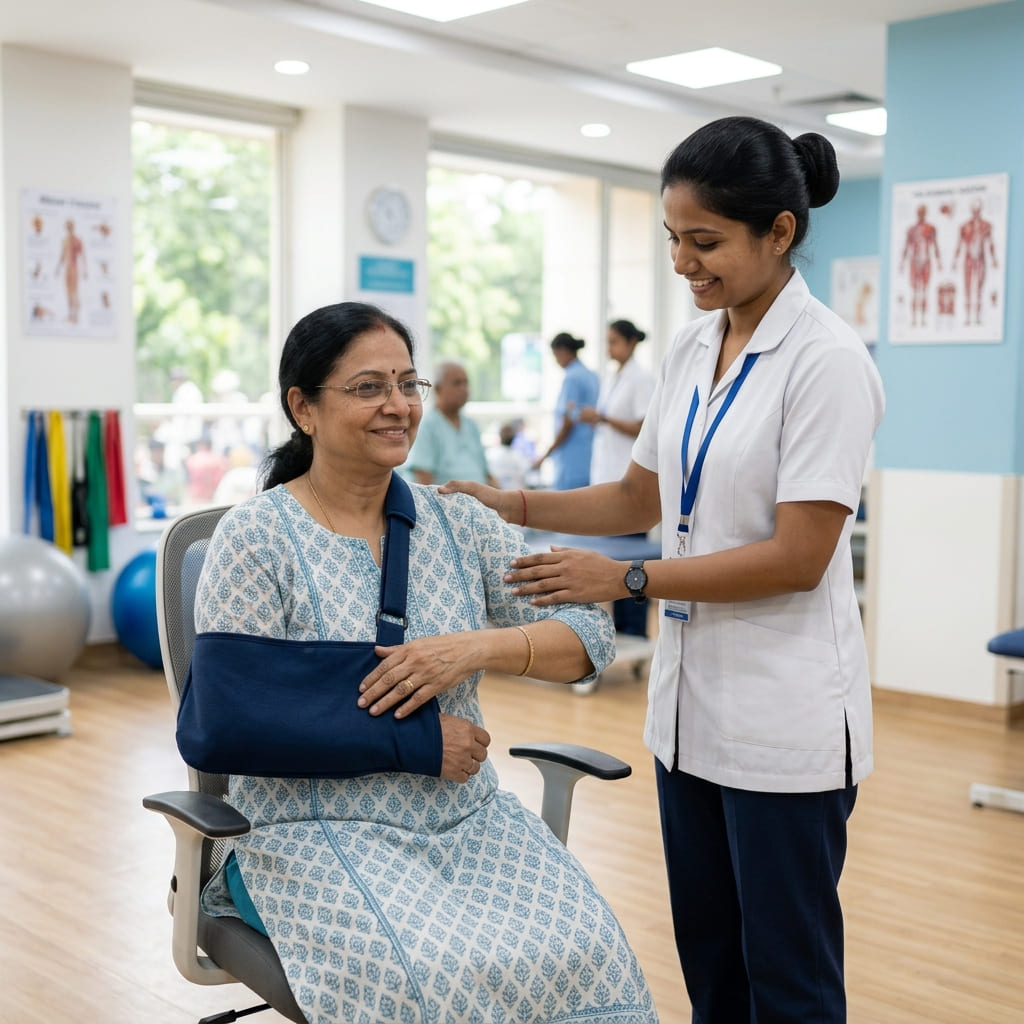
- Shoulder is protected by using a shoulder sling
- Gradual restoration of shoulder movements under medical supervision
- Gradual strengthening of the shoulder, rotator cuff and surrounding muscles
- Physiotherapy for the restoration of shoulder stability, flexibility and upper limb function
- Gradual return to work, sports and overhead activities
AFTERCARE
Recovery & Aftercare for Reverse Bankart Repair
AFTERCARE
Recovery & Aftercare for Reverse Bankart Repair
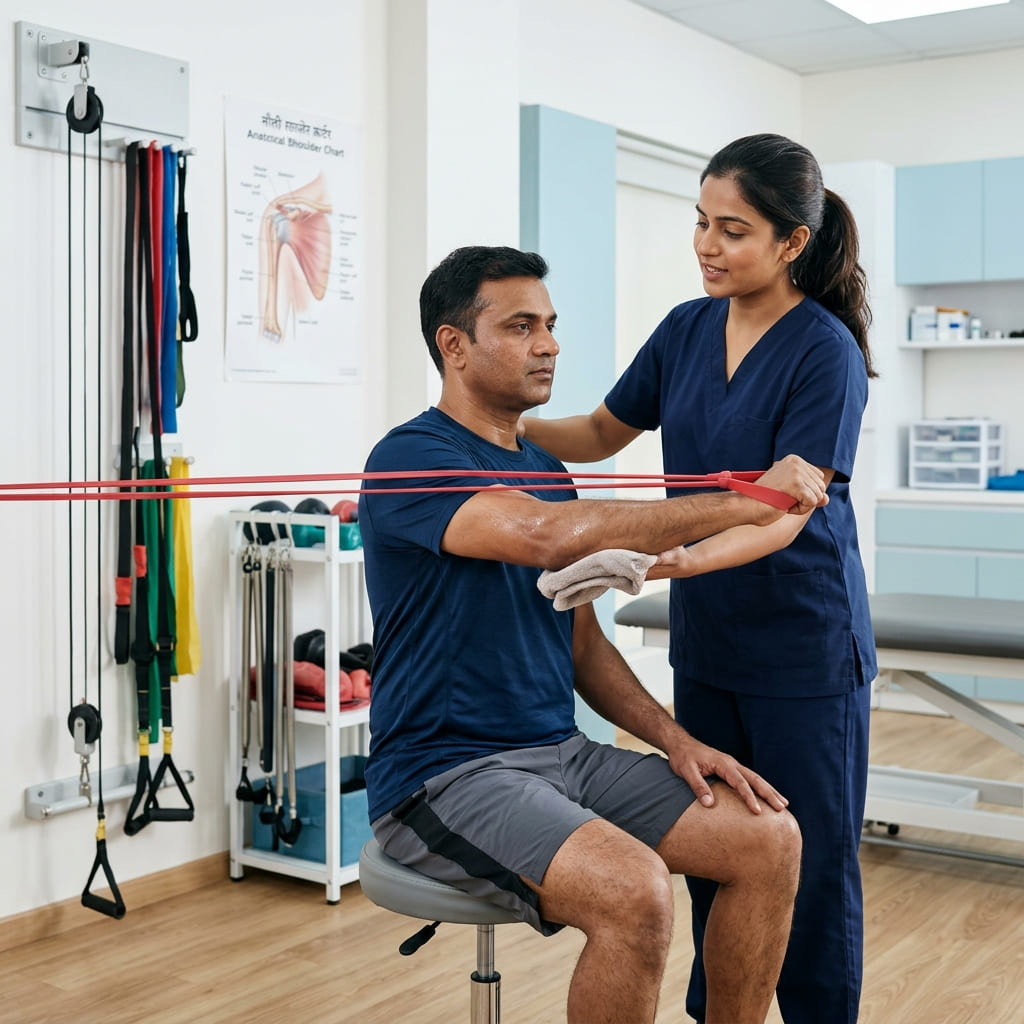
A good recovery depends on the proper aftercare and adherence to the rehabilitation programme. The correct aftercare allows restoring shoulder stability, increasing shoulder strength, preventing the recurrent posterior shoulder instability and achieving the best results. Regular follow-ups allow the specialist to monitor the recovery and tailor the rehabilitation process to individual progress.
The following aftercare is recommended for optimal recovery:
- Use of the prescribed shoulder sling during the early recovery period.
- Regular physiotherapy sessions for restoration of shoulder movement, stability and strength.
- Consistent performance of prescribed rehabilitation exercises.
- Gradual resumption of daily activities and avoiding heavy lifting, sports or overhead activities until clearance by the physician.
- Regular follow-up visits for monitoring recovery and adjustment of the rehabilitation process.
FAQ'S
Do You Have Any Question?
Mild reverse Bankart lesions or fresh cases of posterior shoulder instability might be managed without surgery with the help of physiotherapy and a comprehensive rehabilitation program. Recurrent posterior shoulder instability and large labral tears usually require surgical treatment for stabilization of the shoulder joint.
The recovery period after the procedure will vary according to the severity of the condition and the surgical intervention conducted. The doctor will give you a personalized rehabilitation program.
It will depend on the state of your shoulder joint and rehabilitation results. When you are ready to engage in such activities, your surgeon will tell you about it.
This procedure is very common and has been used for many years. This procedure can be called a safe one when conducted by a specialist and followed by a proper rehabilitation program.
The chances that the problem will come back are reduced with the procedure but still can appear because of new injuries or going back to physical activity too early.