ARTHROSCOPY & SPORTS INJURY ASSOCIATES


OVERVIEW
What is Calcific Tendinitis?
Calcific Tendinitis is a condition, which occurs due to the formation of calcium deposits in shoulder tendons, especially in the rotator cuff tendons. This condition may cause inflammation, pain, stiffness and decrease shoulder mobility. The symptoms appear either gradually or abruptly depending on deposit breakdown. Early detection and appropriate treatment help to relieve symptoms, increase shoulder mobility and ensure successful recovery.
Important facts about Calcific Tendinitis:
- Calcium deposits in shoulder tendons
- It is associated with rotator cuff tendons and shoulder movement
- It may cause shoulder pain, stiffness, and decrease in shoulder mobility
- Appropriate treatment improves function and relieves symptoms
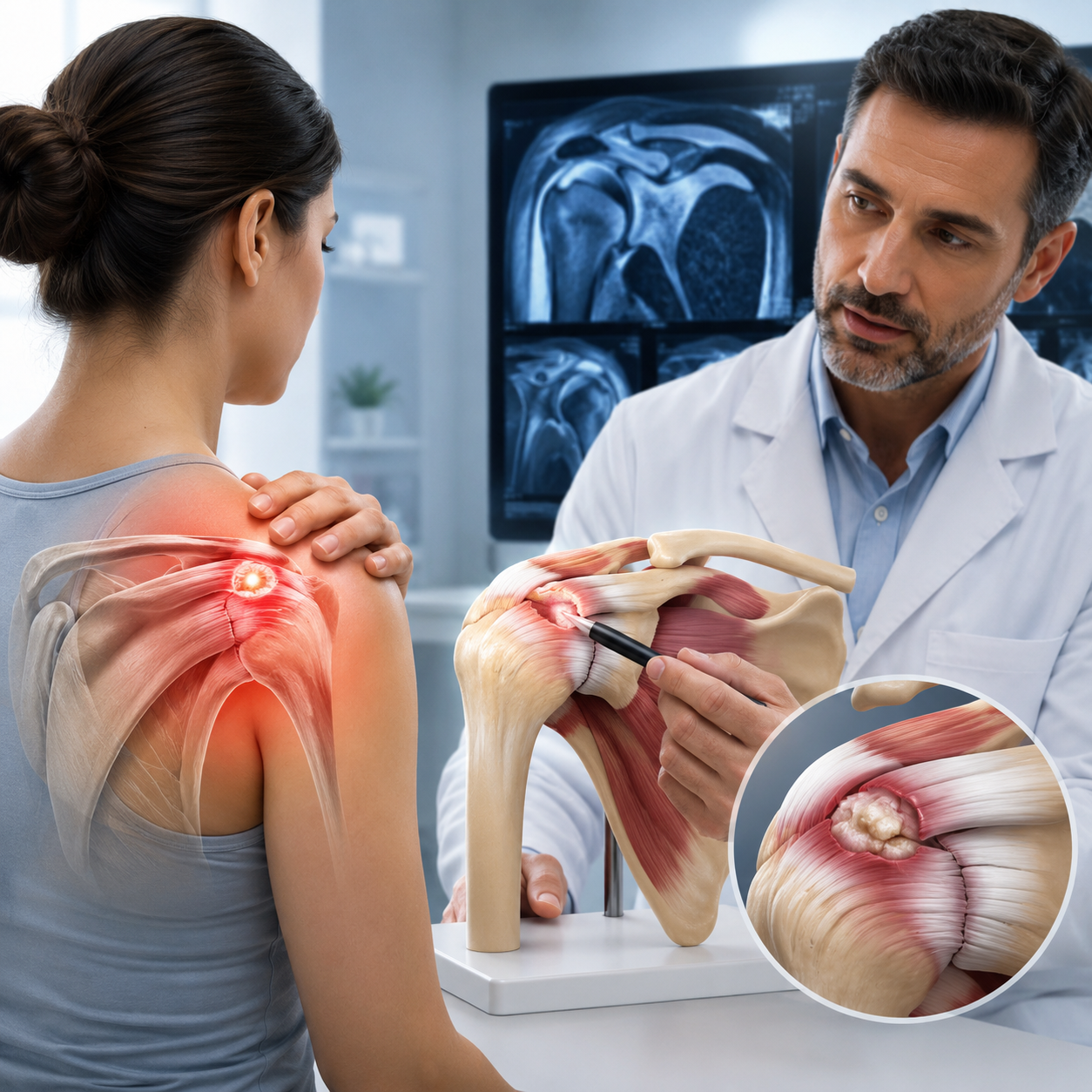
Calcific Tendinitis is a condition, which occurs due to the formation of calcium deposits in shoulder tendons, especially in the rotator cuff tendons. This condition may cause inflammation, pain, stiffness and decrease shoulder mobility. The symptoms appear either gradually or abruptly depending on deposit breakdown. Early detection and appropriate treatment help to relieve symptoms, increase shoulder mobility and ensure successful recovery.
Important facts about Calcific Tendinitis:
- Calcium deposits in shoulder tendons
- It is associated with rotator cuff tendons and shoulder movement
- It may cause shoulder pain, stiffness, and decrease in shoulder mobility
- Appropriate treatment improves function and relieves symptoms
Surgeons Available for Consultations

Dr. Karnav Panchal
M.B.B.S, M.S. (Orthopedics),
FAOS (South Korea)
Consultant Arthroscopist & Sports Injury Specialist Consultant Joint Replacement Surgeon

Dr. Aniket Gupta
M.B.B.S, M.S. (Orthopedics),
MRCS (Edinburgh)
Training & Qualifications Fellowship in MRCS (UK) Arthroscopy & Arthroplasty (Milan, Italy)
Consultant Physiotherapist

Dr. Aarsh Bhatt
B.P.T,M.P.T (Cardio-Respiratory Disorders) MIAP , HCPC (UK) , DHA (UAE)
Consultant Physiotherapist

Dr. Hetvi Dimothe
BPT , M.P.T (Rehabilitation) MIAP, HCPC (UK) , DHA (UAE)
Consultant Physiotherapist
Causes
What Are the Causes of Shoulder Calcific Tendinitis?
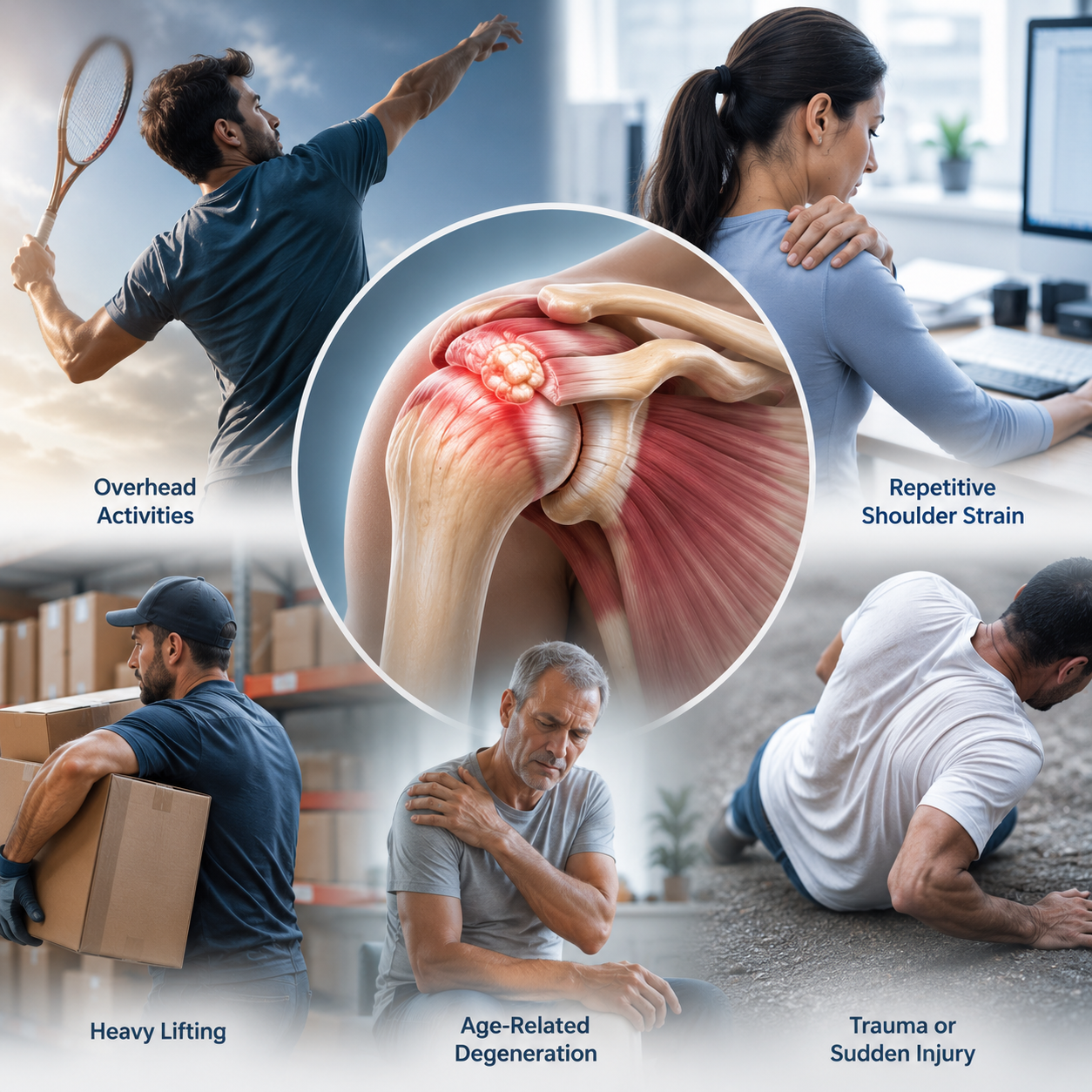
There are many possible causes of this disease, however, its exact causes are still unknown. Degenerative changes in the tendon, decreased blood circulation, repetitive shoulder movements, aging are often related to this disease. Gradually calcium deposits are accumulating in the tendons and causing inflammation. As the deposits accumulate or dissolve, pain, stiffness and decrease in shoulder function may occur.
Causes
What Are the Causes of Shoulder Calcific Tendinitis?
There are many possible causes of this disease, however, its exact causes are still unknown. Degenerative changes in the tendon, decreased blood circulation, repetitive shoulder movements, aging are often related to this disease. Gradually calcium deposits are accumulating in the tendons and causing inflammation. As the deposits accumulate or dissolve, pain, stiffness and decrease in shoulder function may occur.
Causes:
- Degenerative changes in the tendons
- Decreased blood supply and its effect on tendon healing
- Repetitive shoulder movements
- Aging changes in tendons
- Inflammatory responses contribute to the formation of calcium deposits
What Other Structures Can Be Affected Along with Shoulder Calcific Tendinitis?
The accumulation of calcium deposits in shoulder tendons can irritate the neighboring tissues. Due to the complexity of the shoulder joint, inflammation may affect other neighboring structures and change the mechanics of shoulder joint. Depending on the severity of the problem, irritation of neighboring tendons, bursae, capsules and other supporting structures may develop and cause pain, stiffness and decrease in shoulder performance.
- Rotator cuff tendons
- Subacromial bursa
- Shoulder joint capsule
- Supporting shoulder ligaments
- Neighboring muscles of the shoulder
- Other shoulder soft tissues
SYMPTOMS
What Are the Symptoms of Shoulder Calcific Tendinitis?
The symptoms can develop gradually or abruptly in case of calcium deposits irritating the neighboring tissues. Usually, the disease develops with shoulder pain, stiffness, and difficulty performing daily activities.

Persistent Shoulder Pain
Pain in movement, lifting and at rest affecting comfort and functionality.
Reduced Shoulder Mobility
Shoulder pain and stiffness limiting shoulder movement.
Pain With Overhead Movement
Pain is provoked by lifting arms overhead.
Neglecting the symptoms may lead to further inflammation, persistent pain, reduced mobility and difficulties in performing routine activities.
Connect with our experts and get the right guidance for your condition.
Pain At Night
Pain increases when sleeping on the affected side.
Shoulder Stiffness
Tight feeling of the shoulder during movement.
Reduced Shoulder Strength
Reduction of strength in physical activities.
Functional Limitations
Decrease in ability to perform activities due to pain.
Connect with our experts and get the right guidance for your condition.
BOOK CONSULTATIONDIAGNOSIS
How Are Doctors Diagnosing Shoulder Calcific Tendinitis?
Initially, doctors perform the review of the patient’s complaints, medical history, and influence of pain on the daily activities. Physical examination is performed to assess the shoulder movement, strength, flexibility and pain in the joint. Diagnostic tests are used to detect the presence of calcium deposits and extent of the tendons involvement. At ALIGN ASIA, the complete examination confirms the diagnosis, estimates the symptoms severity and suggests the best treatment plan.

DIAGNOSIS
How Are Doctors Diagnosing Shoulder Calcific Tendinitis?
Initially, doctors perform the review of the patient’s complaints, medical history, and influence of pain on the daily activities. Physical examination is performed to assess the shoulder movement, strength, flexibility and pain in the joint. Diagnostic tests are used to detect the presence of calcium deposits and extent of the tendons involvement. At ALIGN ASIA, the complete examination confirms the diagnosis, estimates the symptoms severity and suggests the best treatment plan.
Methods of the diagnosis:
- Physical examination of shoulder mobility, strength, pain and function
- Diagnostic imaging to detect calcium deposits and tendons involvement
- X-ray
- Ultrasound
TREATMENT
What is the Treatment for Shoulder Calcific Tendinitis?
Treatment regimen depends on the deposits size, symptoms, shoulder functionality and tendon irritation or inflammation.

Appropriate early treatment will decrease pain, increase shoulder mobility and assist tendon recovery. The planned treatment regimen with rehabilitation, pain relief and gradual restoration of tendon function will help to restore shoulder functionality.
Pain Relief
Pain relief and reduction of inflammation
Activity modification
Avoidance of movements provoking the symptoms
Physiotherapy
Increase shoulder mobility and strength
Tendon rehabilitation
Restore the functionality of shoulder
Surgical evaluation
Consider advanced treatment options
NON-SURGICAL CARE
How Is Shoulder Calcific Tendinitis Treated without Surgery?
Many patients recover from this disease with nonsurgical treatment and rehabilitation. Nonsurgical treatment is aimed at inflammation reduction, pain relief, increasing shoulder mobility and assisting the tendon healing. Physiotherapy, activity modification, medications and other advanced treatments may help to restore the shoulder function. Timely treatment may provide favorable prognosis and reduce the need for surgery in eligible patients.
NON-SURGICAL CARE
How Is Shoulder Calcific Tendinitis Treated without Surgery?
Many patients recover from this disease with nonsurgical treatment and rehabilitation. Nonsurgical treatment is aimed at inflammation reduction, pain relief, increasing shoulder mobility and assisting the tendon healing. Physiotherapy, activity modification, medications and other advanced treatments may help to restore the shoulder function. Timely treatment may provide favorable prognosis and reduce the need for surgery in eligible patients.
Nonsurgical treatment includes:
- Physiotherapy to increase mobility, strengthen supportive muscles and restore the shoulder movement
- Modification of activities to avoid repetitive movements irritating the tendon
- Anti-inflammatory medications to relieve pain and facilitate rehabilitation process
- Shock wave therapy to break calcium deposits and alleviate symptoms
RISKS OF NO TREATMENT
When Is Surgery Needed for Shoulder Calcific Tendinitis?
Persistence of calcium deposits and inflammation may affect shoulder functionality, therefore, surgery may be required in case of persistent symptoms despite rehabilitation. Patients often have favorable outcome with conservative treatment; however, some patients may experience pain, stiffness and shoulder immobilization. Early evaluation of the symptoms may allow to determine the need for advanced treatment before symptoms interfere with the daily activities.

RISKS OF NO TREATMENT
When Is Surgery Needed for Shoulder Calcific Tendinitis?
Persistence of calcium deposits and inflammation may affect shoulder functionality, therefore, surgery may be required in case of persistent symptoms despite rehabilitation. Patients often have favorable outcome with conservative treatment; however, some patients may experience pain, stiffness and shoulder immobilization. Early evaluation of the symptoms may allow to determine the need for advanced treatment before symptoms interfere with the daily activities.
Prompt treatment allows to increase mobility, alleviate discomfort and protect shoulder function.
- Persistent pain may impair sleep and daily activities
- Deposits can affect tendon functionality and movement
- Decrease in shoulder mobility may interfere with work and recreation
- Persistent symptoms may not respond to nonsurgical treatment
Surgery may be required in case of persistent symptoms despite rehabilitation.
SURGERY
What Surgical Options Are Available for Shoulder Calcific Tendinitis?
In case of nonsurgical treatment providing no relief, advanced procedures may be applied to treat calcium deposits and irritation of the tendon. The most appropriate treatment method depends on the deposits size, symptoms and shoulder functionality. Surgeries help to relieve pain, increase shoulder mobility, restore tendon function and preserve shoulder function allowing patient to return to routine activities comfortably.
Available surgical options:
- Removal of calcium deposits by arthroscopy to relieve pain and improve mobility
- Tendon debridement to remove damaged or irritated tendon tissue
- Repair of rotator cuff in case of tendon tear
- Minimally invasive techniques allowing faster recovery
- Choice of the surgery depends on the symptoms, diagnostic test results and treatment effectiveness
- Postoperative rehabilitation is required to ensure proper recovery and long-term shoulder health
SURGERY
What Surgical Options Are Available for Shoulder Calcific Tendinitis?
In case of nonsurgical treatment providing no relief, advanced procedures may be applied to treat calcium deposits and irritation of the tendon. The most appropriate treatment method depends on the deposits size, symptoms and shoulder functionality. Surgeries help to relieve pain, increase shoulder mobility, restore tendon function and preserve shoulder function allowing patient to return to routine activities comfortably.

Available surgical options:
- Removal of calcium deposits by arthroscopy to relieve pain and improve mobility
- Tendon debridement to remove damaged or irritated tendon tissue
- Repair of rotator cuff in case of tendon tear
- Minimally invasive techniques allowing faster recovery
- Choice of the surgery depends on the symptoms, diagnostic test results and treatment effectiveness
- Postoperative rehabilitation is required to ensure proper recovery and long-term shoulder health
COMPLICATIONS
What Are the Possible Complications of Shoulder Calcific Tendinitis or Its Treatment?
Complications do not occur in all patients, however, they can occur in case of untreated or progressing condition. Regular follow-up, adherence to rehabilitation exercises and appropriate treatment reduce the risk of the development of complications and allow patients to maintain the shoulder mobility, functionality and ensure successful recovery.
Persistent Shoulder Pain
Persistent pain may affect the patient’s sleep and daily activities.
Decreased Shoulder Mobility
Inflammation and stiffness may gradually reduce shoulder mobility.
Tendon Irritation
Calcium deposits may persistently irritate shoulder tendons.
Muscle Weakness
Shoulder pain and immobility may lead to muscle weakness.
Connect with our experts and get the right guidance for your condition.
RECOVERY & OUTCOMES
What Is the Recovery Process after Treatment for Shoulder Calcific Tendinitis?

RECOVERY & OUTCOMES
What Is the Recovery Process after Treatment for Shoulder Calcific Tendinitis?
Recovery period depends on the severity of the symptoms, type of the performed procedure and individual characteristics of recovery. The most patients show gradual improvement due to rehabilitation, physiotherapy and special exercises. The main goals are to reduce inflammation, restore shoulder mobility and improve strength. Adherence to the rehabilitation allows patients to safely return to the routine activities with reduced pain and minimal risk of developing symptoms in the future.
Recovery includes the following steps:
- Pain control and protection of shoulder joint
- Mobility exercises to restore the shoulder movement
- Progressive shoulder muscles and tendon strengthening
- Proper physiotherapy
AFTERCARE
Recovery & Aftercare after Shoulder Calcific Tendinitis Treatment
AFTERCARE
Recovery & Aftercare after Shoulder Calcific Tendinitis Treatment
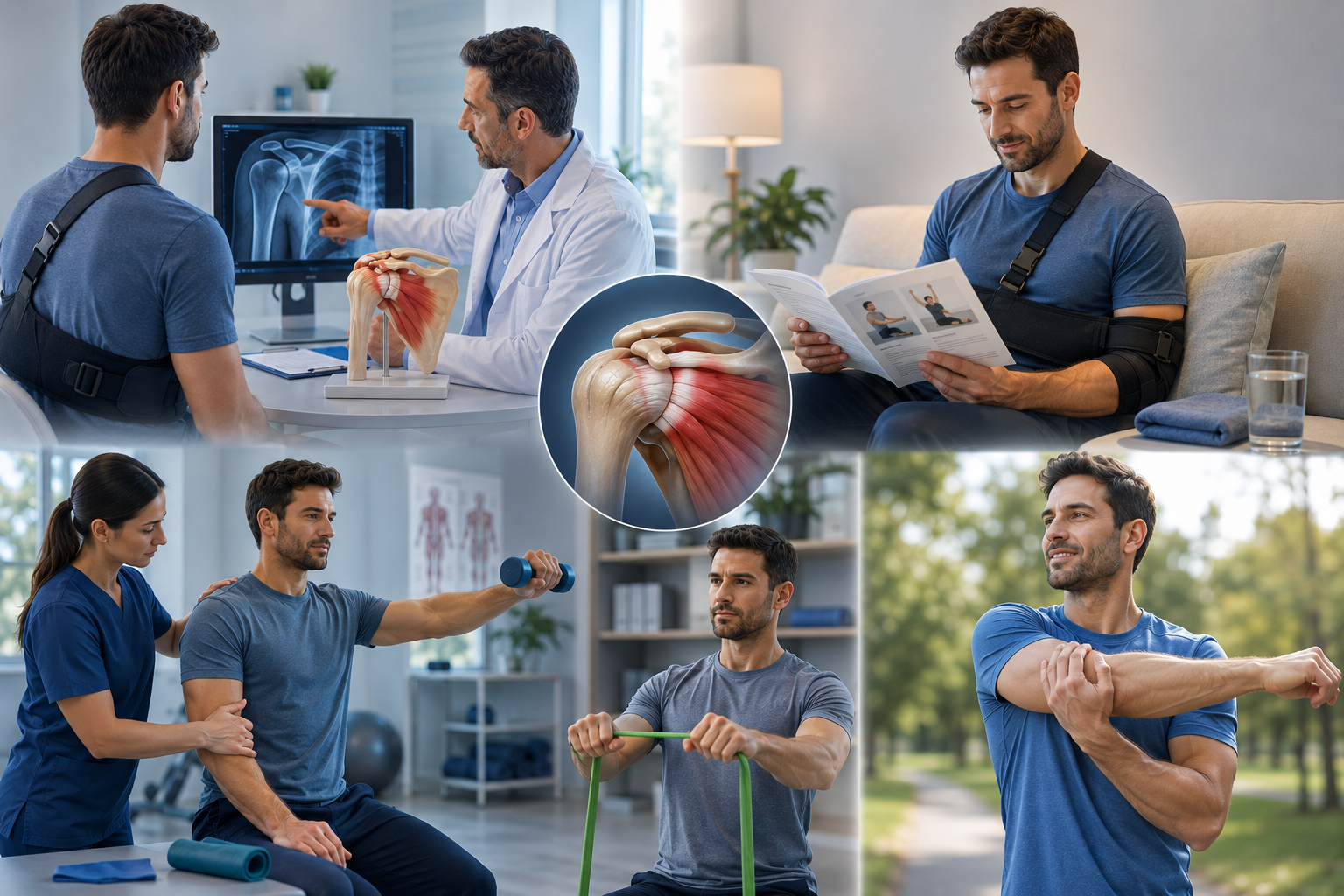
Aftercare is the key factor ensuring proper recovery. Regular rehabilitation exercises allow maintaining shoulder mobility, improving strength and supporting tendon healing. Adherence to doctor’s recommendations during the recovery period increases treatment efficacy and helps patient to safely return to routine activities maintaining long-term shoulder health.
Steps of aftercare:
- Regular performance of rehabilitation exercises
- Attending physiotherapy sessions
- Avoidance of repeated overhead activities during recovery period
- Gradual increasing activity according to medical advice
- Regular visits for the monitoring of the recovery and shoulder health
FAQ'S
Do You Have Any Question?
Yes. Many patients recover with physiotherapy, medications and nonsurgical treatments.
Most cases of this disease are successfully treated, however, some persistent symptoms may require advanced treatment.
Recovery period varies depending on severity of the symptoms, type of treatment and rehabilitation.
In some patients, calcium deposits gradually dissolve and absorb.
Adherence to rehabilitation recommendations and maintenance of shoulder health may reduce the risk of recurrence.