ARTHROSCOPY & SPORTS INJURY ASSOCIATES

OVERVIEW
What Is Shoulder Joint Replacement?
Shoulder joint replacement is the surgical procedure during which the worn out surfaces of the shoulder joint are replaced with the artificial implants. The replacement surgery is performed when arthritis or the significant damage to the shoulder joint caused by injury leads to persistent shoulder pain, stiffness, and loss of shoulder functionality.
The shoulder joint is formed by the ball-shaped end of the upper arm bone (head of the humerus) and the cup-shaped surface of the shoulder blade (glenoid). During replacement surgery the worn out surfaces are removed and replaced with the artificial surfaces.
There are various types of shoulder replacements which are used depending on the state of the joint and rotator cuff.
Key facts about Shoulder Joint Replacement
- Replace the worn out surfaces of the shoulder joint
- Reduce the persistent shoulder pain
- Improve the shoulder functionality
- Can be performed for advanced arthritis and cuff tear arthropathy
- Type of replacement is chosen according to the condition of the joint and rotator cuff
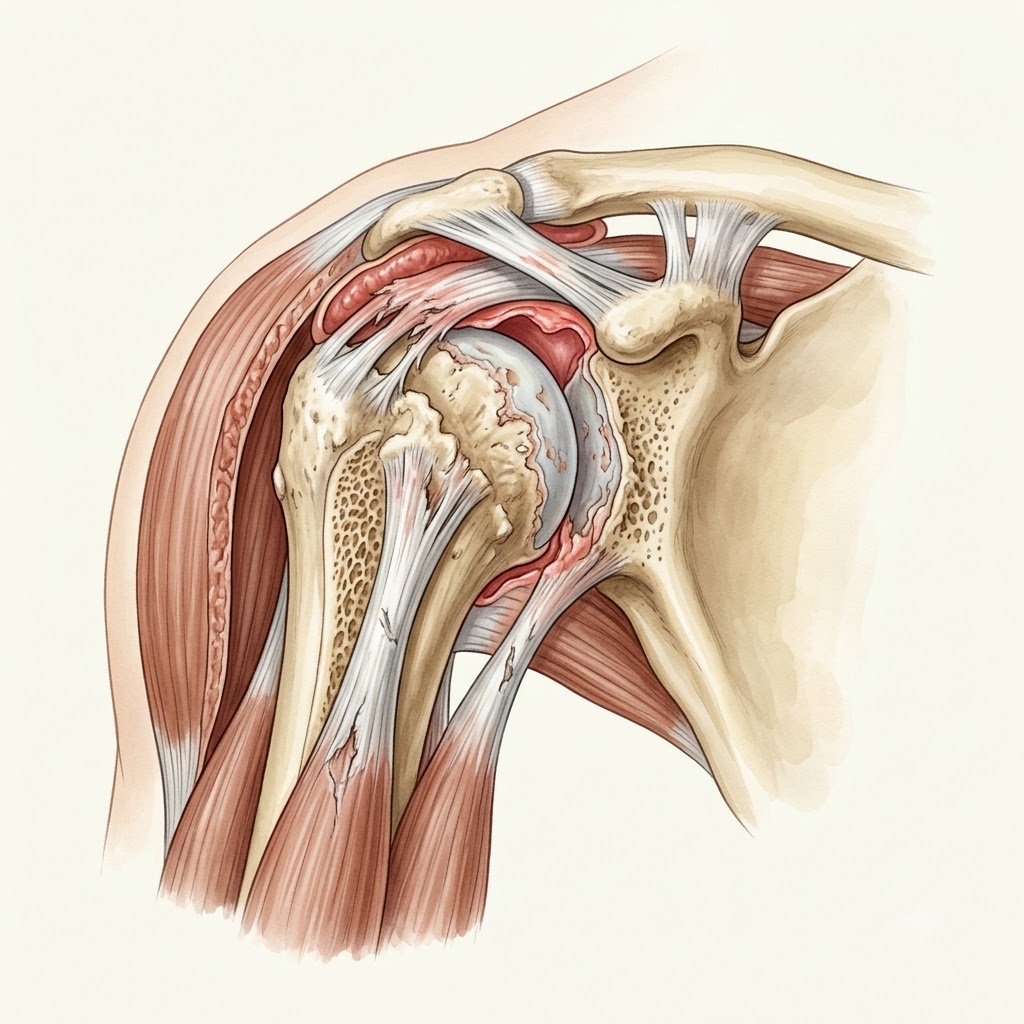
Shoulder joint replacement is the surgical procedure during which the worn out surfaces of the shoulder joint are replaced with the artificial implants. The replacement surgery is performed when arthritis or the significant damage to the shoulder joint caused by injury leads to persistent shoulder pain, stiffness, and loss of shoulder functionality.
The shoulder joint is formed by the ball-shaped end of the upper arm bone (head of the humerus) and the cup-shaped surface of the shoulder blade (glenoid). During replacement surgery the worn out surfaces are removed and replaced with the artificial surfaces.
There are various types of shoulder replacements which are used depending on the state of the joint and rotator cuff.
Key facts about Shoulder Joint Replacement
- Replace the worn out surfaces of the shoulder joint
- Reduce the persistent shoulder pain
- Improve the shoulder functionality
- Can be performed for advanced arthritis and cuff tear arthropathy
- Type of replacement is chosen according to the condition of the joint and rotator cuff
Surgeons Available for Consultations

Dr. Karnav Panchal
M.B.B.S, M.S. (Orthopedics),
FAOS (South Korea)
Consultant Arthroscopist & Sports Injury Specialist Consultant Joint Replacement Surgeon

Dr. Aniket Gupta
M.B.B.S, M.S. (Orthopedics),
MRCS (Edinburgh)
Training & Qualifications Fellowship in MRCS (UK) Arthroscopy & Arthroplasty (Milan, Italy)
Consultant Physiotherapist

Dr. Aarsh Bhatt
B.P.T,M.P.T (Cardio-Respiratory Disorders) MIAP , HCPC (UK) , DHA (UAE)
Consultant Physiotherapist

Dr. Hetvi Dimothe
BPT , M.P.T (Rehabilitation) MIAP, HCPC (UK) , DHA (UAE)
Consultant Physiotherapist

Causes
What Are the Causes of Shoulder Arthritis and Cuff Tear Arthropathy?
Shoulder arthritis happens due to the gradual wearing off of the articular cartilage covering the surfaces of the shoulder joint. The cuff tear arthropathy can happen when a significant tear in the rotator cuff changes the mechanics of the shoulder joint causing its progressive deterioration.
Causes
What Are the Causes of Shoulder Arthritis and Cuff Tear Arthropathy?
Shoulder arthritis happens due to the gradual wearing off of the articular cartilage covering the surfaces of the shoulder joint. The cuff tear arthropathy can happen when a significant tear in the rotator cuff changes the mechanics of the shoulder joint causing its progressive deterioration.
These conditions can be caused by:
- Age-related wearing off of the articular cartilage
- Old shoulder injuries or fractures
- Longstanding tear of the rotator cuff
- Repetitive shoulder movements
- Previous shoulder surgery
- Inflammation of the joints
What Is the Shoulder Joint Damage?
The shoulder joint disease can affect multiple structures involved in the shoulder movement and stability.
- Head of the humerus
- Glenoid
- Articular cartilage
- Tendons of the rotator cuff
- Joint capsule
- Soft tissue around the shoulder joint
SYMPTOMS
What Are the Symptoms of Advanced Shoulder Joint Damage?
The symptoms usually get worse with time and advanced shoulder arthritis or cuff tear arthropathy may affect the ability to perform different activities like work, self-care, sport, sleeping.

Shoulder Pain
The pain can occur during movement and, in advanced stages, even at rest or during the night.
Shoulder Stiffness
It can become hard to lift, rotate, and move the shoulder.
Connect with our experts and get the right guidance for your condition.
Reduced Range of Movement
It becomes harder to reach objects above, behind, and across the body.
Weakness
The shoulder weakness can appear due to the damage of the rotator cuff and pain.
Difficulties Performing Activities of Daily Living
It can be hard to perform dressing, grooming, reaching, lifting, and other actions.
Night Pain
The shoulder joint damage can cause pain which interferes with the sleep.
Connect with our experts and get the right guidance for your condition.
BOOK CONSULTATIONDIAGNOSIS
How Do Doctors Diagnose Shoulder Joint Damage?
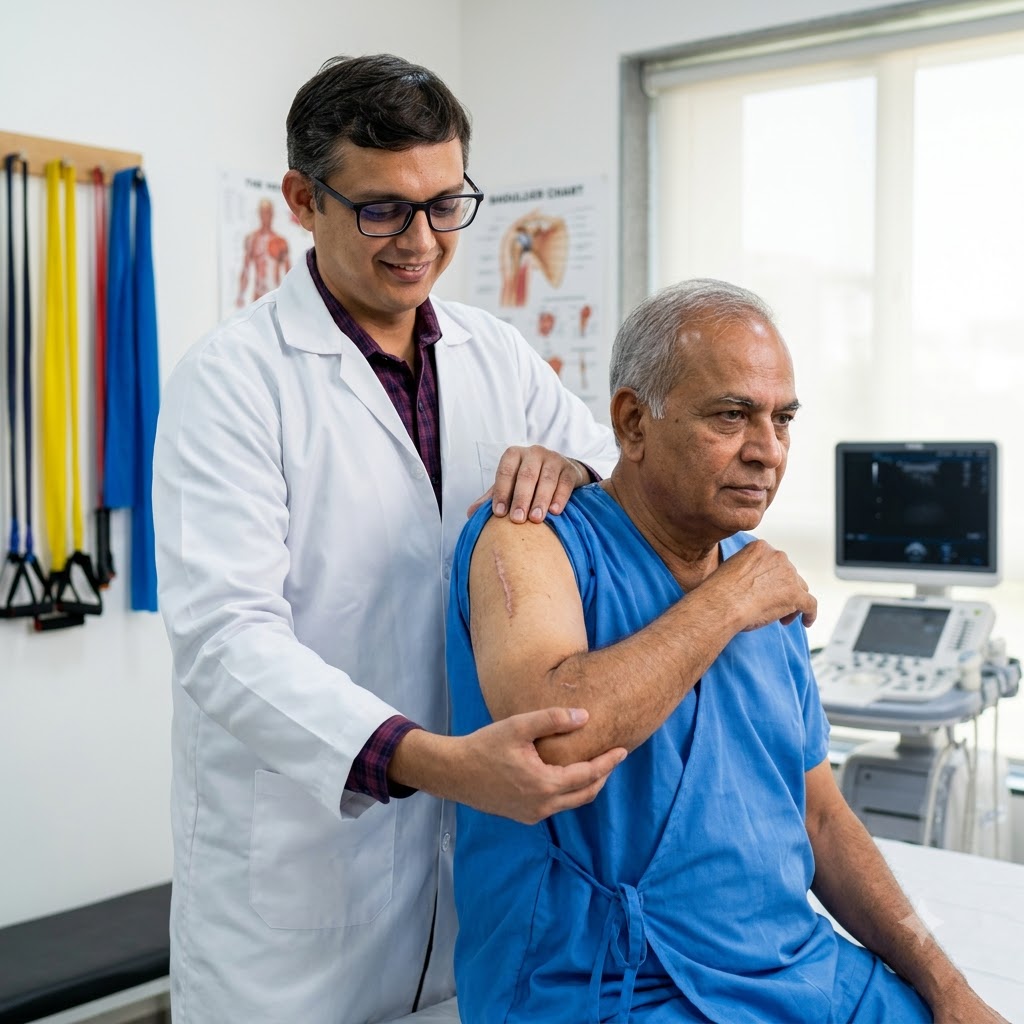
The doctors diagnose the shoulder joint damage according to the symptoms, medical history, previous injuries, and thorough physical examination. They assess the shoulder movement, strength, pain, stability, and rotator cuff.
DIAGNOSIS
How Do Doctors Diagnose Shoulder Joint Damage?
The doctors diagnose the shoulder joint damage according to the symptoms, medical history, previous injuries, and thorough physical examination. They assess the shoulder movement, strength, pain, stability, and rotator cuff.
The diagnosis of the shoulder joint damage can include:
- Physical examination of the shoulder
- X-ray for assessment of the joint space narrowing, changes in the bones, arthritis
- CT scan for the detailed assessment of the bone structure when needed
- MRI or ultrasound for assessment of the rotator cuff and other soft tissue structures
The findings help determine the degree of joint damage and the need for shoulder joint replacement.
TREATMENT
What Is the Treatment for Shoulder Osteoarthritis and Cuff Tear Arthropathy?
The treatment depends on the degree of joint damage, symptoms, rotator cuff condition, age, activity level, functional needs. Generally the conservative treatment is tried first, while the surgery is suggested when the pain and limitations become significant.
Pain Management
Pain-relieving and anti-inflammatory medications can help to relieve pain and inflammation.
Activity Modification
The reduction of activities which strain the shoulder may help to manage the symptoms.
Physiotherapy
The exercises can help to maintain the shoulder movement, strength and function.
Injections
In some cases the injections can be used as the means of managing persistent symptoms.
Surgical Treatment
The shoulder replacement may be necessary in case when the pain and functional limitations persist despite the appropriate conservative treatment.
NON-SURGICAL CARE
What Is the Treatment of Shoulder Osteoarthritis and Cuff Tear Arthropathy Without Surgery?
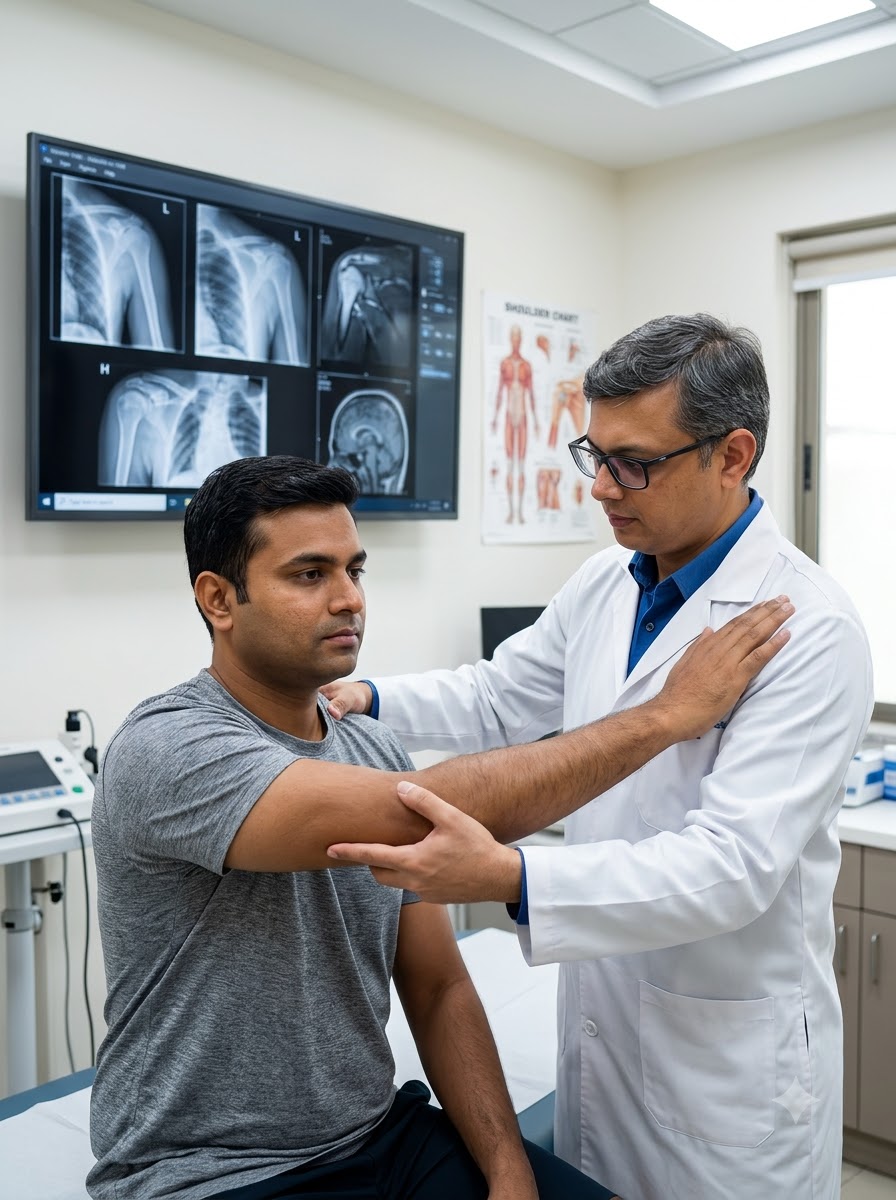
Many people suffering from shoulder arthritis or cuff tear arthropathy can be successfully treated without surgery. The aim of the treatment is to manage the pain, maintain shoulder movement and function.
NON-SURGICAL CARE
What Is the Treatment of Shoulder Osteoarthritis and Cuff Tear Arthropathy Without Surgery?
Many people suffering from shoulder arthritis or cuff tear arthropathy can be successfully treated without surgery. The aim of the treatment is to manage the pain, maintain shoulder movement and function.
Without surgery options include:
- Physiotherapy to maintain mobility and strengthen the shoulder
- Activity modification to prevent painful or repetitive movements
- Pain-relieving and anti-inflammatory medications
- Home exercises to maintain flexibility and function
- Injections to help managing persistent symptoms in selected cases
In case the above-mentioned methods do not bring enough relief the surgical treatment may be discussed.
RISKS OF NO TREATMENT
When Is Shoulder Joint Replacement Necessary?
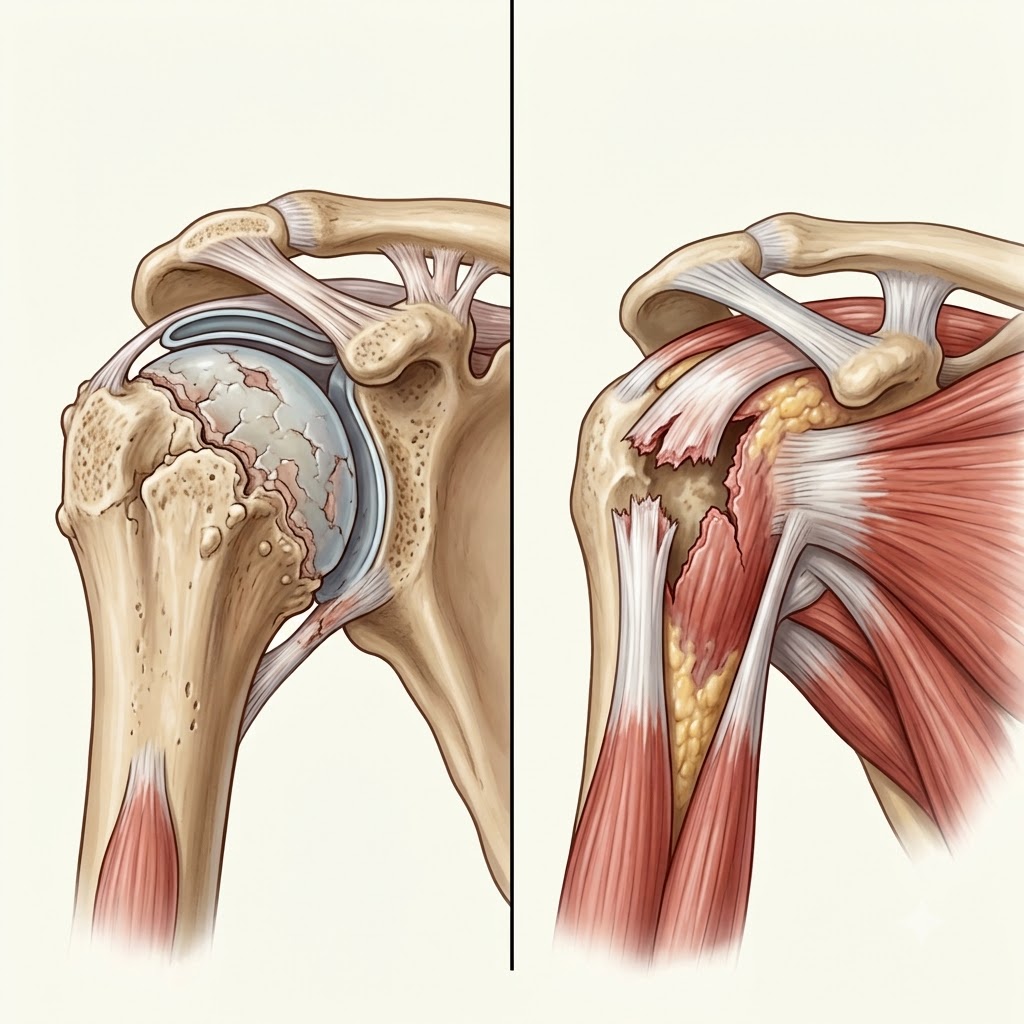
Shoulder joint replacement is considered in case of severe shoulder joint damage causing persistent pain and significant functional limitations despite non-surgical treatment.
RISKS OF NO TREATMENT
When Is Shoulder Joint Replacement Necessary?
Shoulder joint replacement is considered in case of severe shoulder joint damage causing persistent pain and significant functional limitations despite non-surgical treatment.
The surgery is considered in case of:
- Severe shoulder pain affecting activities or sleep
- Advanced osteoarthritis with significant joint damage
- Cuff tear arthropathy with severe pain and loss of function
- Stiffness and limitation of movement of the shoulder
- Insufficient relief from conservative treatment
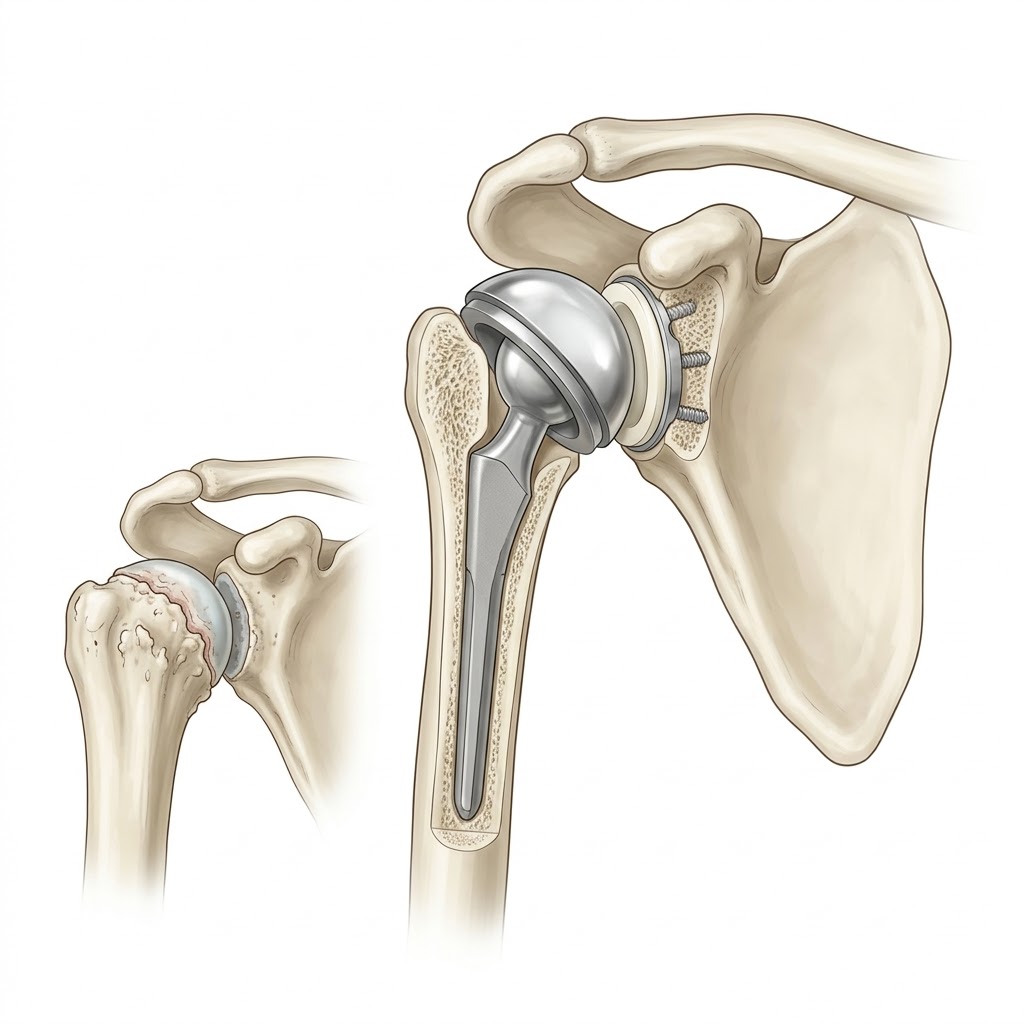
The type of shoulder replacement is selected depending on the state of the shoulder joint and rotator cuff. In case the rotator cuff is working properly the anatomic shoulder replacement can be used, while in case of damage to the rotator cuff the reverse shoulder replacement can be used.
SURGERY
What Happens During Shoulder Joint Replacement Surgery?
The surgery for shoulder joint replacement includes removal of the damaged joint surfaces and their replacement with the artificial components. The exact procedure depends on the type of replacement and the condition of the joint.
The surgery for shoulder joint replacement generally includes:
- Incision to access the shoulder joint
- Removal of the damaged part of the humeral head
- Preparation of the humerus and glenoid for the appropriate implant
- Placement of the prostheses
- Assessment of the movement and stability of the shoulder
- Closure of the incision and initiation of the individual rehabilitation program
The choice between anatomic and reverse shoulder replacement surgery depends mostly on the condition of the rotator cuff, joint damage and individual needs.
SURGERY
What Happens During Shoulder Joint Replacement Surgery?
The surgery for shoulder joint replacement includes removal of the damaged joint surfaces and their replacement with the artificial components. The exact procedure depends on the type of replacement and the condition of the joint.
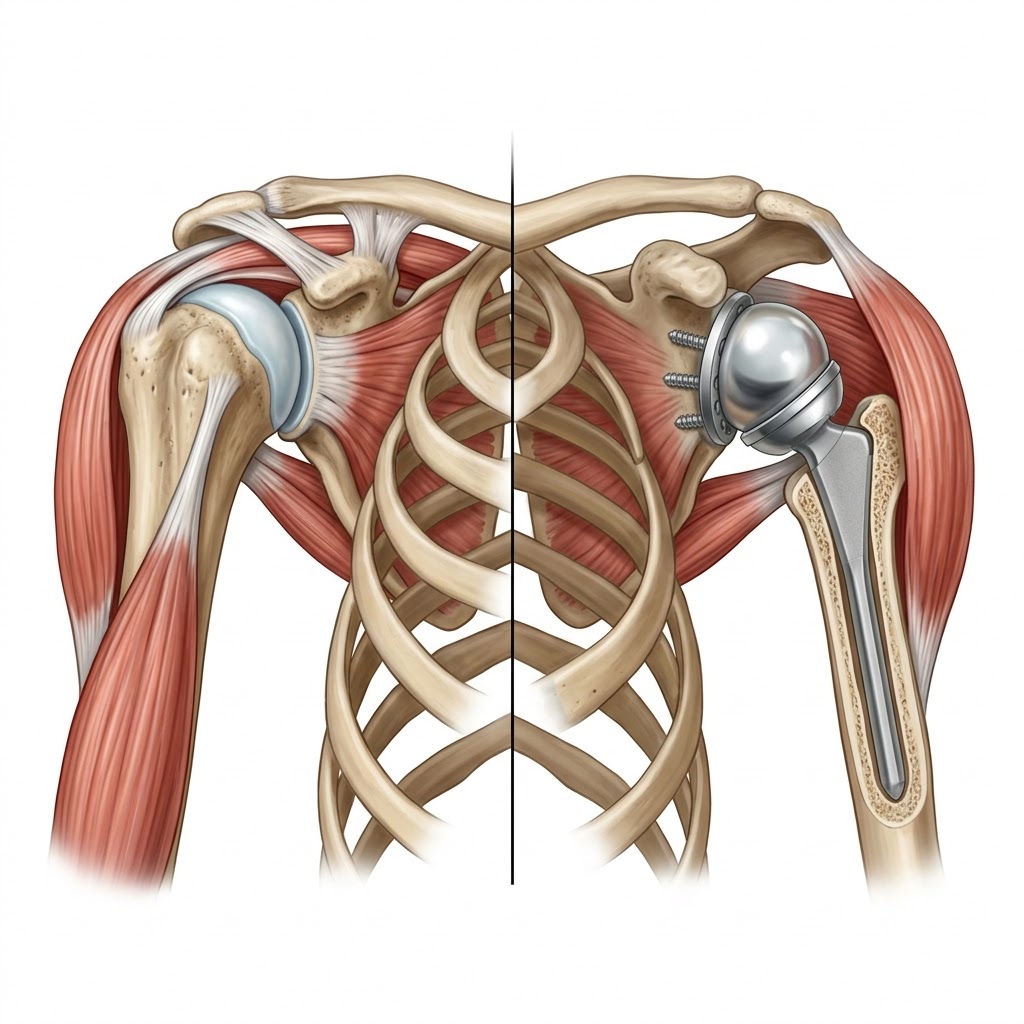
The surgery for shoulder joint replacement generally includes:
- Incision to access the shoulder joint
- Removal of the damaged part of the humeral head
- Preparation of the humerus and glenoid for the appropriate implant
- Placement of the prostheses
- Assessment of the movement and stability of the shoulder
- Closure of the incision and initiation of the individual rehabilitation program
The choice between anatomic and reverse shoulder replacement surgery depends mostly on the condition of the rotator cuff, joint damage and individual needs.
COMPLICATIONS
What Are the Complications of Shoulder Joint Replacement?
The shoulder joint replacement can help to relieve pain and improve the shoulder functionality. However, there are some possible complications. Your surgeon will assess the risk of complications before the surgery.
Persistent Pain
Some people can have persistent shoulder pain because of the underlying condition or other factors.
Shoulder Stiffness
Restriction of movement can persist, especially if the rehabilitation is late or the movement is restricted.
Prosthesis-Related Complications
Loosening, wearing off, instability or other problems with the prosthesis can appear in some patients.
Infection or Nerve Injury
Like in case of any other surgery there is a possibility of infection, bleeding, or nerve irritation.
Connect with our experts and get the right guidance for your condition.
RECOVERY & OUTCOMES
Recovery after Shoulder Joint Replacement Surgery
RECOVERY & OUTCOMES
Recovery after Shoulder Joint Replacement Surgery
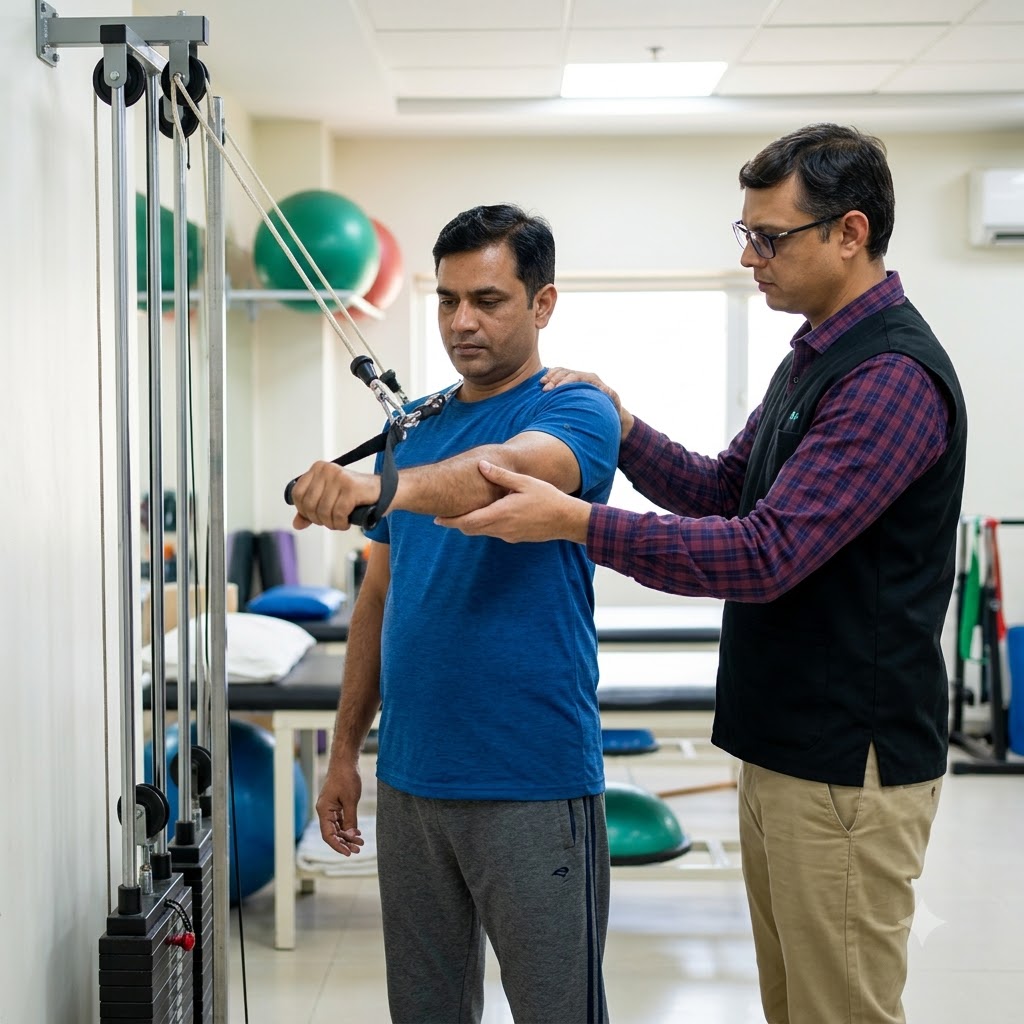
The recovery is gradual and includes the shoulder protection during the initial period and restoration of the shoulder movement, strength, and function. The recovery time depends on the type of replacement, underlying condition and individual healing.
The general recovery process usually includes:
- Protection of the shoulder joint with a sling
- Gradual range of movement exercises under supervision
- Strength training with time
- Physiotherapy
- Gradual return to activities and work
The adherence to the rehabilitation program is important to get the best functional results.
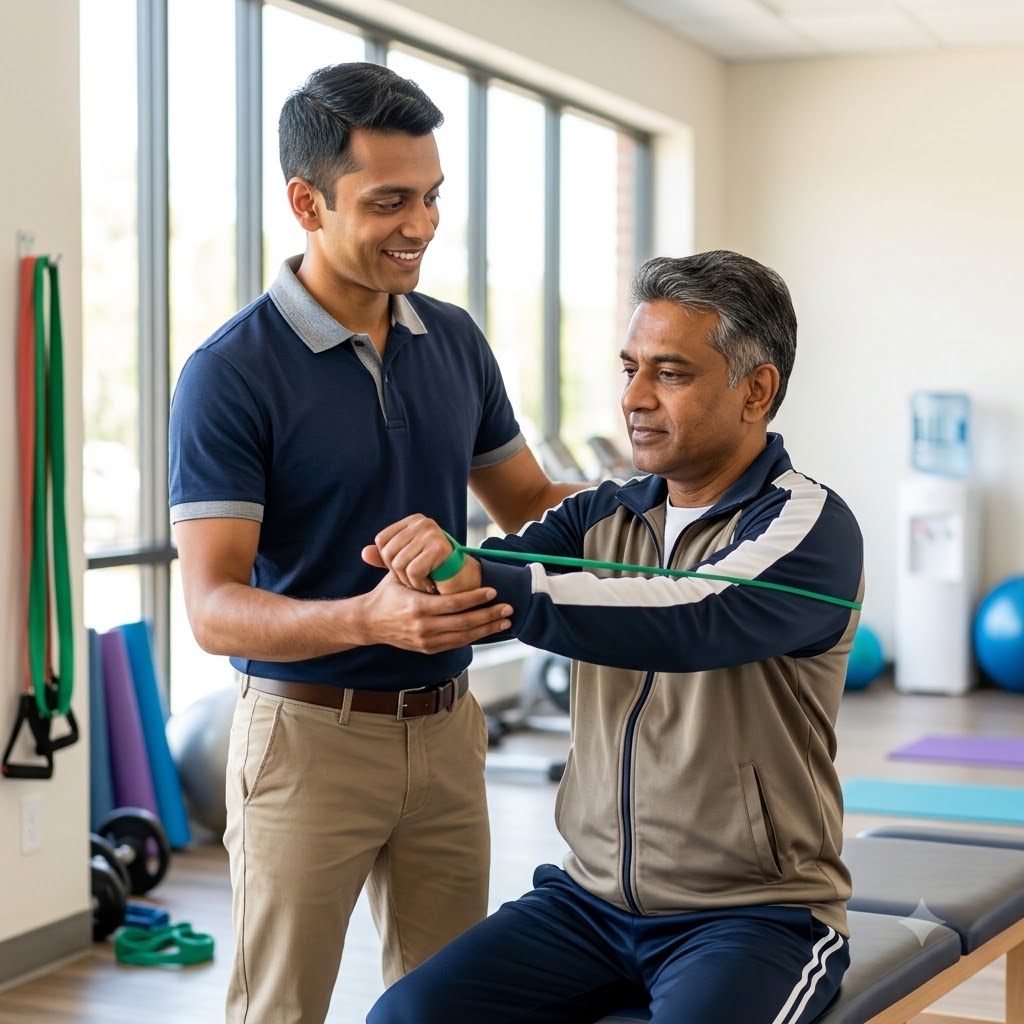
AFTERCARE
Shoulder Joint Replacement Surgery: Recovery and Aftercare
AFTERCARE
Shoulder Joint Replacement Surgery: Recovery and Aftercare
The proper aftercare can help to protect the replacement, restore movement, and maintain the shoulder function.
The recommended aftercare includes:
- Use of the prescribed sling for the duration of the early post-operative period.
- Regular physiotherapy sessions.
- Consistent performance of the exercises.
- Avoidance of heavy lifting and high-impact activities until being allowed.
- Return to normal activities as healing occurs.
- Regular follow-ups to monitor the shoulder function and the condition of the prosthesis.
FAQ'S
Do You Have Any Questions?
It can be performed when advanced arthritis or cuff tear arthropathy causes persistent pain and loss of shoulder function despite non-operative treatment.
The anatomic shoulder replacement reproduces the natural joint anatomy and is used when the rotator cuff is functioning properly. Reverse shoulder replacement changes the mechanics of the shoulder joint and can be used in case of severe damage to the rotator cuff.
The recovery time depends on the type of replacement, underlying condition, and individual healing and will be discussed with your specialist.
People return to activities gradually with healing. The exact timing depends on the particular activity and individual recovery and will be discussed with your healthcare provider.
Yes. The replacement aims to relieve the pain and improve the shoulder function. The extent of improvement depends on the state of the shoulder before surgery and rehabilitation.
The lifespan of the prosthesis varies among patients and depends on many factors including the type of the prosthesis, activity level, underlying condition, and shoulder health.