ARTHROSCOPY & SPORTS INJURY ASSOCIATES

OVERVIEW
What is Elbow Arthroscopy?
Elbow Arthroscopy is a minimally invasive procedure for diagnosing and treating elbow joint internal pathologies. A camera is introduced through small incisions and the doctor examines and treats the joint from inside.
If post-traumatic elbow stiffness is caused by scarring, loose bodies, bone spurs or other pathologies in the joint, arthroscopy may help to relieve stiffness with minimal damage to surrounding structures.
Key features of Elbow Arthroscopy:
- Uses small incisions to access the elbow joint
- Provides direct visualization of the joint
- Removes scarring, loose bodies or bone spurs if necessary
- May improve limited elbow movement
- Usually causes less soft tissue damage than open surgery

Elbow Arthroscopy is a minimally invasive procedure for diagnosing and treating elbow joint internal pathologies. A camera is introduced through small incisions and the doctor examines and treats the joint from inside.
If post-traumatic elbow stiffness is caused by scarring, loose bodies, bone spurs or other pathologies in the joint, arthroscopy may help to relieve stiffness with minimal damage to surrounding structures.
Key features of Elbow Arthroscopy:
- Uses small incisions to access the elbow joint
- Provides direct visualization of the joint
- Removes scarring, loose bodies or bone spurs if necessary
- May improve limited elbow movement
- Usually causes less soft tissue damage than open surgery
Overview
Clicking and Locking
Loose bodies and irregular joint surfaces may cause clicking, catching and locking sensations.
Difficulty Performing Regular Activities
It becomes harder to eat, dress, groom, drive, reach and lift things.
Weakness
Limited use of the affected arm causes weakness in the elbow and forearm region.
Surgeons Available for Consultations
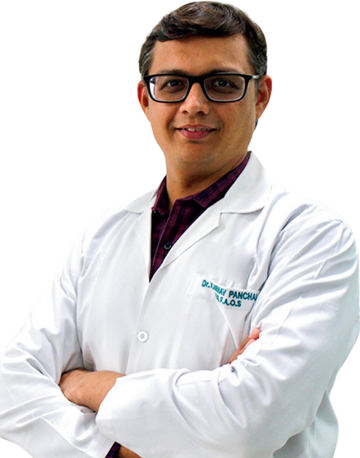
Dr. Karnav Panchal
M.B.B.S, M.S. (Orthopedics),
FAOS (South Korea)
Consultant Arthroscopist & Sports Injury Specialist Consultant Joint Replacement Surgeon

Dr. Aniket Gupta
M.B.B.S, M.S. (Orthopedics),
MRCS (Edinburgh)
Training & Qualifications Fellowship in MRCS (UK) Arthroscopy & Arthroplasty (Milan, Italy)
Consultant Physiotherapist

Dr. Aarsh Bhatt
B.P.T,M.P.T (Cardio-Respiratory Disorders) MIAP , HCPC (UK) , DHA (UAE)
Consultant Physiotherapist

Dr. Hetvi Dimothe
BPT , M.P.T (Rehabilitation) MIAP, HCPC (UK) , DHA (UAE)
Consultant Physiotherapist
Causes
What Causes Elbow Stiffness After Trauma?
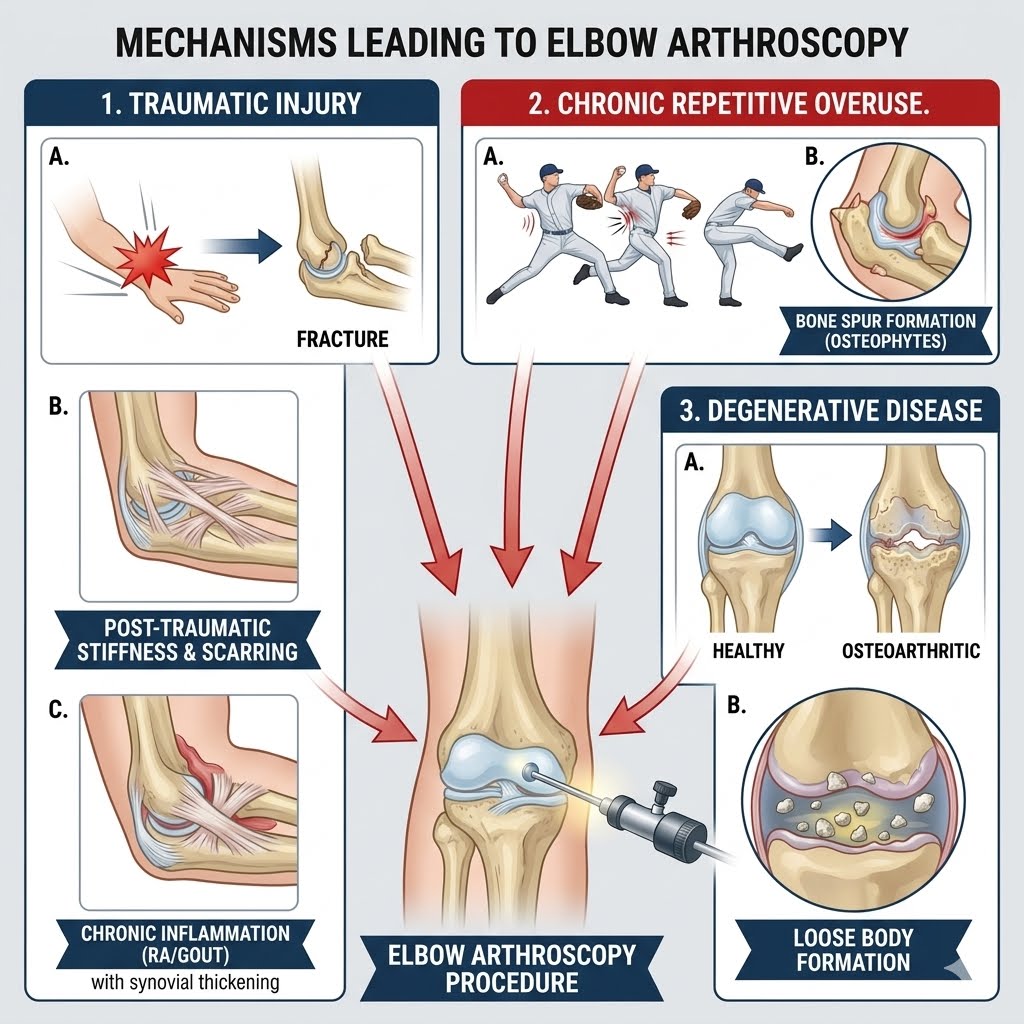
Elbow stiffness develops after trauma or surgery due to scarring, tightening of joint capsule, bone growth or other factors that limit normal joint movement.
Causes
What Causes Elbow Stiffness After Trauma?
Elbow stiffness develops after trauma or surgery due to scarring, tightening of joint capsule, bone growth or other factors that limit normal joint movement.
Common causes include:
- Elbow fractures
- Elbow dislocations
- Previous elbow surgery
- Prolonged immobility
- Abnormal scarring
- Bone spurs and loose bodies
- Heterotopic ossification
- Degenerative joint changes
What Structures May Be Involved?
Post-traumatic changes affect several structures involved in normal joint movement.
- Joint capsule
- Articular cartilage
- Joint ligaments
- Muscles and tendons
- Bone surfaces
- Adjacent soft tissues
SYMPTOMS
What are the Symptoms of Elbow Stiffness?
Symptoms depend on the severity and nature of the stiffness. Limited movement will gradually affect work, sport activities and regular activities.

Elbow Stiffness
Elbow feels stiff or tight when moving arm joints.
Limited Movement
A patient may have problems with full elbow flexion and extension.
Painful Movement
Pain can develop when moving elbow through its limited range.
Chronic stiffness can lead to long-term loss of movement.
Connect with our experts and get the right guidance for your condition.
Clicking and Locking
Loose bodies and irregular joint surfaces may cause clicking, catching and locking sensations.
Difficulty Performing Regular Activities
It becomes harder to eat, dress, groom, drive, reach and lift things.
Weakness
Limited use of the affected arm causes weakness in the elbow and forearm region.
Connect with our experts and get the right guidance for your condition.
BOOK CONSULTATIONDIAGNOSIS
How Do Doctors Diagnose Elbow Stiffness?
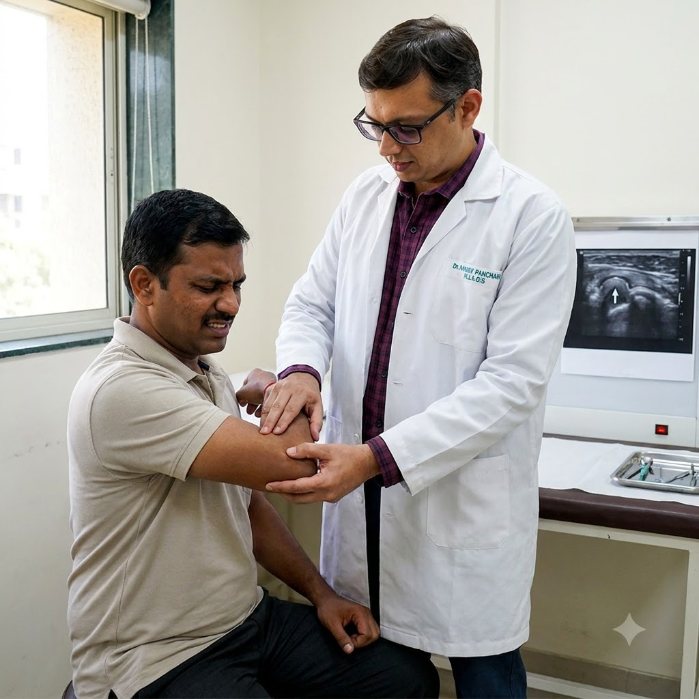
Elbow stiffness is diagnosed on the basis of the medical history and thorough examination of the patient. Specialist will check the elbow movement, pain, strength and functional status.
DIAGNOSIS
How Do Doctors Diagnose Elbow Stiffness?
Elbow stiffness is diagnosed on the basis of the medical history and thorough examination of the patient. Specialist will check the elbow movement, pain, strength and functional status.
Diagnosis includes:
- Examination of the elbow joint movement and function
- Measurement of the range of motion
- X-rays to assess bones and joint abnormalities
- CT scan for a detailed evaluation of bone-related restriction
- MRI if the soft tissues or cartilage damage need to be evaluated
The information allows to determine the cause of the stiffness and decide whether arthroscopic treatment is required.
TREATMENT
What is the Treatment for Post-Traumatic Elbow Contracture?
Elbow contracture treatment depends on its severity, underlying cause and impact on daily activities. Conservative treatment is usually tried first and surgery is needed when significant restrictions persist.
Physiotherapy
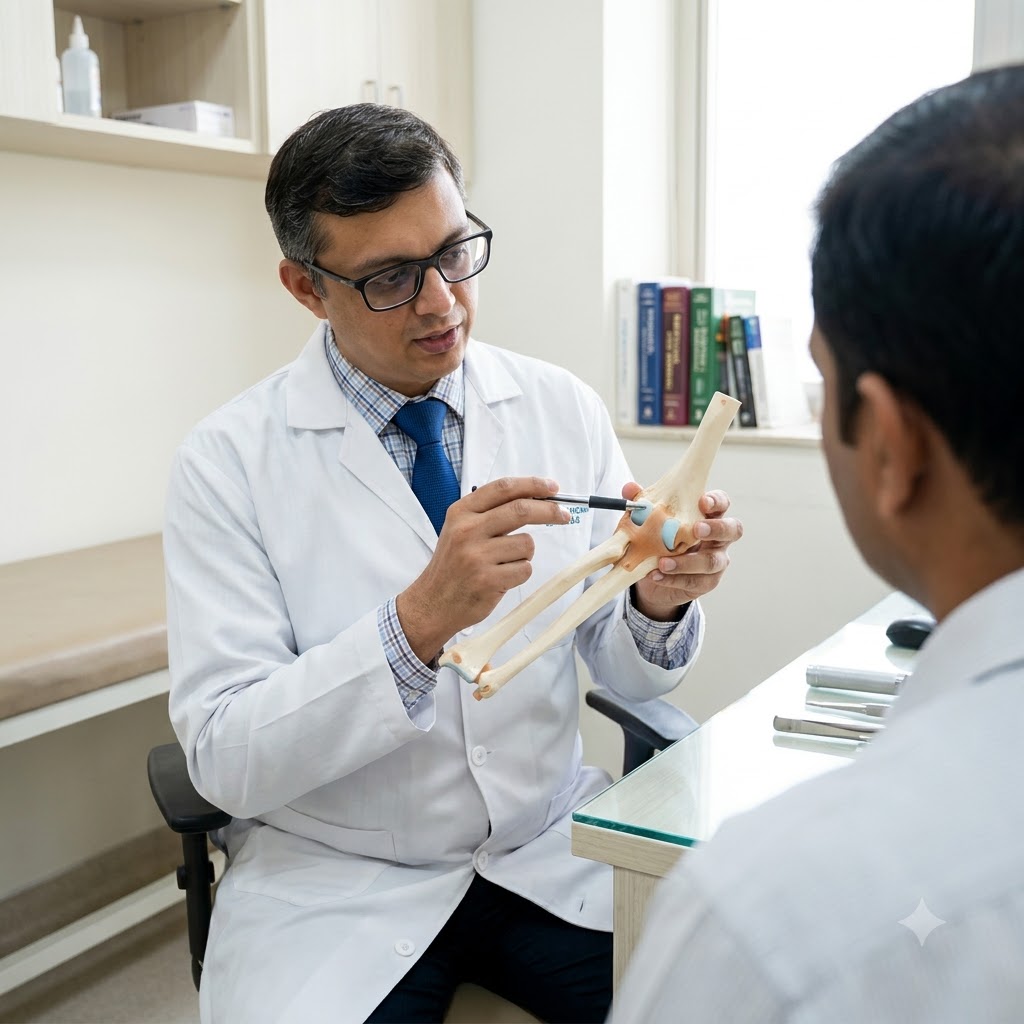
Improves joint flexibility, maintains movement and strengthens surrounding muscles.
Range of Motion Exercises
Progressive exercises help to gradually restore elbow joint flexion and extension.
Splinting
Static or dynamic splints can be used to improve movement limitation in selected patients.
Pain Management
Painkillers can help to cope with discomfort during rehabilitation.
Surgical Treatment
When restrictions persist despite proper conservative treatment, elbow arthroscopy or open contracture release can be tried.
NON-SURGICAL CARE
How is Elbow Stiffness Treated Without Surgery?
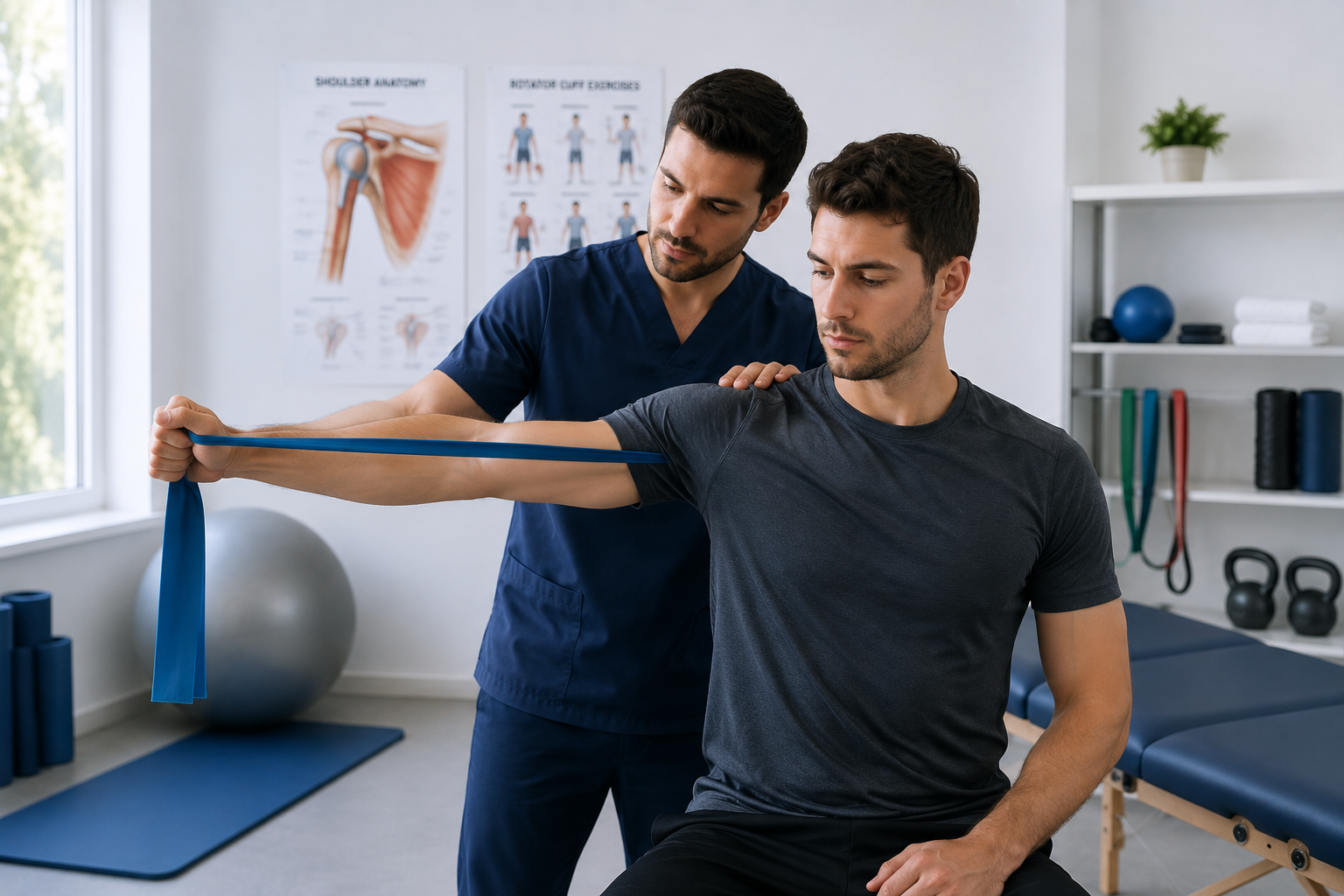
Many patients can be successfully treated with rehabilitation program especially when treatment starts early. Non-surgical treatment aims at restoration of elbow movement, pain relief and prevention of stiffness development.
NON-SURGICAL CARE
How is Elbow Stiffness Treated Without Surgery?
Many patients can be successfully treated with rehabilitation program especially when treatment starts early. Non-surgical treatment aims at restoration of elbow movement, pain relief and prevention of stiffness development.
Non-surgical treatment options include:
- Physiotherapy to increase flexibility, mobility and strength of the elbow
- Range of motion exercises
- Splinting when needed
- Modification of activities to avoid movements aggravating the condition
- Pain management to facilitate rehabilitation
If these measures don’t provide enough improvement, surgical treatment can be considered.
RISKS OF NO TREATMENT
When is Elbow Arthroscopy Needed?
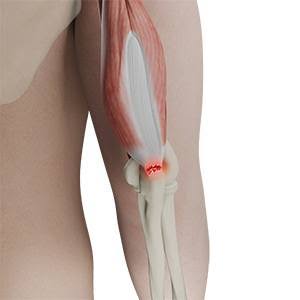
Elbow arthroscopy may be performed when persistent stiffness, pain or mechanical symptoms persist despite proper conservative treatment. This procedure is especially useful when scarring, loose bodies, bone spurs or other joint internal pathology contribute to movement limitations.
RISKS OF NO TREATMENT
When is Elbow Arthroscopy Needed?
Elbow arthroscopy may be performed when persistent stiffness, pain or mechanical symptoms persist despite proper conservative treatment. This procedure is especially useful when scarring, loose bodies, bone spurs or other joint internal pathology contribute to movement limitations.
Elbow arthroscopy may be indicated in the presence of:
- Persistent elbow stiffness despite the rehabilitation
- Limited elbow movement impacting daily activities
- Loose bodies causing clicking, catching and locking
- Bone spurs causing restriction of joint movement
- Scarring or other joint internal pathology
The purpose of the procedure is to solve joint problems and improve joint movement and function.
SURGERY
What Happens During Elbow Arthroscopy?
Elbow arthroscopy is performed with the help of small incisions around the elbow joint. The doctor uses arthroscope to see inside the joint and identify and treat problematic structures.
The procedure typically includes:
- Creation of small incisions around the elbow joint
- Insertion of arthroscope to visualize the joint
- Identification of scarring, loose bodies, bone spurs or damaged joint structures
- Solving of problems with the structures causing symptoms
- Evaluation of the elbow joint movement after procedure
- Closing of the incisions and start of the rehabilitation program
Exact procedure steps depend on the cause of the stiffness and condition of the elbow joint.
SURGERY
What Happens During Elbow Arthroscopy?
Elbow arthroscopy is performed with the help of small incisions around the elbow joint. The doctor uses arthroscope to see inside the joint and identify and treat problematic structures.
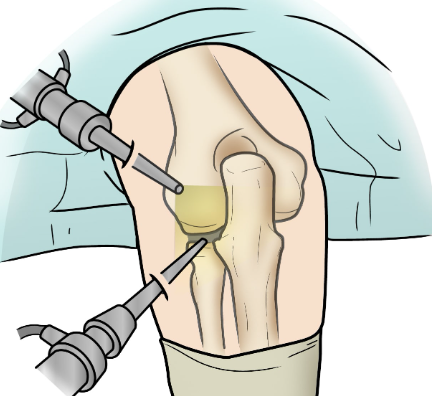
The procedure typically includes:
- Creation of small incisions around the elbow joint
- Insertion of arthroscope to visualize the joint
- Identification of scarring, loose bodies, bone spurs or damaged joint structures
- Solving of problems with the structures causing symptoms
- Evaluation of the elbow joint movement after procedure
- Closing of the incisions and start of the rehabilitation program
Exact procedure steps depend on the cause of the stiffness and condition of the elbow joint.
COMPLICATIONS
What are the Possible Complications of Elbow Arthroscopy?
Even though the procedure is performed using minimally invasive technique, complications can still occur. Your specialist will discuss the potential risks for your specific case.
Recurrent Stiffness
Formation of new scarring during healing may cause some loss of joint movement.
Persistent Pain
Pain can persist if joint damage and associated conditions are present.
Nerve Irritation or Injury
There are several important nerves around the elbow and they can be irritated or injured during the surgery.
Infection or Wound Healing Problems
Complications like infection or delayed healing are possible with any surgical procedure.
Incomplete Restoration of Movement
Improvement in movement depends on the nature and severity of the original stiffness.
Connect with our experts and get the right guidance for your condition.
RECOVERY & OUTCOMES
What is the Recovery Process after Elbow Arthroscopy?
RECOVERY & OUTCOMES
What is the Recovery Process after Elbow Arthroscopy?
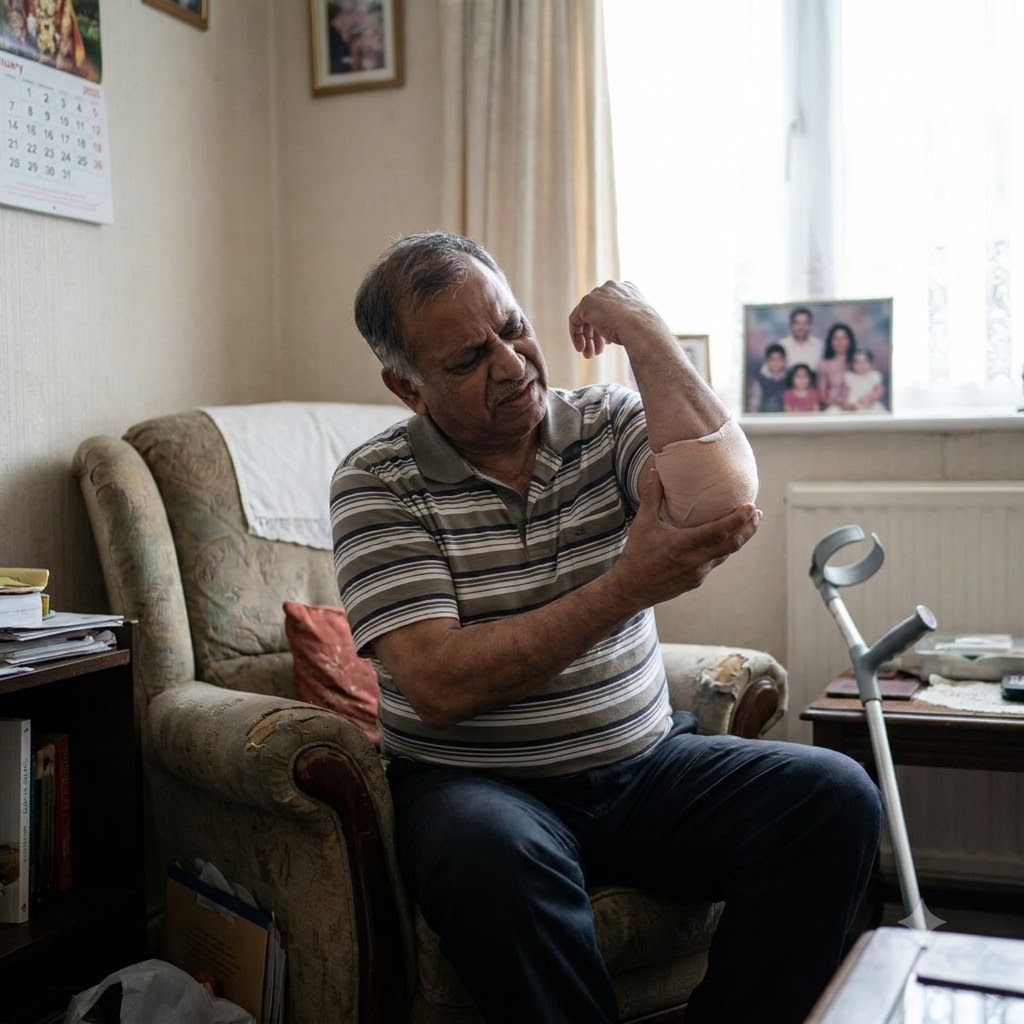
Elbow arthroscopy recovery includes pain and swelling management, gradual restoration of elbow movement and strength. Rehabilitation is needed to maintain the results of the procedure.
Elbow arthroscopy recovery includes:
- Management of pain and swelling
- Early initiation of range of motion exercises
- Progressive stretching and mobility exercises
- Strengthening exercises as healing progresses
- Rehabilitation program
- Gradual return to work and regular activities
Elbow arthroscopy recovery time depends on the performed procedure and specific patient.
AFTERCARE
Recovery & Aftercare after Elbow Arthroscopy
AFTERCARE
Recovery & Aftercare after Elbow Arthroscopy
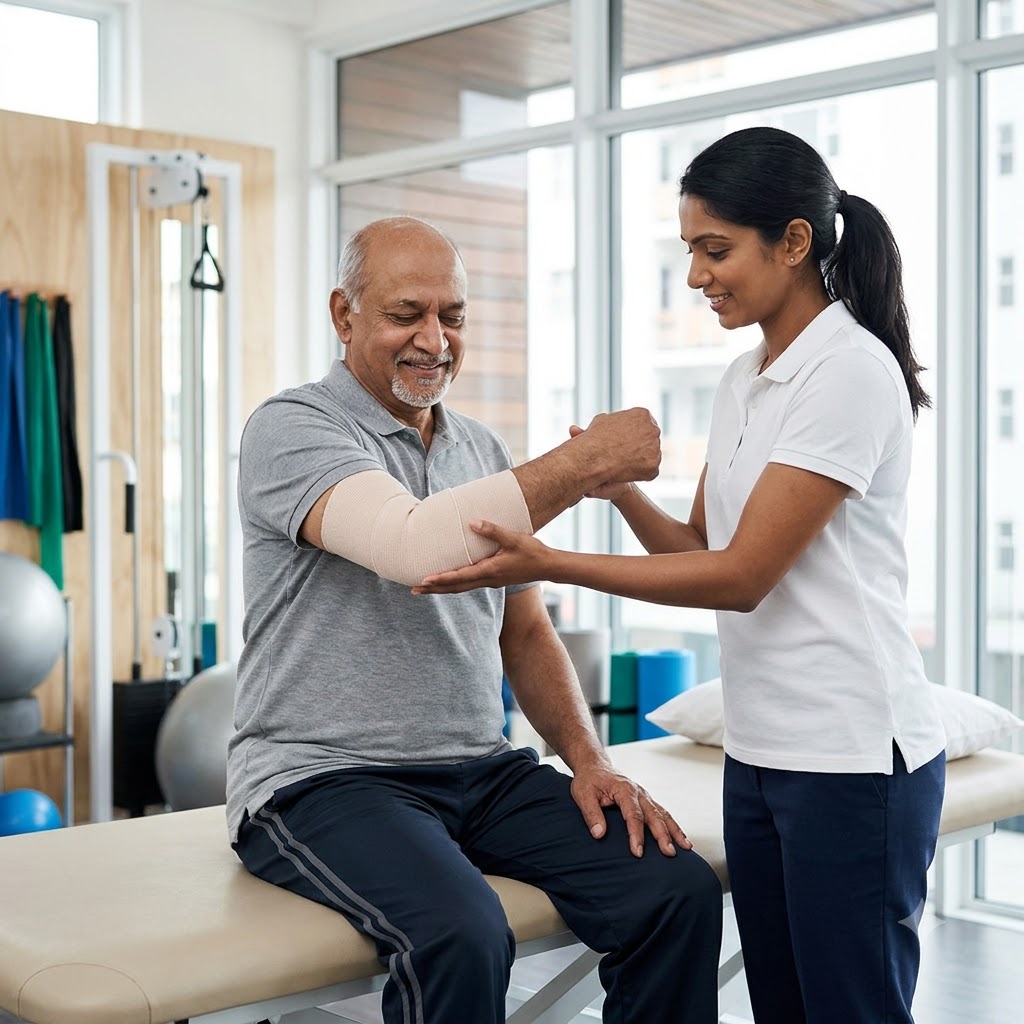
Following your prescribed rehabilitation program will help to maintain joint movement and promote recovery.
Aftercare recommendations include:
- Attend physiotherapy sessions
- Perform prescribed range of motion exercises
- Follow wound care recommendations
- Gradually increase activities as instructed
- Avoid excessive strain during healing
- Attend all scheduled follow-up visits
Proper rehabilitation will help to restore joint movement and function.
FAQ'S
Do You Have Any Question?
It may be recommended when elbow stiffness, pain, loose bodies, bone spurs or other joint problems persist despite proper conservative treatment.
Yes. In case of movement restriction caused by treatable problems like scarring, loose bodies or bone spurs, arthroscopy may improve the range of movement.
Recovery period depends on the treated condition and the patient’s individual healing. Your specialist will recommend an individual rehabilitation program and recovery period.
Elbow arthroscopy is an established minimally invasive procedure. Potential complications are possible with any surgery and your specialist will discuss risks and benefits prior to the treatment.
Yes. Formation of new scarring is possible during healing process. Following rehabilitation recommendations can help to minimize this risk.
This depends on the performed procedure, initial condition and your recovery process. Your specialist will give advice when you can gradually return to certain activities.