
ARTHROSCOPY & SPORTS INJURY ASSOCIATES

OVERVIEW
What Is Distal Biceps Tendon Repair?
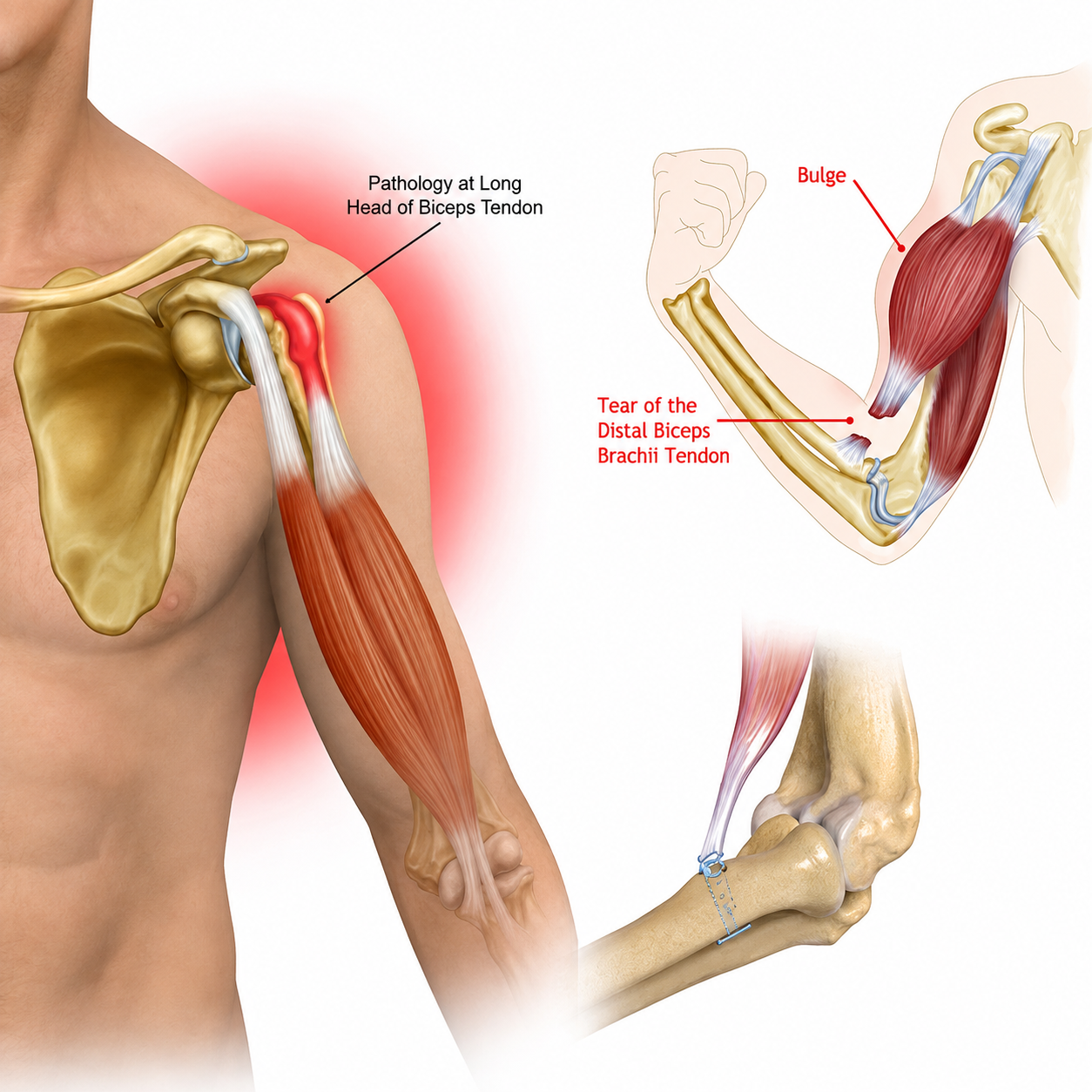
Distal Biceps Tendon Repair refers to a surgical procedure carried out for the purpose of reattaching the torn distal biceps tendon to the radius bone near the elbow. The distal biceps tendon performs an important role in elbow flexion, forearm rotation, and upper extremity strength. Rupture of the tendon causes pain, weakness, swelling, and problems with lifting or pulling actions. With proper surgical repair of the damaged tendon, it is possible to improve its functioning, arm strength, and return to normal activities.
Here are some facts about Distal Biceps Tendon Repair:
- It restores the normal functioning of the torn distal biceps tendon
- Facilitates elbow flexion and forearm rotation strength
- Most often recommended in case of complete tendon rupture
- Timely surgery improves future recovery
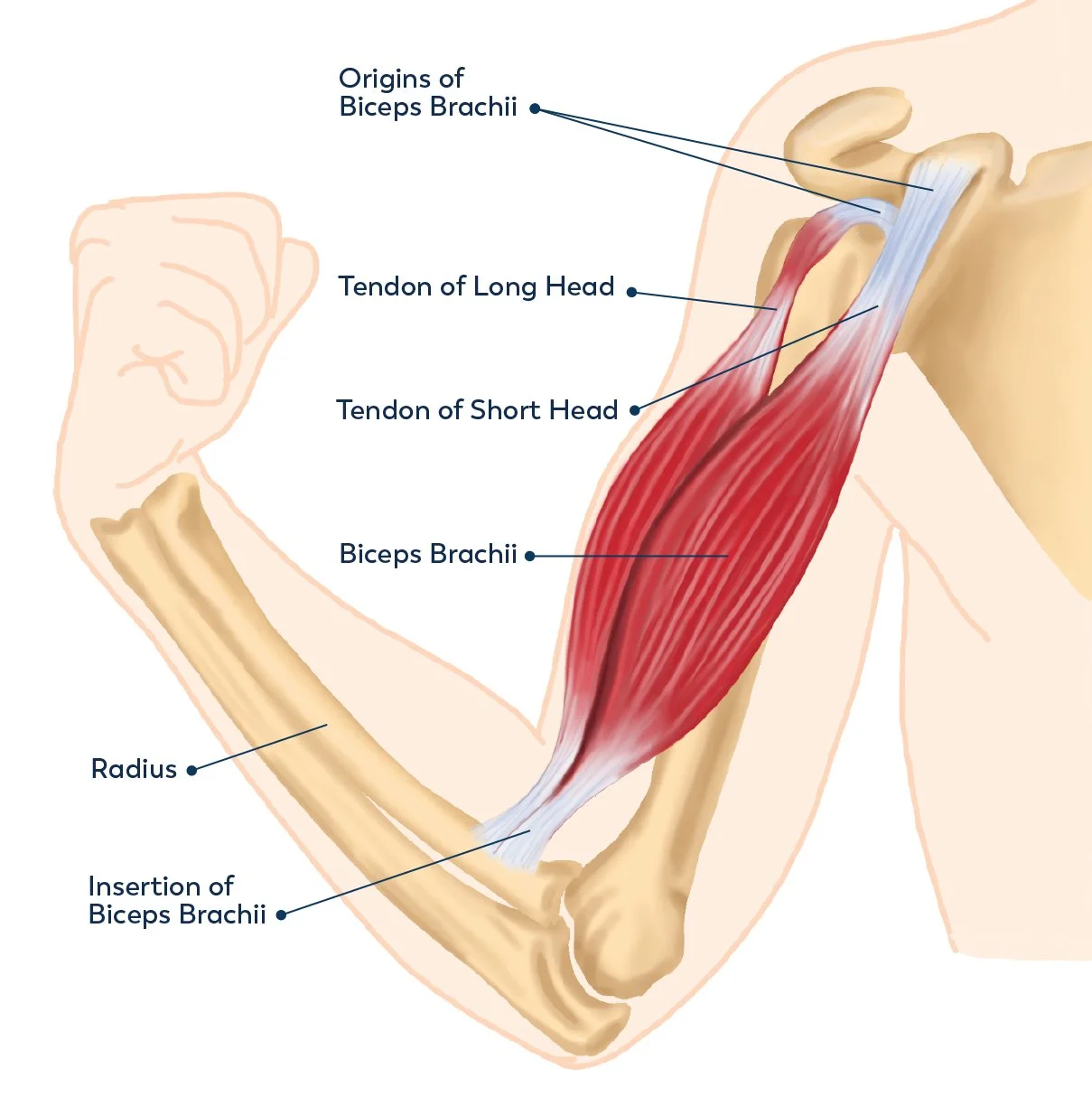
Distal Biceps Tendon Repair refers to a surgical procedure carried out for the purpose of reattaching the torn distal biceps tendon to the radius bone near the elbow. The distal biceps tendon performs an important role in elbow flexion, forearm rotation, and upper extremity strength. Rupture of the tendon causes pain, weakness, swelling, and problems with lifting or pulling actions. With proper surgical repair of the damaged tendon, it is possible to improve its functioning, arm strength, and return to normal activities.
Here are some facts about Distal Biceps Tendon Repair:
- It restores the normal functioning of the torn distal biceps tendon
- Facilitates elbow flexion and forearm rotation strength
- Most often recommended in case of complete tendon rupture
- Timely surgery improves future recovery
Overview
Popping Sensation
Most often, the patient feels or hears a sudden popping sound during the injury.
Problems With Turning the Palm Upward
During turning the palm up, the patient experiences pain and weakness.
Problems With Lifting
The patient is no longer able to perform such actions.
Visible Change in Biceps Muscle Shape
Sometimes, the biceps muscle moves upward due to the torn tendon.
Surgeons Available for Consultations

Dr. Karnav Panchal
M.B.B.S, M.S. (Orthopedics),
FAOS (South Korea)
Consultant Arthroscopist & Sports Injury Specialist Consultant Joint Replacement Surgeon

Dr. Aniket Gupta
M.B.B.S, M.S. (Orthopedics),
MRCS (Edinburgh)
Training & Qualifications Fellowship in MRCS (UK) Arthroscopy & Arthroplasty (Milan, Italy)
Consultant Physiotherapist

Dr. Aarsh Bhatt
B.P.T,M.P.T (Cardio-Respiratory Disorders) MIAP , HCPC (UK) , DHA (UAE)
Consultant Physiotherapist

Dr. Hetvi Dimothe
BPT , M.P.T (Rehabilitation) MIAP, HCPC (UK) , DHA (UAE)
Consultant Physiotherapist
Causes
What Causes Distal Biceps Tendon Tear?
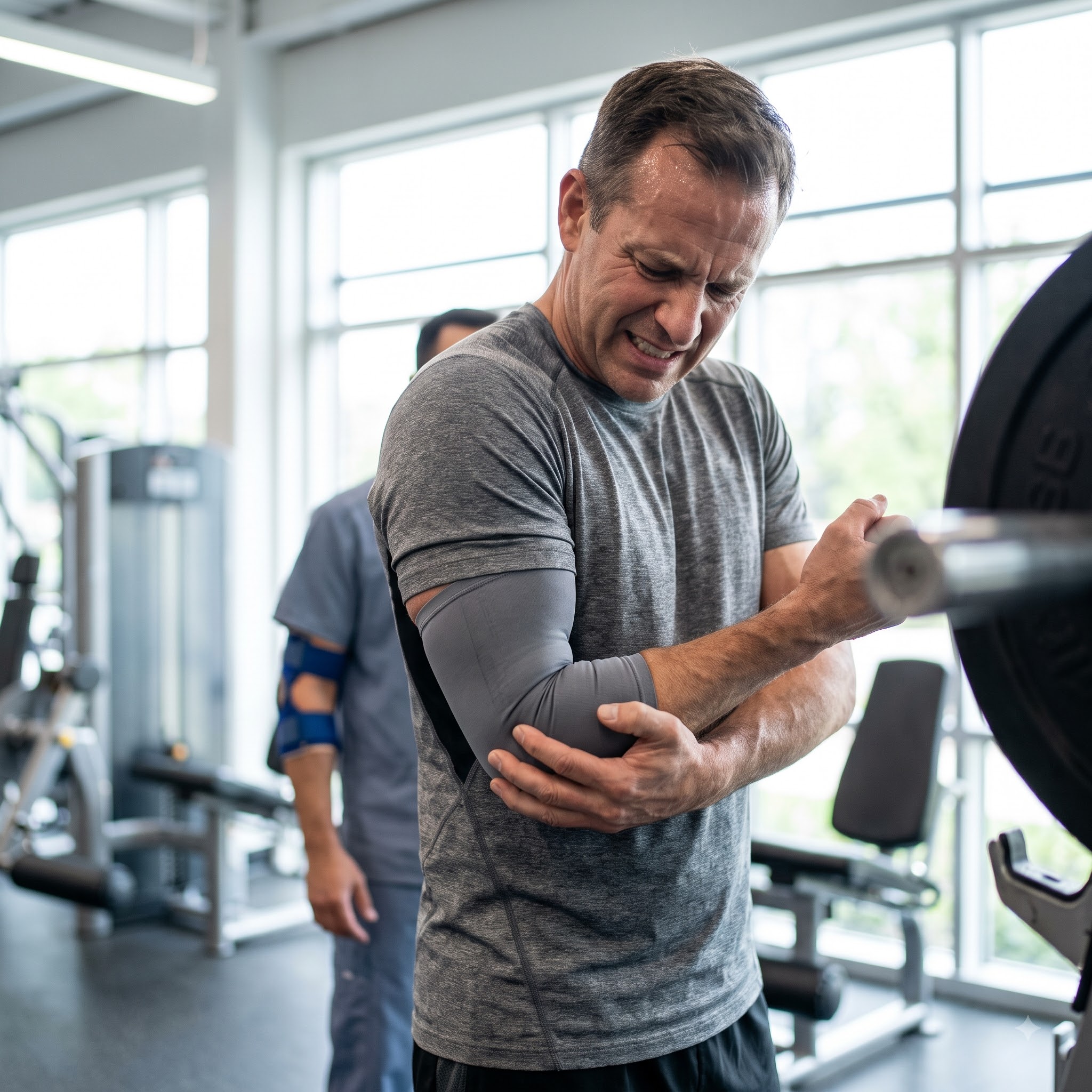
The distal biceps tendon tear happens when the excessive force is put on the bent elbow resulting in the disconnection of the tendon from the radius bone. Usually, this condition affects those who are engaged in heavy lifting, work in construction or engage in weight training and sports which involve sudden pulling actions. Sometimes, due to aging, the tendon may become weaker and prone to tear during routine activities.
Causes
What Causes Distal Biceps Tendon Tear?
The distal biceps tendon tear happens when the excessive force is put on the bent elbow resulting in the disconnection of the tendon from the radius bone. Usually, this condition affects those who are engaged in heavy lifting, work in construction or engage in weight training and sports which involve sudden pulling actions. Sometimes, due to aging, the tendon may become weaker and prone to tear during routine activities.
Distal Biceps Tendon Tears happen due to the following reasons:
- Excessive load during the heavy lifting
- Forceful pulling or lifting
- Injuries sustained during sports
- Upper limb injuries due to falls or traumas
- Age-related changes resulting in tendon weakness
What Other Structures Can Be Affected Along With Distal Biceps Tendon Tear?
Sometimes, a distal biceps tendon tear affects not only the damaged structure but also adjacent muscles, ligaments, nerves, and soft tissues near the elbow joint. Depending on the severity of the injury, these structures may be overstretched or irritated causing additional problems like pain, weakness, swelling, and lack of elbow function.
- Elbow ligaments
- Forearm muscles
- Adjacent tendons
- Nearby nerves
- Joint capsule
- Soft tissues near the elbow joint
SYMPTOMS
What Are the Symptoms of a Distal Biceps Tendon Tear?
Usually, symptoms develop abruptly after the injury takes place and influence arm strength and elbow function. Timely evaluation is essential in order to make a correct diagnosis and start treatment in order to achieve the best recovery results.

Sudden Elbow Pain
The pain usually arises right after the injury takes place and gets worse during lifting, pulling, and rotating the forearm.
Loss of Strength
Due to the injury, the ability to perform elbow flexion and forearm rotation becomes reduced.
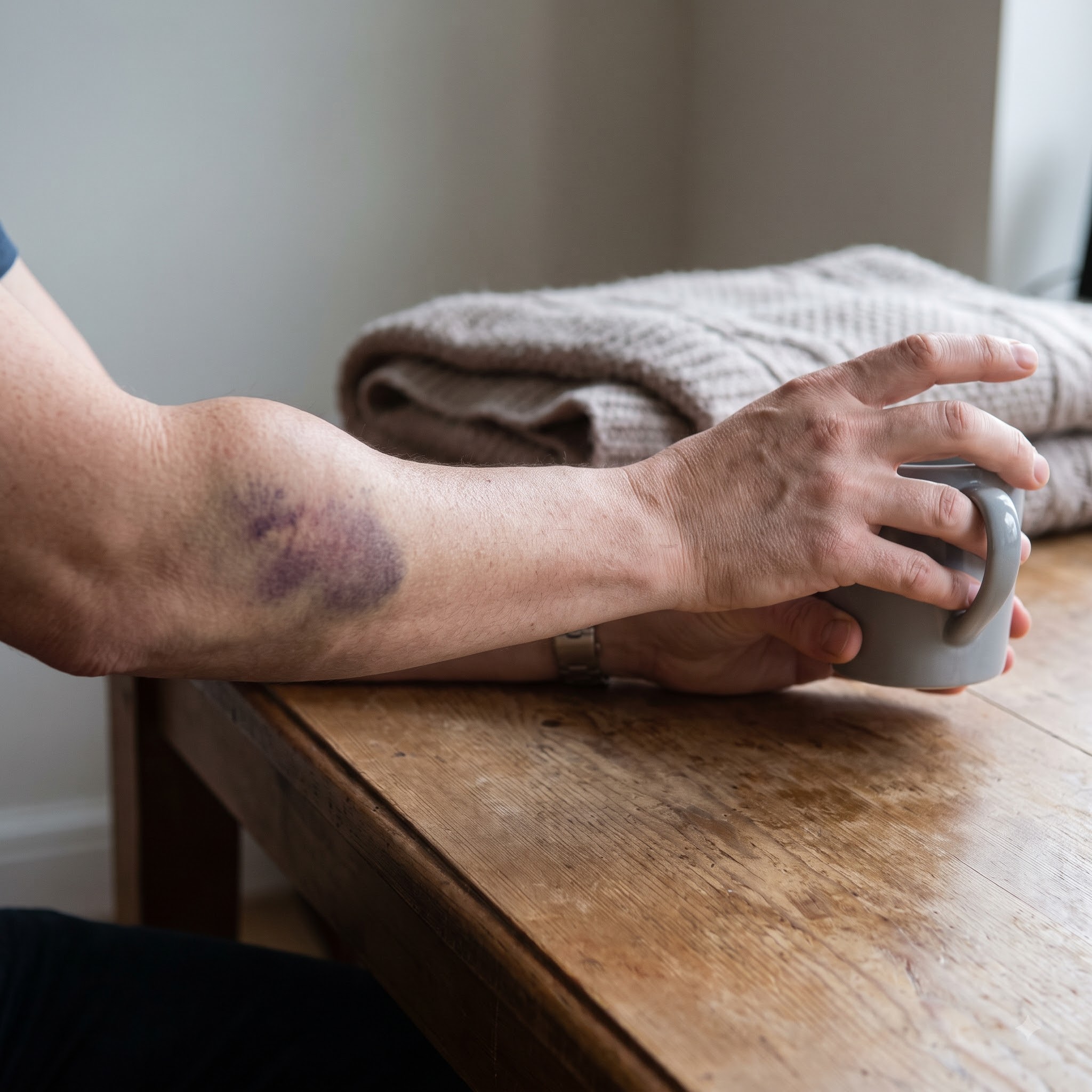
Bruising and Swelling
They appear in the area of the front part of the elbow and the upper forearm.
Neglecting these symptoms may result in a persistent weakness and lack of arm function, as well as the necessity of more complicated treatment in the future.
Connect with our experts and get the right guidance for your condition.
Popping Sensation
Most often, the patient feels or hears a sudden popping sound during the injury.
Problems With Turning the Palm Upward
During turning the palm up, the patient experiences pain and weakness.
Problems With Lifting
The patient is no longer able to perform such actions.
Visible Change in Biceps Muscle Shape
Sometimes, the biceps muscle moves upward due to the torn tendon.
Connect with our experts and get the right guidance for your condition.
BOOK CONSULTATIONDIAGNOSIS
How Do Doctors Diagnose a Distal Biceps Tendon Tear?
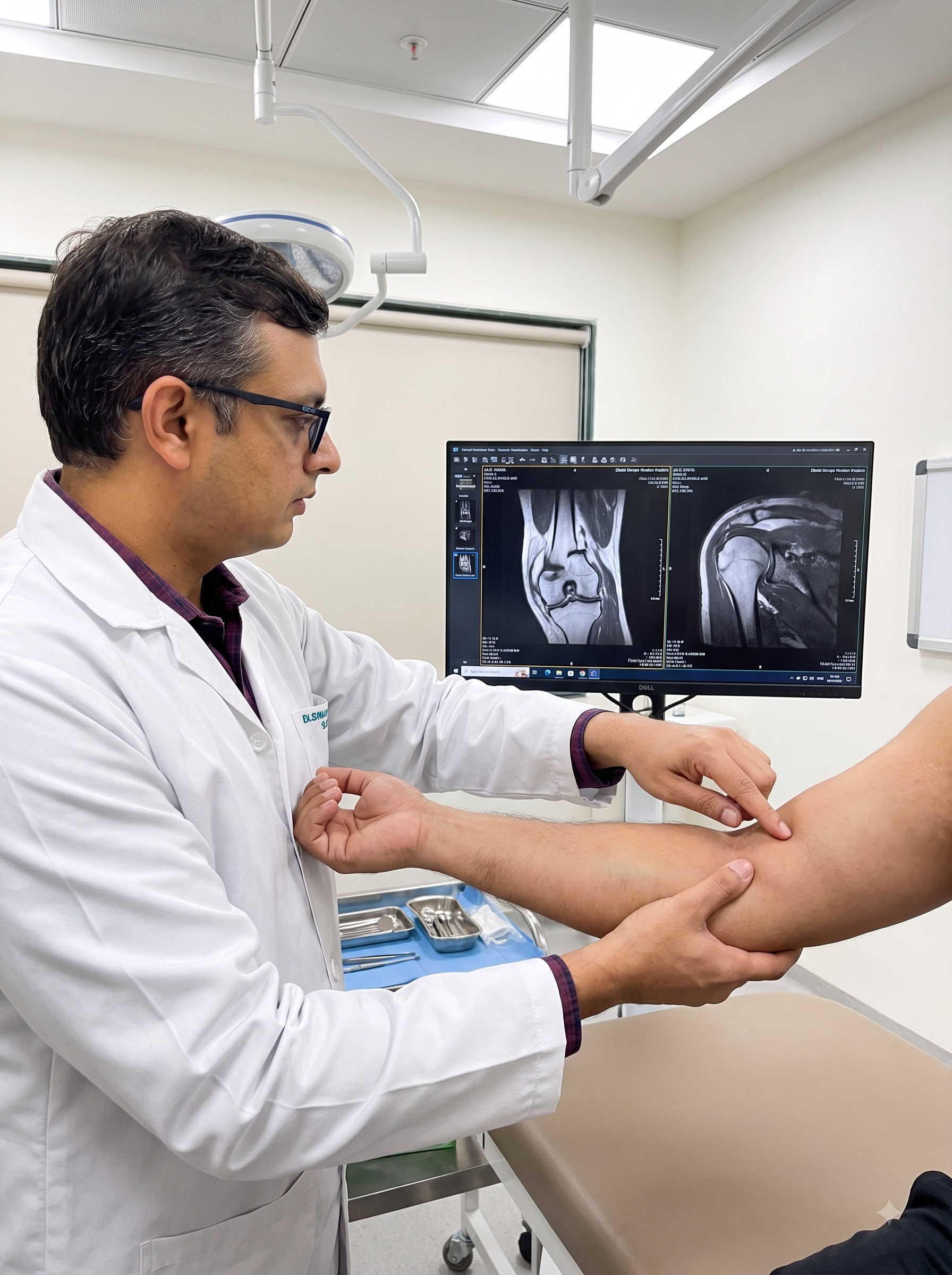
The diagnosis of the distal biceps tendon tear is made with the help of the discussion of the symptoms, analysis of the way of occurrence of the injury, and physical examination. During the latter, doctors assess the patient's pain, bruising, arm strength, forearm rotation and elbow mobility. In order to confirm the diagnosis and evaluate the injury, doctors usually recommend imaging studies. At ALIGN ASIA, we perform comprehensive examination to get accurate diagnosis and plan proper treatment.
DIAGNOSIS
How Do Doctors Diagnose a Distal Biceps Tendon Tear?
The diagnosis of the distal biceps tendon tear is made with the help of the discussion of the symptoms, analysis of the way of occurrence of the injury, and physical examination. During the latter, doctors assess the patient's pain, bruising, arm strength, forearm rotation and elbow mobility. In order to confirm the diagnosis and evaluate the injury, doctors usually recommend imaging studies. At ALIGN ASIA, we perform comprehensive examination to get accurate diagnosis and plan proper treatment.
Distal Biceps Tendon Tears are diagnosed with the help of the following tests:
- Physical examination assessing tendon condition, elbow strength, forearm rotation, and arm function
- Imaging studies assessing the extent of tendon damage and other injuries
- MRI
- Ultrasound
- X-ray (if necessary to assess the presence of bone injuries)
TREATMENT
What Is the Treatment for a Distal Biceps Tendon Tear?
The treatment of the distal biceps tendon tear depends on the degree of the injury, the patient's activity level, their functional needs, and the time passed since the injury happened. Partial tears are usually treatable conservatively, while complete tendon rupture needs surgical repair. Early treatment helps to improve recovery outcome and prevent weakness in the future.
Pain Management
It helps to ease the pain and swelling during the initial recovery stage.
Activity Modification
It protects the injured tendon and prevents further injury.
Physiotherapy
It helps to improve mobility, flexibility and general elbow function.
Tendon Rehabilitation
It facilitates tendon healing and gradual restoration of the movement.
Distal Biceps Tendon Repair
This procedure reattaches the torn tendon to restore elbow strength and forearm rotation.
NON-SURGICAL CARE
How Is Distal Biceps Tendon Tear Treated Without Surgery?
Sometimes, there are patients whose partial tendon tears or low functional demands make them good candidates for non-surgical treatment. The conservative treatment is focused on the reduction of pain, improvement of elbow movement, maintenance of the existing function, and strengthening of the adjacent muscles. Proper rehabilitation programme helps to treat the injury with a minimum risk of further tendon damage.

NON-SURGICAL CARE
How Is Distal Biceps Tendon Tear Treated Without Surgery?
Sometimes, there are patients whose partial tendon tears or low functional demands make them good candidates for non-surgical treatment. The conservative treatment is focused on the reduction of pain, improvement of elbow movement, maintenance of the existing function, and strengthening of the adjacent muscles. Proper rehabilitation programme helps to treat the injury with a minimum risk of further tendon damage.
Treatment options without surgery include:
- Physiotherapy programmes aimed at elbow mobilization, strengthening of the muscles and restoration of function
- Activity modification helps to protect the injured tendon and prevent its damage
- Pain relief with anti-inflammatory medication
- Strengthening and stretching exercises for elbow
RISKS OF NO TREATMENT
When Is Distal Biceps Tendon Repair Needed?
While some partial tendon tears can be managed conservatively, surgical repair is usually needed for complete ruptures of the tendon or its partial rupture resulting in significant weakness and problems with daily activities, work, or sport. It is advisable to have early surgical repair in order to restore the normal strength, particularly, elbow flexion and forearm rotation.
RISKS OF NO TREATMENT
When Is Distal Biceps Tendon Repair Needed?
While some partial tendon tears can be managed conservatively, surgical repair is usually needed for complete ruptures of the tendon or its partial rupture resulting in significant weakness and problems with daily activities, work, or sport. It is advisable to have early surgical repair in order to restore the normal strength, particularly, elbow flexion and forearm rotation.
Distal biceps tendon repair is usually needed in the following cases:
- Complete rupture of the distal biceps tendon
- Important loss of the ability of the elbow to rotate and bend
- Persistent weakness in spite of the conservative treatment
- High functional needs with the necessity of physical labor or participating in sports
SURGERY
What Is Distal Biceps Tendon Repair Surgery?
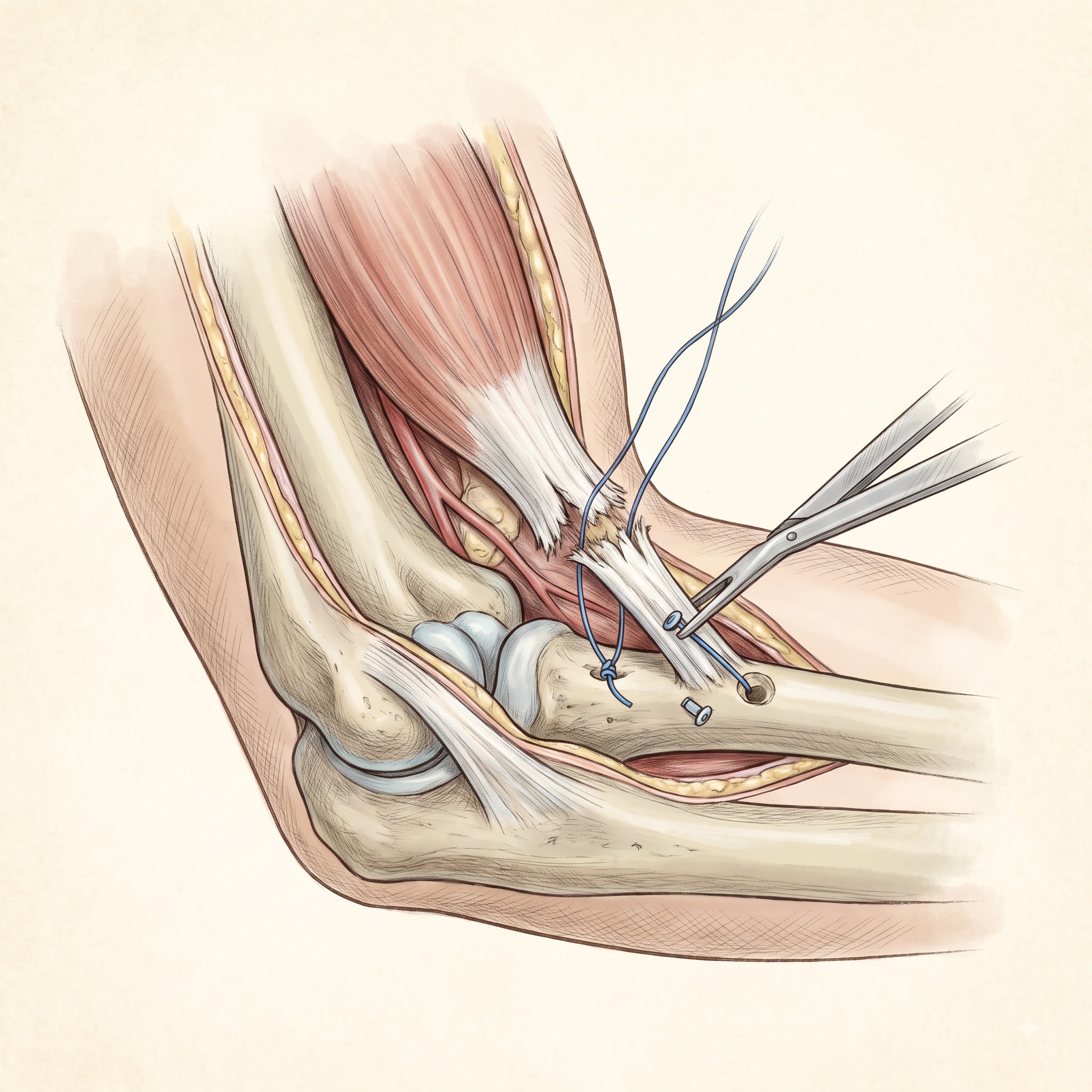
Distal Biceps Tendon Repair refers to a surgical procedure performed in order to reattach the torn distal biceps tendon to the radius bone near the elbow. The aim of the surgery is the restoration of the strength of elbow flexion and forearm rotation. Nowadays, surgical procedures are performed with the help of modern technologies that help to achieve a secure tendon fixation with preservation of surrounding structures. At ALIGN ASIA, every surgical procedure is tailor-made based on the severity of the injury, patient's activity level, and recovery aims.
Distal Biceps Tendon Repair surgery is usually done in accordance with the following procedure:
- With the help of the carefully planned incision, the torn distal biceps tendon is accessed.
- The damaged tendon is exposed, prepared, and ready to be attached.
- Suture anchor fixation
- Cortical button fixation
- Interference screw fixation
- The damaged tendon is reattached to the radius bone with the use of the necessary fixation techniques.
- Tendon tension, elbow joint movement, and repair security are assessed before finishing the procedure.
- The incision is closed and personalized rehabilitation programme is suggested.
SURGERY
What Is Distal Biceps Tendon Repair Surgery?
Distal Biceps Tendon Repair refers to a surgical procedure performed in order to reattach the torn distal biceps tendon to the radius bone near the elbow. The aim of the surgery is the restoration of the strength of elbow flexion and forearm rotation. Nowadays, surgical procedures are performed with the help of modern technologies that help to achieve a secure tendon fixation with preservation of surrounding structures. At ALIGN ASIA, every surgical procedure is tailor-made based on the severity of the injury, patient's activity level, and recovery aims.
Distal Biceps Tendon Repair surgery is usually done in accordance with the following procedure:
- With the help of the carefully planned incision, the torn distal biceps tendon is accessed.
- The damaged tendon is exposed, prepared, and ready to be attached.
- Suture anchor fixation
- Cortical button fixation
- Interference screw fixation
- The damaged tendon is reattached to the radius bone with the use of the necessary fixation techniques.
- Tendon tension, elbow joint movement, and repair security are assessed before finishing the procedure.
- The incision is closed and personalized rehabilitation programme is suggested.
COMPLICATIONS
What Are the Possible Complications of Distal Biceps Tendon Tear or Its Treatment?
While most of the patients are recovering successfully, complications may arise in case the distal biceps tendon tear remains untreated or during the healing period. Early diagnosis, timely surgical intervention if required, and proper rehabilitation help to minimize the risks. Follow-up visits help to track the recovery and prevent any problems during it in order to achieve the best functional outcome.
Persistent Weakness
Delayed treatment may result in the incomplete healing and weakness of elbow flexion and forearm rotation.
Elbow Joint Stiffness
During recovery and rehabilitation, limited elbow joint mobility may develop.
Re-injury of the Tendon
Too early return to heavy activity may increase the risk of the recurrence of the tendon injury.
Impaired Arm Function
Unhealed tendon injury or complications of the healing process may lead to the reduction of the lifting ability, grip strength, and arm function.
Connect with our experts and get the right guidance for your condition.
RECOVERY & OUTCOMES
What Is the Recovery Process After Distal Biceps Tendon Repair?
RECOVERY & OUTCOMES
What Is the Recovery Process After Distal Biceps Tendon Repair?
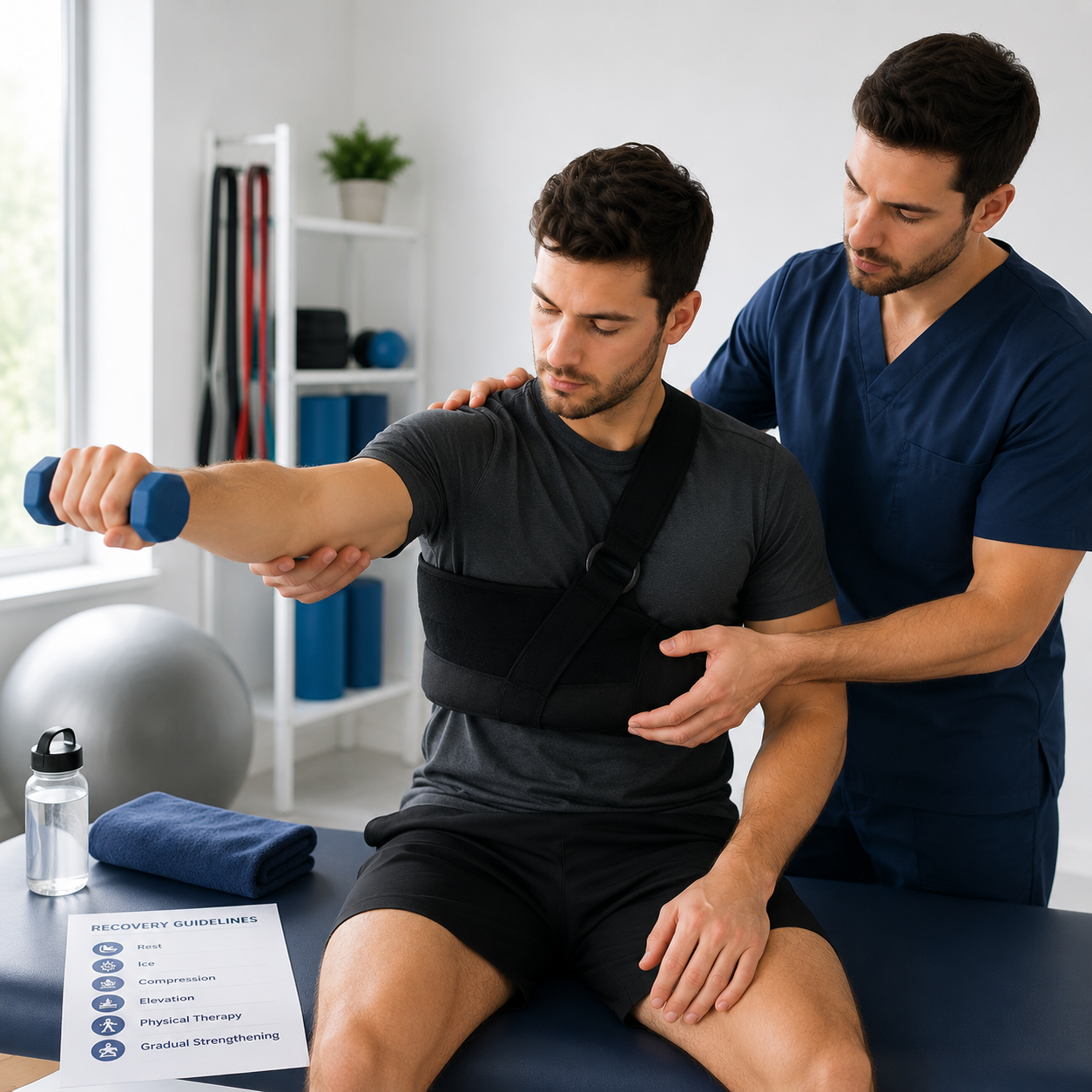
Recovery after the distal biceps tendon repair is the process which involves the tendon protection along with gradual restoration of elbow mobility, strength, and function. It takes time and depends on the severity of the injury, the surgical technique used and individual healing abilities. A rehabilitation programme helps to achieve the desired result safely.
The process of the recovery after Distal Biceps Tendon Repair surgery usually includes the following steps:
- Protection of the repaired tendon with the help of a brace or splint
- Gentle range of motion exercises under the guidance of a specialist
- Progressive strength training of the biceps, forearm and adjacent muscles
- Physiotherapy for improving the flexibility, stability and arm function
- Gradual return to work, sports, and daily activities
AFTERCARE
Recovery & Aftercare For Distal Biceps Tendon Repair
AFTERCARE
Recovery & Aftercare For Distal Biceps Tendon Repair
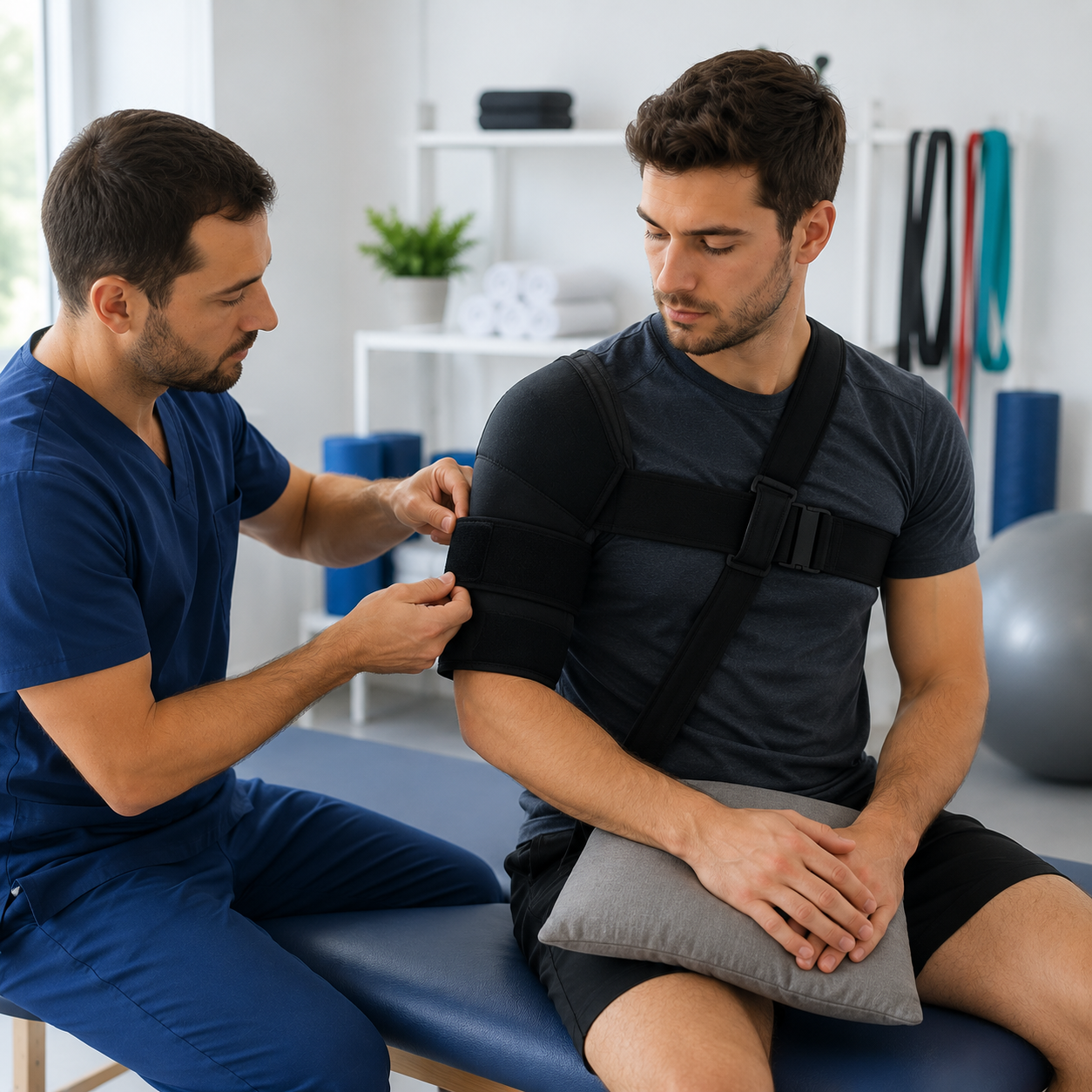
Effective recovery depends on the implementation of the rehabilitation programme and the protection of the repaired tendon during the healing period. Appropriate aftercare helps to restore the elbow strength, improve the forearm function, decrease the risk of re-injury and obtain the best long-term outcome. Regular follow-up helps to monitor the process of recovery and adjust the treatment if required.
The following aftercare measures are needed to facilitate recovery process:
- Wearing the prescribed brace or support device as recommended in the initial period after surgery
- Regular attendance of physiotherapy sessions for strength, flexibility and elbow joint function improvement
- Performing rehabilitation exercises exactly as recommended by the healthcare team
- Gradual activity level increase and avoiding heavy lifting before it is medically approved
- Regular follow-ups to control the recovery progress
FAQ'S
Do You Have Any Question?
While some partial tears may heal conservatively, the complete tendon ruptures require surgery to restore strength and function.
It depends on the severity of the injury, healing speed, and rehabilitation. Your specialist will provide you with an individualized recovery timetable.
It depends on tendon healing, restoration of strength and rehabilitation progress. Your surgeon will tell you when it is safe to return to work and sports.
It is a common orthopaedic procedure performed safely by skilled specialists.
Re-injury is rare, but following postoperative instructions, finishing rehabilitation and gradually resuming the physical activity will help you to avoid it.