ARTHROSCOPY & SPORTS INJURY ASSOCIATES

OVERVIEW
What is Golfer's Elbow (Medial Epicondylitis)?
Golfer’s Elbow or Medial Epicondylitis is a condition resulting from irritation or degeneration of the tendons attaching the forearm muscles to the inner part of the elbow (medial epicondyle). It arises because of overuse of the forearm muscles responsible for gripping, lifting, throwing, and moving the wrist. Although the term Golfer’s Elbow suggests the involvement of the condition in playing golf, the injury is common among athletes, manual workers, and people who repeat similar arm movements. Proper treatment will help you relieve pain, restore functionality and protect the tendons from further injury.
These are some key facts to know about Golfer’s Elbow (Medial Epicondylitis):
- Affects the tendons of the inner side of the elbow
- Develops because of repetitive movements like gripping, lifting or turning of the wrist
- Causes pain, tenderness and reduced grip strength
- Proper early treatment will promote recovery and protect the tendons from further damage
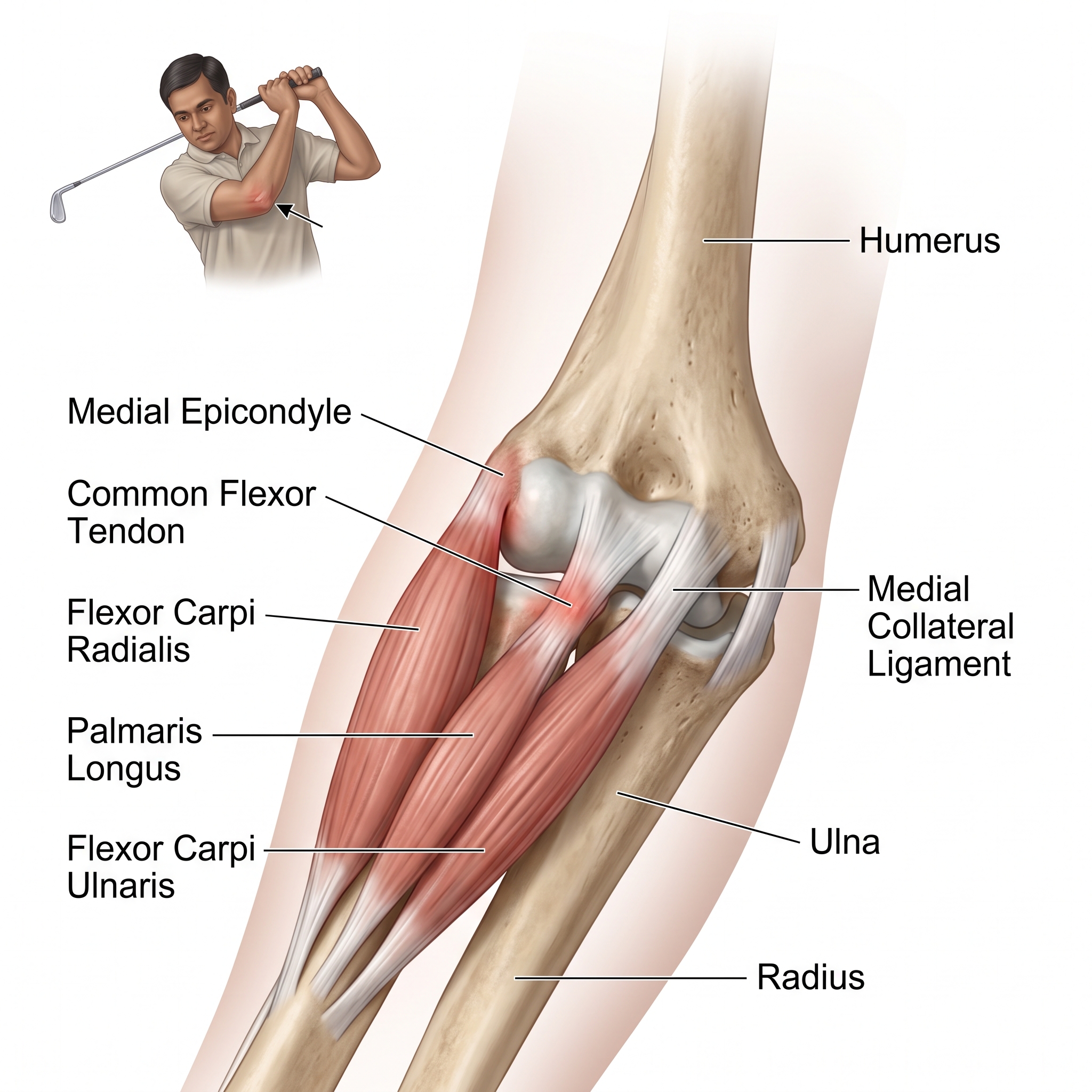
Golfer’s Elbow or Medial Epicondylitis is a condition resulting from irritation or degeneration of the tendons attaching the forearm muscles to the inner part of the elbow (medial epicondyle). It arises because of overuse of the forearm muscles responsible for gripping, lifting, throwing, and moving the wrist. Although the term Golfer’s Elbow suggests the involvement of the condition in playing golf, the injury is common among athletes, manual workers, and people who repeat similar arm movements. Proper treatment will help you relieve pain, restore functionality and protect the tendons from further injury.
These are some key facts to know about Golfer’s Elbow (Medial Epicondylitis):
- Affects the tendons of the inner side of the elbow
- Develops because of repetitive movements like gripping, lifting or turning of the wrist
- Causes pain, tenderness and reduced grip strength
- Proper early treatment will promote recovery and protect the tendons from further damage
Surgeons Available for Consultations
Dr. Karnav Panchal
M.B.B.S, M.S. (Orthopedics),
FAOS (South Korea)
Consultant Arthroscopist & Sports Injury Specialist Consultant Joint Replacement Surgeon

Dr. Aniket Gupta
M.B.B.S, M.S. (Orthopedics),
MRCS (Edinburgh)
Training & Qualifications Fellowship in MRCS (UK) Arthroscopy & Arthroplasty (Milan, Italy)
Consultant Physiotherapist
Dr. Aarsh Bhatt
B.P.T,M.P.T (Cardio-Respiratory Disorders) MIAP , HCPC (UK) , DHA (UAE)
Consultant Physiotherapist

Dr. Hetvi Dimothe
BPT , M.P.T (Rehabilitation) MIAP, HCPC (UK) , DHA (UAE)
Consultant Physiotherapist
Causes
What Causes Golfer's Elbow (Medial Epicondylitis)?
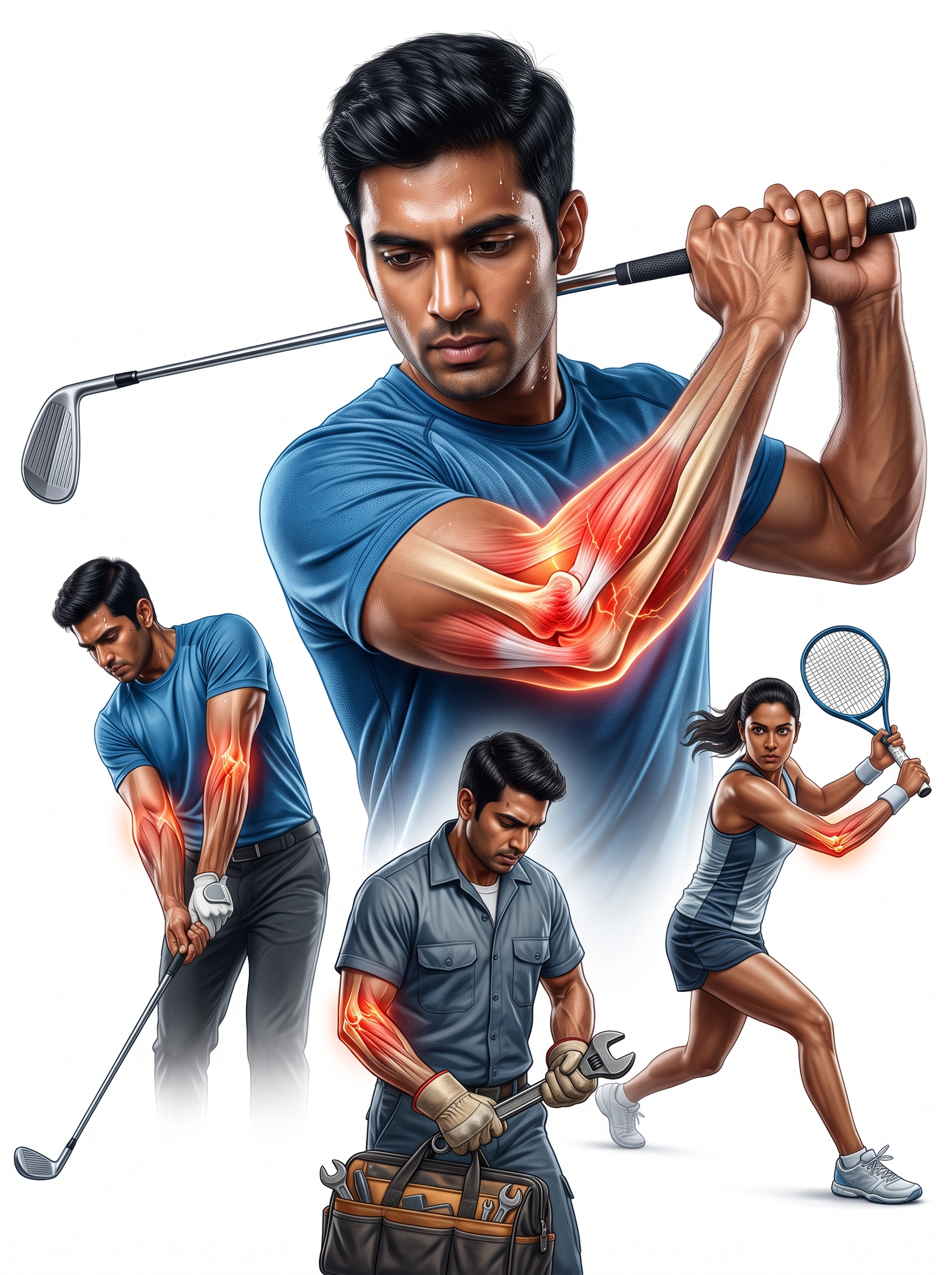
Golfer's Elbow occurs when repetitive movements produce too much strain on the tendons. The constant overloading of the tendons produces microscopic tendon damage that may develop into tendon degeneration if the injuries are not given enough time to heal. The condition may develop both gradually due to repetitive actions and rarely suddenly due to some forceful movements of the forearm.
Causes
What Causes Golfer's Elbow (Medial Epicondylitis)?
Golfer's Elbow occurs when repetitive movements produce too much strain on the tendons. The constant overloading of the tendons produces microscopic tendon damage that may develop into tendon degeneration if the injuries are not given enough time to heal. The condition may develop both gradually due to repetitive actions and rarely suddenly due to some forceful movements of the forearm.
Golfer’s Elbow may be caused by the following factors:
- Repetitive gripping or lifting actions
- Repeated wrist flexion and forearm rotation
- Sport activities like golf, racquet sports, and throwing
- Manual work with repetitive movements of the arms
- Poor technique or overtraining during sports
What Other Structures Can be Affected by Golfer’s Elbow (Medial Epicondylitis)?
Despite the fact that tendon injury is the main one in this case, chronic symptoms or severe overuse may affect other structures, which play a role in the movement and functioning of the elbow.
- Flexor-pronator tendon complex
- Forearm muscles
- Medial collateral ligament
- Ulnar nerve
- Joint capsule
SYMPTOMS
What are the Symptoms of Golfer's Elbow?
Symptoms usually arise gradually and may aggravate when repeating the action causing the injury. The intensity of symptoms depends on the degree of tendon damage and the level of activity of the person. Early treatment will help relieve pain, restore function and avoid further tendon degeneration.

Pain in the Inside Part of the Elbow
Pain arises on the bony protrusion of the inner side of the elbow and increases when gripping, lifting or turning of the wrist.
Tenderness in the Area of the Medial Elbow
Tenderness may appear in the affected area.
Reduced Grip Strength
Weakness of the muscles of the forearms makes it hard to grip and lift objects.
Not paying attention to these symptoms may cause tendon degeneration, pain, reduced grip strength and limited arm functions in the future.
Connect with our experts and get the right guidance for your condition.

Pain on Wrist Flexion
Bending the wrist or turning the forearm against the resistance produces pain.
Stiffness
The elbow becomes stiff especially after the periods of rest or after the repetitive movements.
Tingling or Numbness
Patients may complain about the sensation of tingling and numbness in the ring and little fingers if the ulnar nerve gets irritated.
Difficulty in Doing Everyday Activities
Actions like lifting objects, opening jars, shaking hands and using tools become painful and difficult.
Connect with our experts and get the right guidance for your condition.
BOOK CONSULTATIONDIAGNOSIS
How Do Doctors Diagnose Golfer's Elbow?
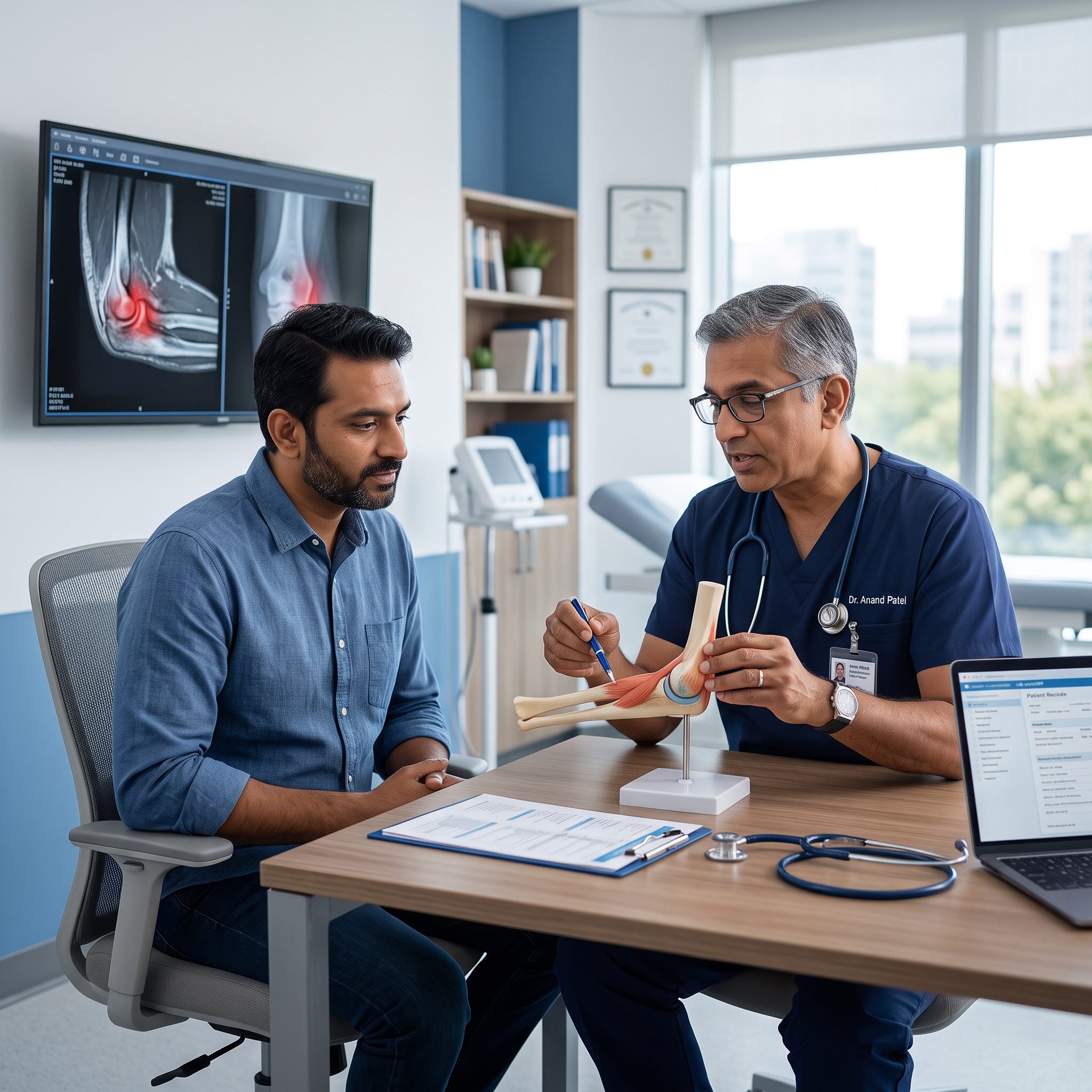
Golfer's Elbow is diagnosed by doctors through evaluation of the patient's complaints, medical history and physical examination. Specialists check the presence of tenderness of the medial epicondyle, pain on resisted wrist flexion, grip strength and overall elbow functioning. To find out whether there is tendon damage or to exclude other diseases imaging examinations may be conducted. At ALIGN ASIA comprehensive assessment allows developing an effective treatment plan.
DIAGNOSIS
How Do Doctors Diagnose Golfer's Elbow?
Golfer's Elbow is diagnosed by doctors through evaluation of the patient's complaints, medical history and physical examination. Specialists check the presence of tenderness of the medial epicondyle, pain on resisted wrist flexion, grip strength and overall elbow functioning. To find out whether there is tendon damage or to exclude other diseases imaging examinations may be conducted. At ALIGN ASIA comprehensive assessment allows developing an effective treatment plan.
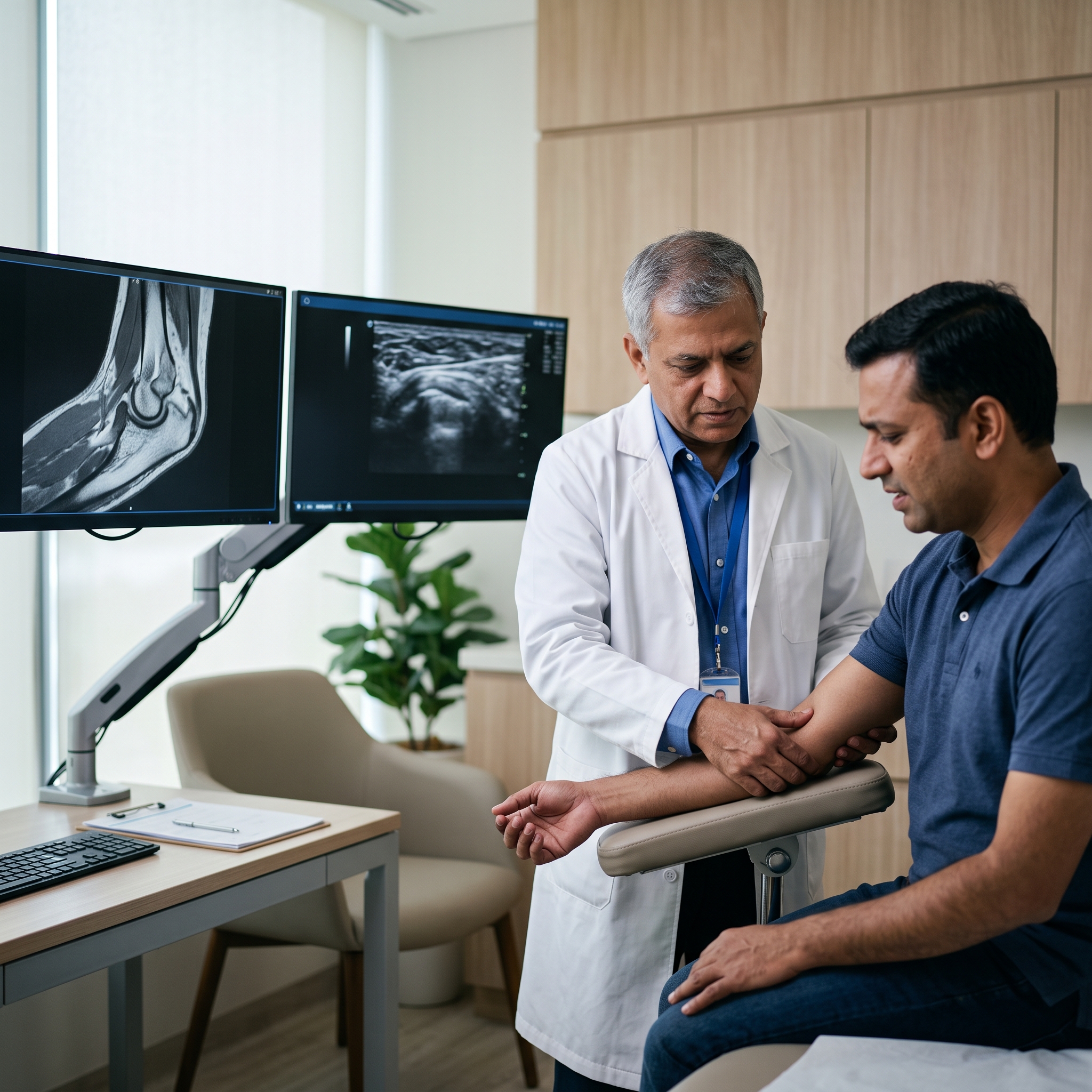
Golfer’s Elbow may be diagnosed in the following ways:
- Physical examination of pain, tenderness, grip strength, range of motion and elbow function
- Imaging studies of tendon damage and related diseases
- Ultrasound
- MRI
- X-ray (if necessary to exclude other bone or joint diseases)
TREATMENT
What is the Treatment for Golfer's Elbow (Medial Epicondylitis)?
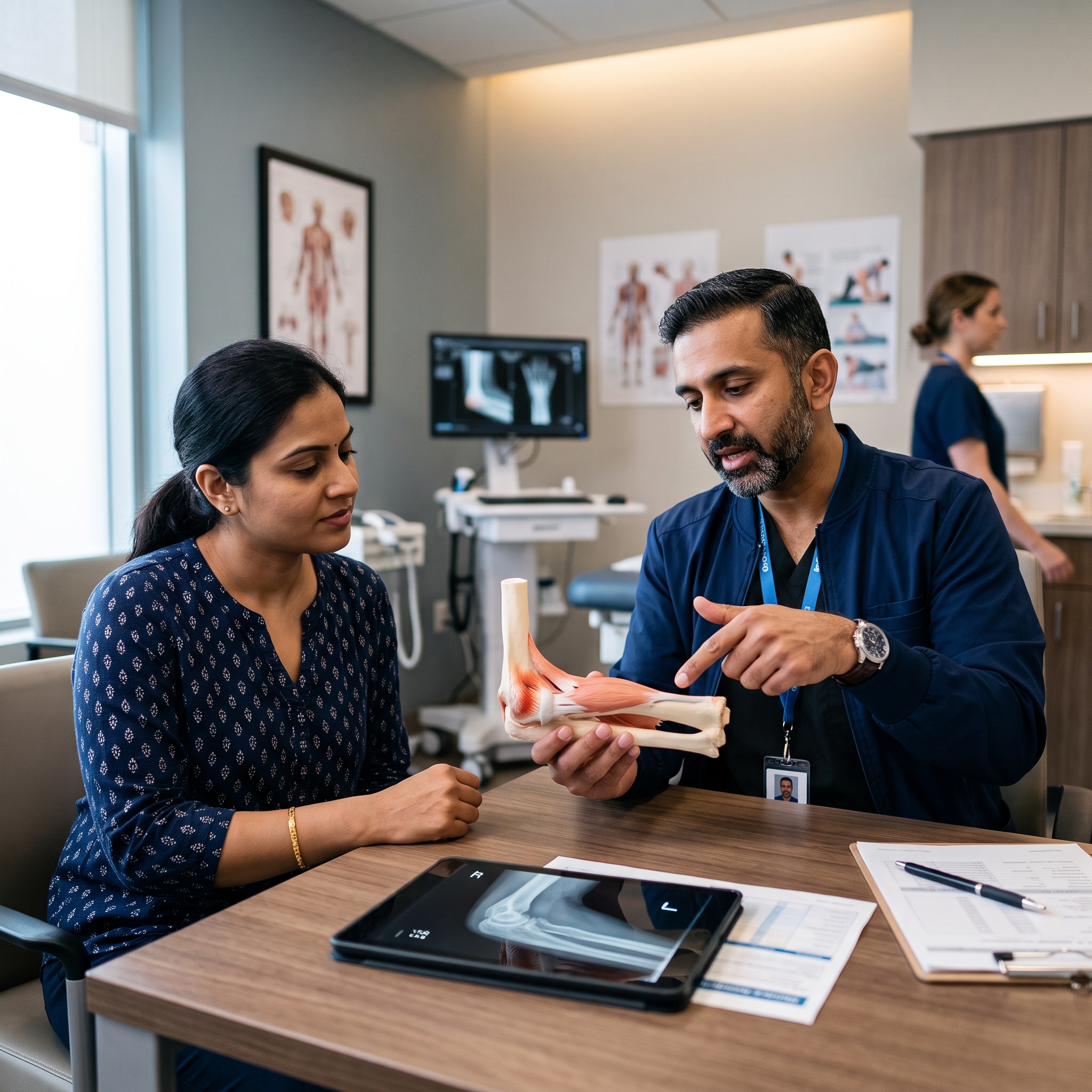
The therapy chosen depends on the degree of tendon injury, duration of symptoms, level of activity and the goals of the patient. Most patients benefit from conservative treatment while others with persistent symptoms or tendon degeneration may require surgery. Early treatment will help to relieve pain, promote healing of the tendon, restore strength and prevent chronic elbow dysfunction.
Pain Management
Reduces pain and inflammation allowing to feel comfortable in everyday life.
Activity Modification
It allows decreasing the strain on the tendon.
Physiotherapy
Builds up the strength of the forearm muscles and improves flexibility.
Tendon Rehabilitation
It helps to regain strength, endurance and normal function of the upper limb.
Surgical Treatment
If symptoms persist despite of comprehensive non-surgical treatment.
NON-SURGICAL CARE
How is Golfer's Elbow Treated Without Surgery?
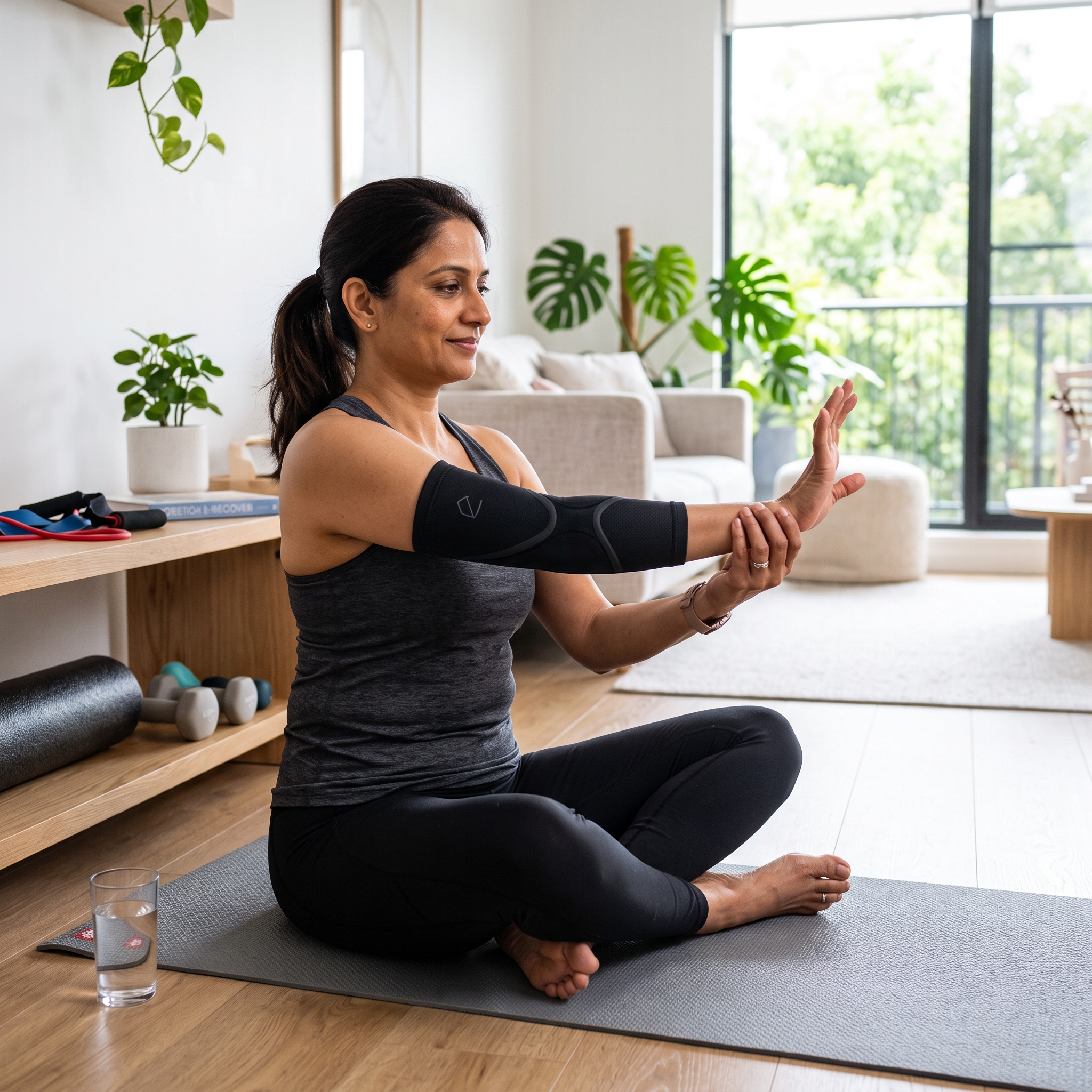
Most patients suffering from Golfer's Elbow successfully recover without any surgery. The conservative therapy concentrates on tendon unloading, pain relief, improvement of flexibility, strengthening of the forearm muscles and restoration of the normal function. Comprehensive rehabilitation allows preventing the recurrence of symptoms.
NON-SURGICAL CARE
How is Golfer's Elbow Treated Without Surgery?
Most patients suffering from Golfer's Elbow successfully recover without any surgery. The conservative therapy concentrates on tendon unloading, pain relief, improvement of flexibility, strengthening of the forearm muscles and restoration of the normal function. Comprehensive rehabilitation allows preventing the recurrence of symptoms.
Non-surgical treatment options include:
- Physiotherapy programmes for improving the strength, flexibility and function of the elbow.
- Activity modification in order to unload the injured tendon and speed up the healing process.
- Anti-inflammatory and pain-relieving drugs for managing symptoms.
- Progressive stretching and strengthening exercises for building up tendon capacity.
RISKS OF NO TREATMENT
When is Surgery Needed for Golfer's Elbow?
Although the majority of patients successfully recover from Golfer's Elbow through conservative therapy, surgery may be recommended in cases when the symptoms persist despite of comprehensive rehabilitation within several months or the tendon degeneration significantly impairs the ability to do work, participate in sports or perform everyday activities. The aim of the surgery is to remove the damaged tendon tissue, restore normal tendon function and relieve the pain.
RISKS OF NO TREATMENT
When is Surgery Needed for Golfer's Elbow?
Although the majority of patients successfully recover from Golfer's Elbow through conservative therapy, surgery may be recommended in cases when the symptoms persist despite of comprehensive rehabilitation within several months or the tendon degeneration significantly impairs the ability to do work, participate in sports or perform everyday activities. The aim of the surgery is to remove the damaged tendon tissue, restore normal tendon function and relieve the pain.
Surgery for Golfer’s Elbow (Medial Epicondylitis) may be required in the following cases:
- Persistence of pain despite of comprehensive non-surgical treatment
- Chronic tendon degeneration affecting the elbow function
- Persistent symptoms impairing work, sports or doing everyday activities
- Lack of improvement despite of the proper rehabilitation programme
Early surgical intervention helps to relieve pain, restore tendon function, improve strength and go back to normal activities safely.
SURGERY
What Surgical Options are Available for Golfer's Elbow?
There are several types of operations, which may be applied for patients with unrecovered symptoms of Golfer's Elbow. The selection of the method depends on the extent of the tendon injury, the duration of symptoms, level of activity and goals of the patient. At ALIGN ASIA each treatment plan is personalized for obtaining the best results.
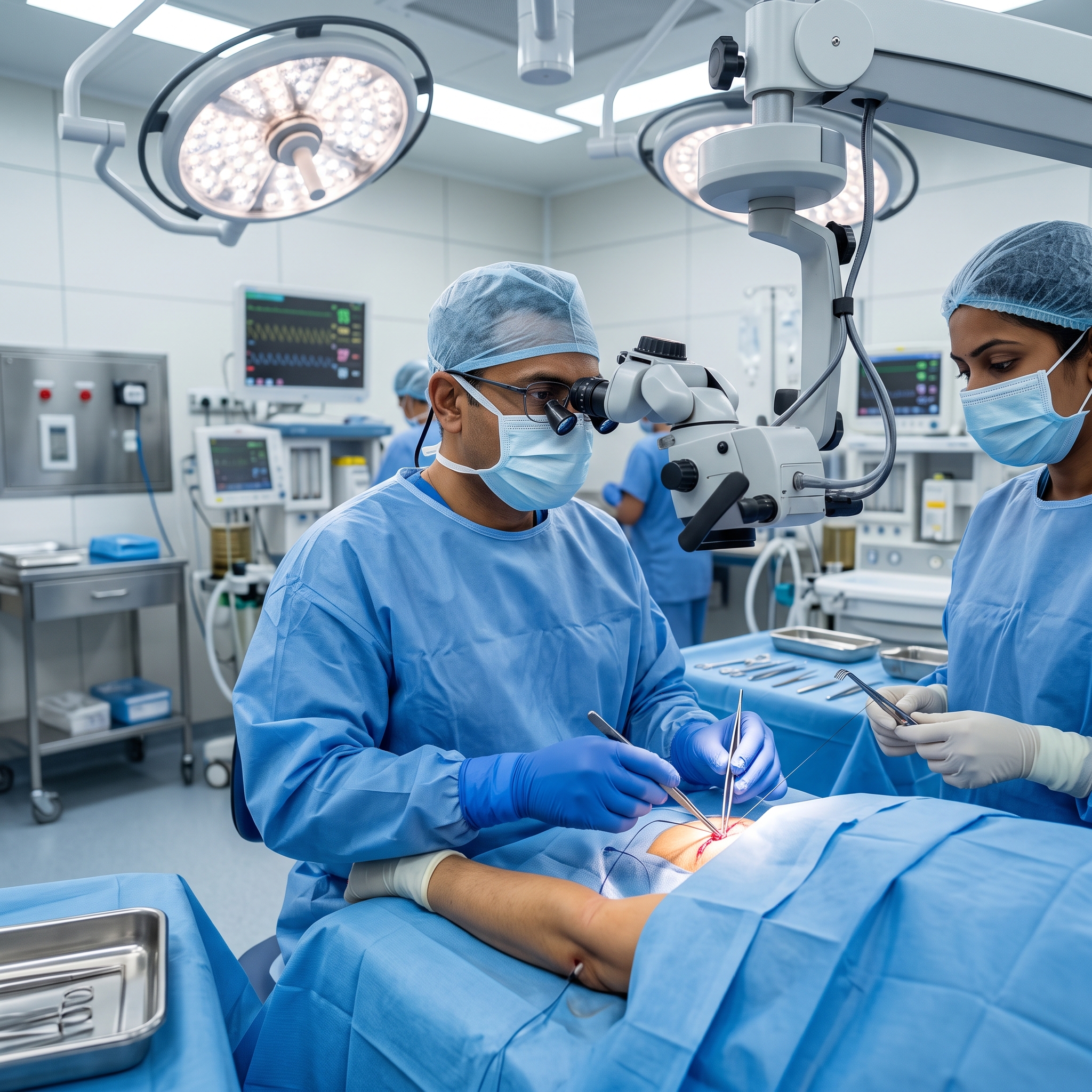
The most commonly used surgical options for Golfer’s Elbow (Medial Epicondylitis) include:
Open Medial Epicondyle Debridement and Tendon Repair
It involves removal of the damaged tendon tissue and its repair in order to restore strength, relieve pain and restore elbow function.
Tendon Release and Repair
The damaged tendon is released in order to decrease the tension followed by its repair or reattachment to facilitate healing and improve function.
Arthroscopic Technique
In selected cases arthroscopy may be used for treating tendon damage and associated diseases of the elbow.
SURGERY
What Surgical Options are Available for Golfer's Elbow?
There are several types of operations, which may be applied for patients with unrecovered symptoms of Golfer's Elbow. The selection of the method depends on the extent of the tendon injury, the duration of symptoms, level of activity and goals of the patient. At ALIGN ASIA each treatment plan is personalized for obtaining the best results.
The most commonly used surgical options for Golfer’s Elbow (Medial Epicondylitis) include:
Open Medial Epicondyle Debridement and Tendon Repair
It involves removal of the damaged tendon tissue and its repair in order to restore strength, relieve pain and restore elbow function.
Tendon Release and Repair
The damaged tendon is released in order to decrease the tension followed by its repair or reattachment to facilitate healing and improve function.
Arthroscopic Technique
In selected cases arthroscopy may be used for treating tendon damage and associated diseases of the elbow.
COMPLICATIONS
What are the Possible Complications of Golfer's Elbow?
Although the majority of patients successfully recover with proper treatment, complications may occur if Golfer's Elbow remains untreated or the tendon damage progresses over time. Early diagnosis and intervention help to minimize these risks. Follow-up appointments also help to monitor the healing of the tendon and ensure its good functioning in the long run.
Chronic Elbow Pain
Chronic tendon degeneration leads to persistence of the pain impairing work, sports and daily activities.
Reduced Grip Strength
Weakening of the muscles of the forearm makes it difficult to grip, lift or carry things.
Elbow Stiffness
Pain and reduced activity over time lead to the stiffness of the elbow.
Tendon Degeneration
Untreated or recurrent overuse causes the progressive damage of the tendon, making recovery longer and leading to the necessity of having a surgery.
Connect with our experts and get the right guidance for your condition.
RECOVERY & OUTCOMES
What is the Recovery Process after Golfer's Elbow Treatment?
RECOVERY & OUTCOMES
What is the Recovery Process after Golfer's Elbow Treatment?
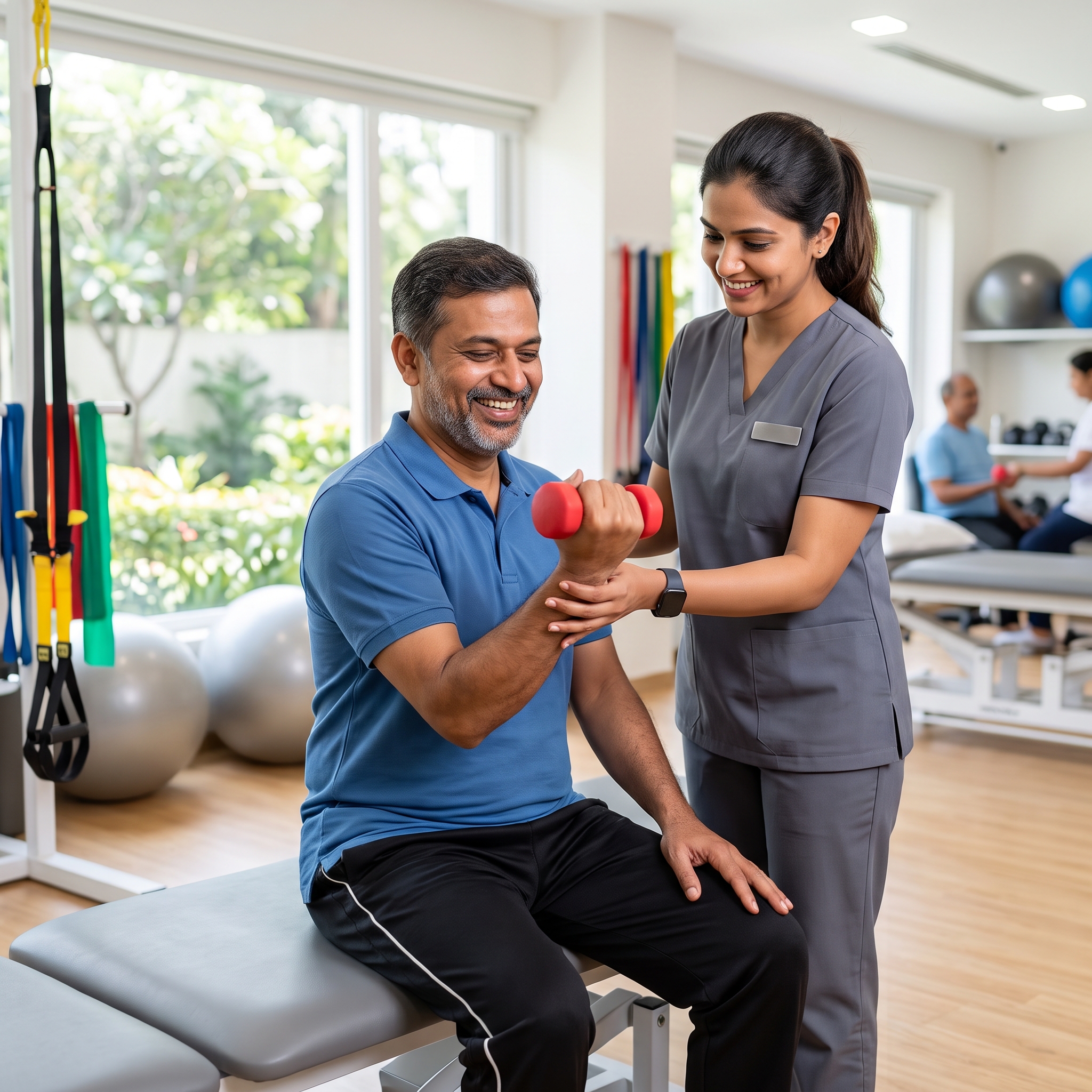
Recovery after the treatment of Golfer's Elbow depends on the severity of the condition and the treatment used. Patients without surgery usually recover gradually under the rehabilitation programme, while those operated should follow a special recovery programme in order to restore tendon function. Personalized rehabilitation program allows returning to work, sports and normal activities.
Recovery after the treatment of Golfer’s Elbow involves the following steps:
- Gradual pain relief and tendon inflammation reduction
- Progressive range of motion exercises for restoring the flexibility
- Strengthening exercises for the forearm, wrist and elbow muscles
- Special physiotherapy for promoting tendon healing and normal upper limb function
- Gradual return to work, sports and repetitive activities depending on the recovery
AFTERCARE
Recovery & Aftercare for Golfer's Elbow
AFTERCARE
Recovery & Aftercare for Golfer's Elbow
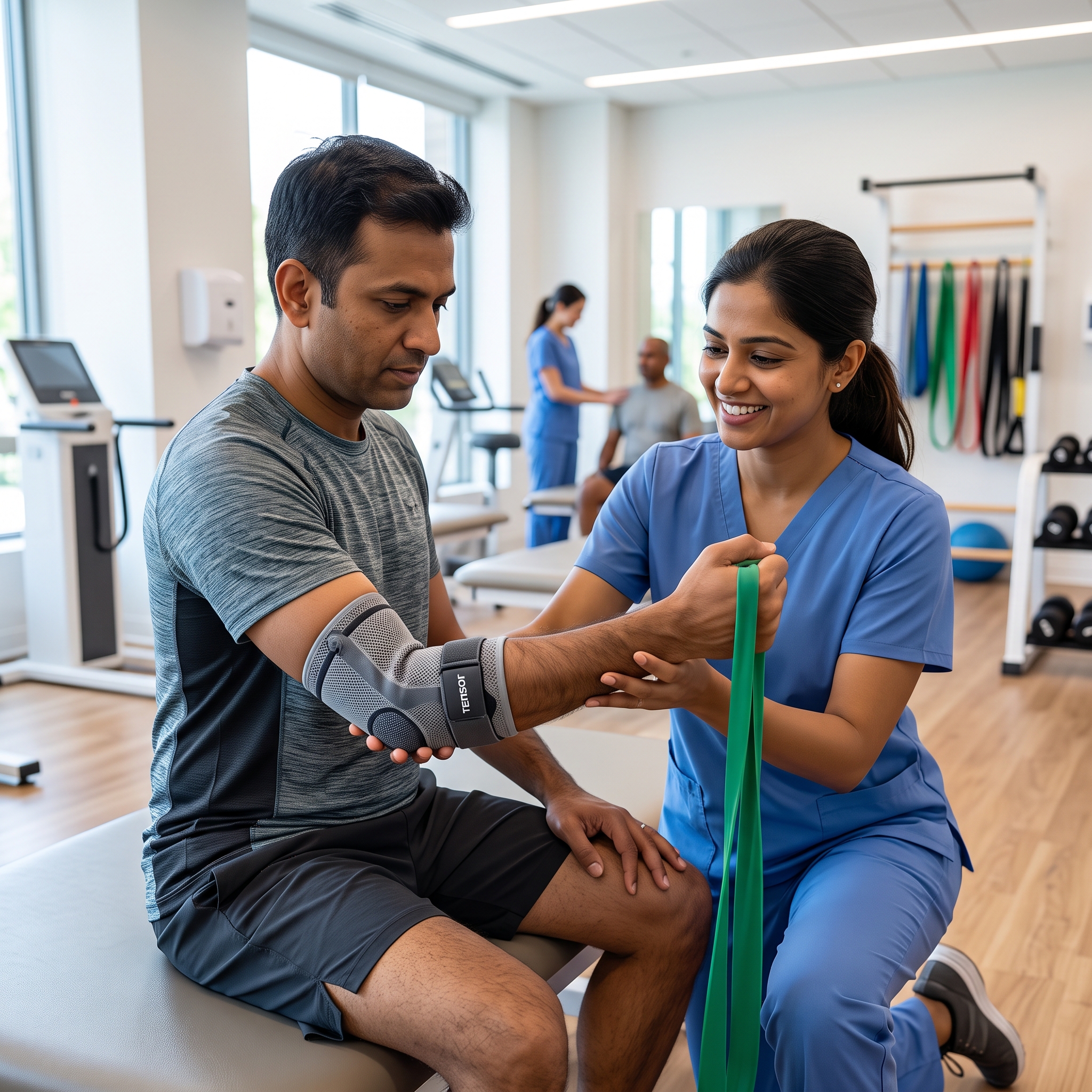
Your successful recovery depends on the protection of the healing tendon along with gradual restoration of strength and function. Following the prescribed rehabilitation program and avoiding overstraining of the tendon during the recovery helps to relieve the symptoms, prevent recurrence and achieve the best possible outcome. Regular follow-up appointments allow monitoring the healing and adjusting the treatment according to your progress.
These aftercare recommendations are suggested for the successful recovery:
- Performing physiotherapy sessions regularly for improving flexibility, strength and function of the elbow
- Doing stretching and strengthening exercises as prescribed consistently at home
- Gradually returning to the activities of gripping, lifting and participating in sports activities as directed by your healthcare team
- Avoiding repetitive movements or excessive loading of the tendon until complete healing
- Attending the follow-up appointments as planned
FAQ'S
Do You Have Any Question?
Yes. Most patients recover from this condition with the help of non-surgical treatment, such as physiotherapy, activity modification, pain management and rehabilitation program. Surgery is recommended only in cases when symptoms persist despite of appropriate conservative treatment.
Recovery time depends on the severity of the tendon injury, the treatment used and individual healing of the patient. Your specialist will recommend a personalized rehabilitation program and the estimated recovery time.
Your return to sport or manual work depends on the resolution of pain, regaining the strength and successful completion of rehabilitation. Your specialist will tell you when it is safe to return to these activities.
Surgical treatment of Golfer’s Elbow is a standard orthopaedic procedure and is safe when performed by experienced specialists and followed by the appropriate rehabilitation program.
Yes. Symptoms may recur if repetitive strain continues or rehabilitation is not completed. Maintaining strength of the forearm muscles, using proper technique during the activities and avoiding overuse can help to avoid the recurrence.