ARTHROSCOPY & SPORTS INJURY ASSOCIATES

OVERVIEW
What Is Elbow Instability?
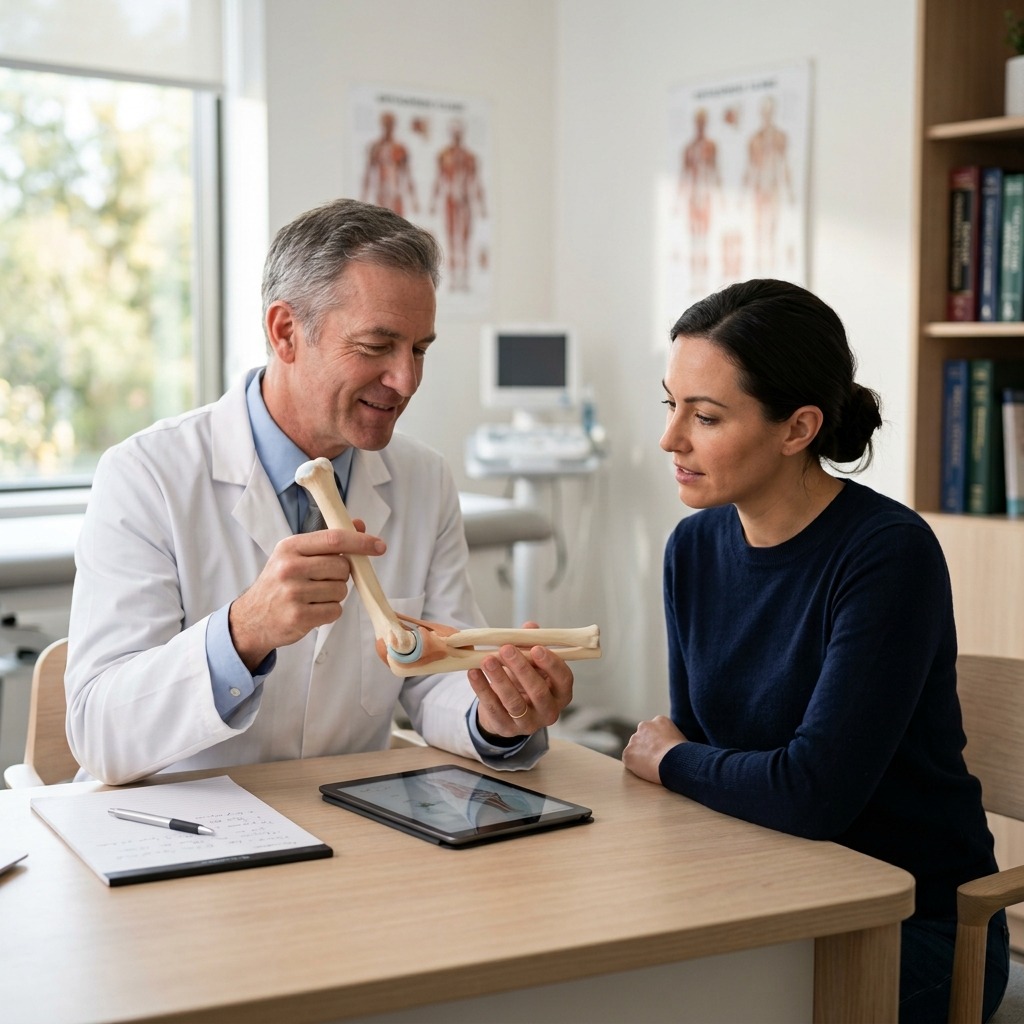
Elbow Instability occurs when the structures that normally hold the joint together during movement are damaged or weakened. Ligaments, muscles or other stabilising structures of the elbow can suffer damage through trauma, injury or repetitive stress. Individuals suffering from elbow instability may complain about pain, lack of stability of the joint and difficulties performing tasks requiring strength in the elbow area. Early diagnosis and proper treatment help restore joint stability and prevent the recurrence of the problem.
Here are several important facts to know about Elbow Instability:
- It happens when the joint loses stability while moving
- Most frequently occurs after ligament injuries or elbow dislocations
- Can cause pain, lack of strength and recurrent instability
- Timely treatment helps restore joint stability and prevent injuries
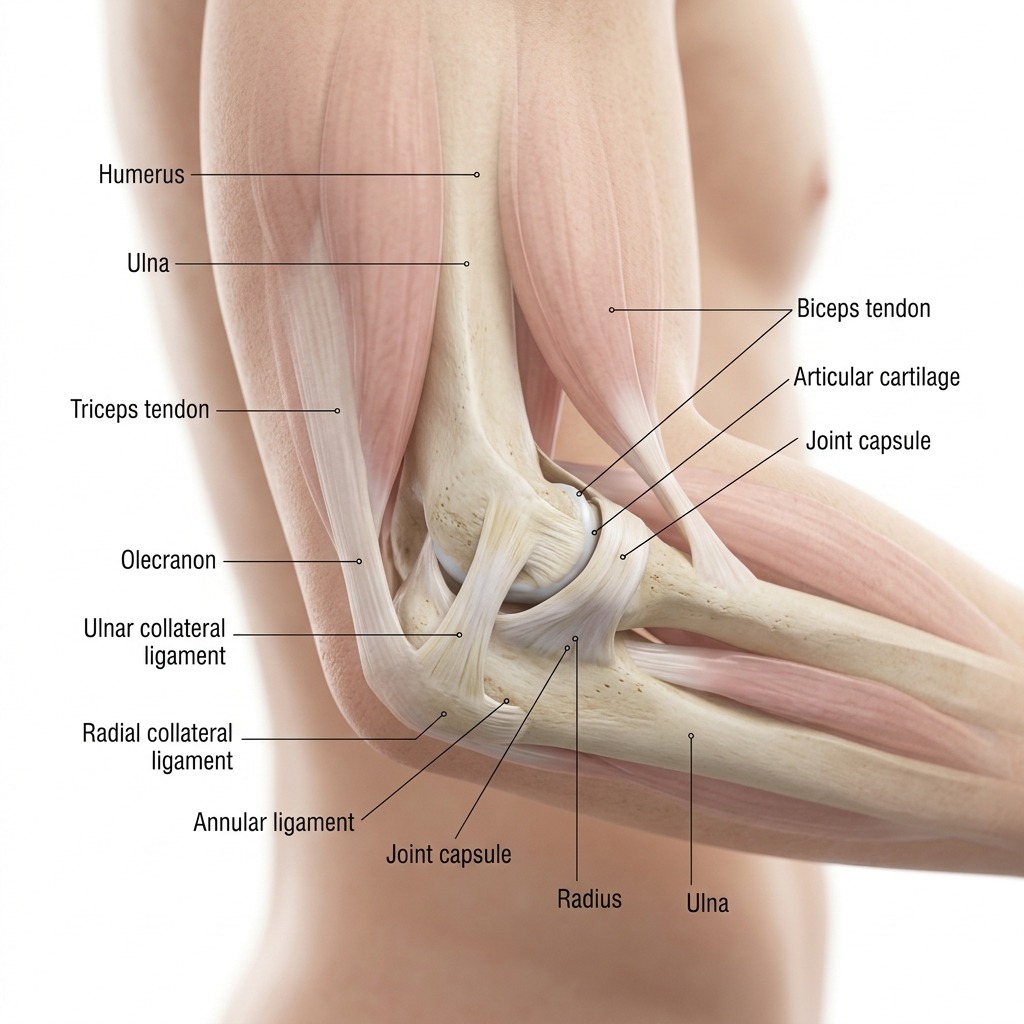
Elbow Instability occurs when the structures that normally hold the joint together during movement are damaged or weakened. Ligaments, muscles or other stabilising structures of the elbow can suffer damage through trauma, injury or repetitive stress. Individuals suffering from elbow instability may complain about pain, lack of stability of the joint and difficulties performing tasks requiring strength in the elbow area. Early diagnosis and proper treatment help restore joint stability and prevent the recurrence of the problem.
Here are several important facts to know about Elbow Instability:
- It happens when the joint loses stability while moving
- Most frequently occurs after ligament injuries or elbow dislocations
- Can cause pain, lack of strength and recurrent instability
- Timely treatment helps restore joint stability and prevent injuries
Surgeons Available for Consultations

Dr. Karnav Panchal
M.B.B.S, M.S. (Orthopedics),
FAOS (South Korea)
Consultant Arthroscopist & Sports Injury Specialist Consultant Joint Replacement Surgeon

Dr. Aniket Gupta
M.B.B.S, M.S. (Orthopedics),
MRCS (Edinburgh)
Training & Qualifications Fellowship in MRCS (UK) Arthroscopy & Arthroplasty (Milan, Italy)
Consultant Physiotherapist

Dr. Aarsh Bhatt
B.P.T,M.P.T (Cardio-Respiratory Disorders) MIAP , HCPC (UK) , DHA (UAE)
Consultant Physiotherapist

Dr. Hetvi Dimothe
BPT , M.P.T (Rehabilitation) MIAP, HCPC (UK) , DHA (UAE)
Consultant Physiotherapist
Causes
What Are The Causes of Elbow Instability?
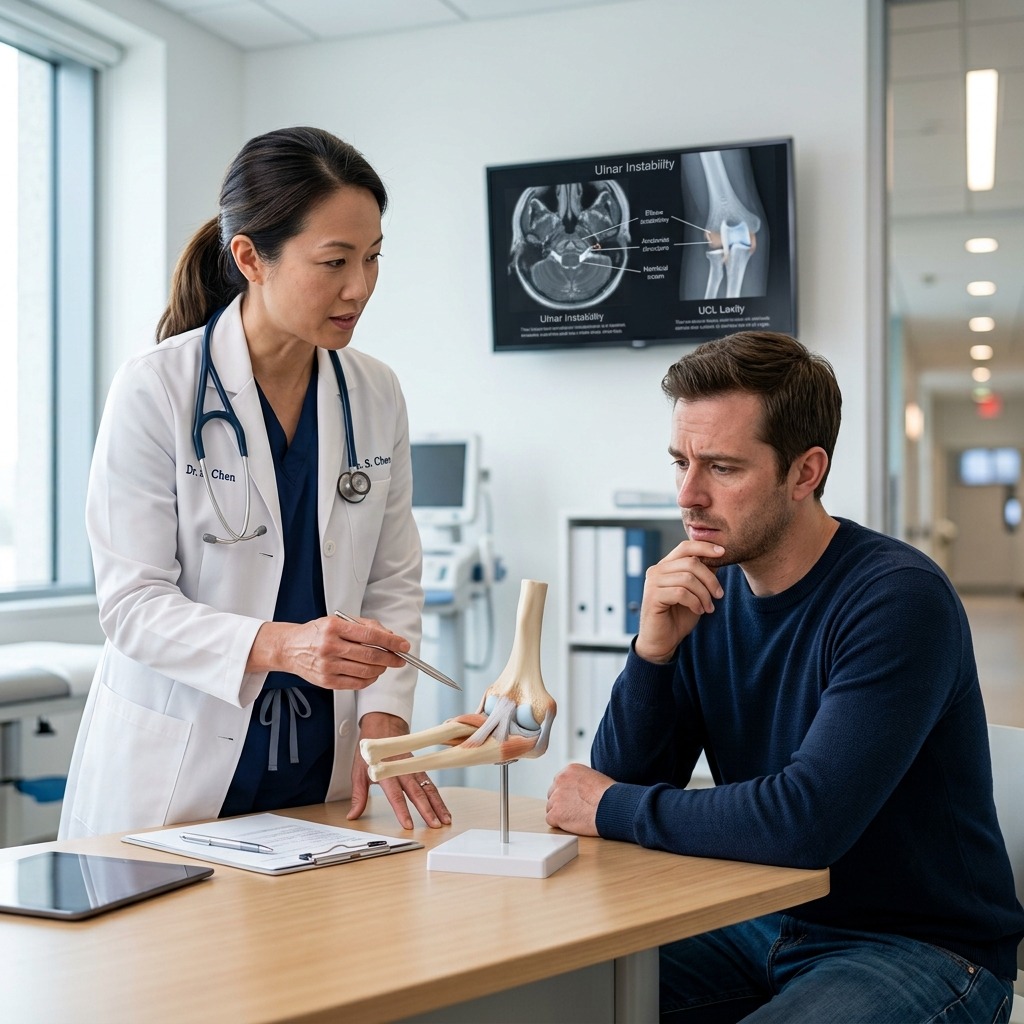
Elbow instability happens when the structures responsible for holding the joint together become damaged or weakened. The most common causes of elbow instability are injuries of the elbow joint, ligament dislocations and falls resulting in trauma. Depending on the severity of the condition, it can occur only during physical effort or even while doing routine daily tasks.
Causes
What Are The Causes of Elbow Instability?
Elbow instability happens when the structures responsible for holding the joint together become damaged or weakened. The most common causes of elbow instability are injuries of the elbow joint, ligament dislocations and falls resulting in trauma. Depending on the severity of the condition, it can occur only during physical effort or even while doing routine daily tasks.
Elbow Instability may be caused by the following reasons:
- Dislocation of the elbow resulting in ligament damage
- Tears of the ligament destabilising the joint
- Sports injuries, falls or twisting injuries
- Repeated stress of the joint
- Elbow surgery
In addition to the above mentioned structures, other elbow structures may become affected by the disease.
Other elbow structures which can be affected along with elbow instability:
- Elbow ligaments
- Joint cartilage
- Surrounding muscles
- Adjacent bones
- Nerves around the elbow joint
SYMPTOMS
What Are The Symptoms of Elbow Instability?
The symptoms of elbow instability depend on the severity of the injuries of the ligaments and the degree of instability. Some individuals may experience pain during certain actions, whereas others might complain about their elbow joint slipping or going out of the normal position. Timely detection of the condition helps start the treatment at an early stage and prevent long-term problems with the joint.

Elbow pain
Developing during movement or lifting heavy objects
Feeling of instability
This sensation can occur while performing everyday activities
Elbow dislocation or subluxation
Recurrent dislocations of the joint
Igoring these symptoms can lead to recurrent instability, damage of the joint, chronic pain and reduced joint stability.
Connect with our experts and get the right guidance for your condition.
Weakness
Decreasing the strength of the joint and difficulty to lift heavy loads
Clicking or catching sensation
Unusual sensations occurring within the joint
Limited range of motion
Difficulties moving the joint freely
Difficulty performing daily tasks
Trouble lifting, pushing or supporting weight of the body
Connect with our experts and get the right guidance for your condition.
BOOK CONSULTATIONDIAGNOSIS
How Is Elbow Instability Diagnosed?
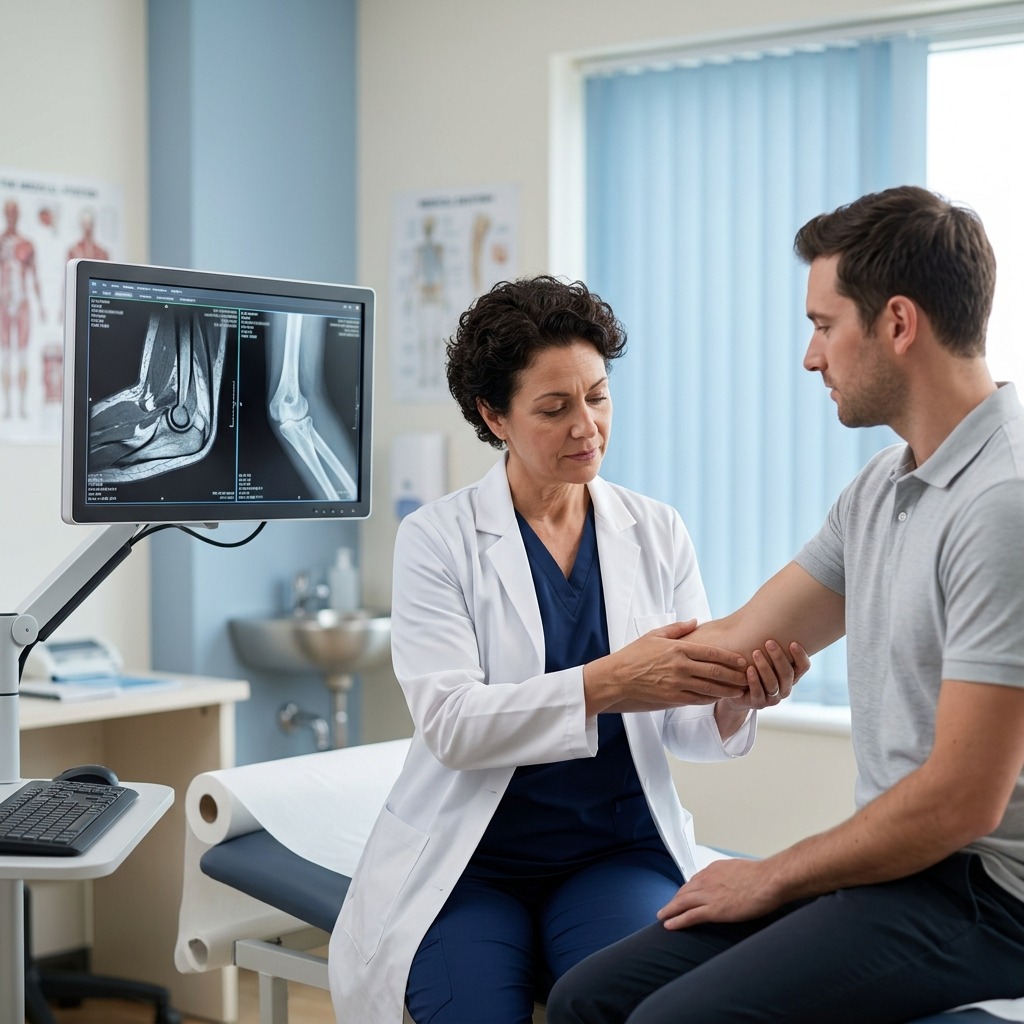
In order to diagnose the condition, doctors perform thorough examination and interview of the patient in order to find out what kind of injury occurred and how it affects the joint. Specialists also perform physical examination of the elbow joint to determine stability of the joint, its range of motion, ligaments condition, strength of the muscles of the upper limb. Specialists also recommend performing imaging studies to make sure whether there are any injuries of the ligaments and joint damage. At ALIGN ASIA clinic we perform comprehensive examination to determine the right diagnosis and create an effective treatment plan.
DIAGNOSIS
How Is Elbow Instability Diagnosed?
In order to diagnose the condition, doctors perform thorough examination and interview of the patient in order to find out what kind of injury occurred and how it affects the joint. Specialists also perform physical examination of the elbow joint to determine stability of the joint, its range of motion, ligaments condition, strength of the muscles of the upper limb. Specialists also recommend performing imaging studies to make sure whether there are any injuries of the ligaments and joint damage. At ALIGN ASIA clinic we perform comprehensive examination to determine the right diagnosis and create an effective treatment plan.
- Elbow Instability may be diagnosed with the help of the following methods:
- Physical examination of the joint stability, ligaments integrity, range of motion and upper limb functionality
- Imaging studies to detect ligament injuries and associated joint damage
- X-Ray
- MRI
- CT Scan
TREATMENT
What Is the Treatment For Elbow Instability?
Depending on the severity of the ligament injury, number of instability episodes, physical activity and patient's demands, treatment for elbow instability may involve non-surgical or surgical treatment. With proper treatment it is possible to improve joint stability and reduce the pain and discomfort. In severe cases it is not possible to treat elbow instability without surgical intervention.

Pain management
Helps to relieve the pain and reduce inflammation.
Activity modification
Protects the joint from movements causing instability.
Physiotherapy
Increases the strength of the muscles supporting the joint and restores joint control.
Bracing
Additional joint support during treatment and recovery period.
Surgical stabilization
Restores the stability of the ligaments
NON-SURGICAL CARE
How is Elbow Instability Treated Non-Surgically?
With the help of conservative treatment, it is possible to successfully manage elbow instability in mild cases or partial injuries of the ligaments. Non-surgical treatment helps to relieve pain and discomfort, restore muscular support of the joint and its stability and reduce the chance of recurrent instability.
NON-SURGICAL CARE
How is Elbow Instability Treated Non-Surgically?
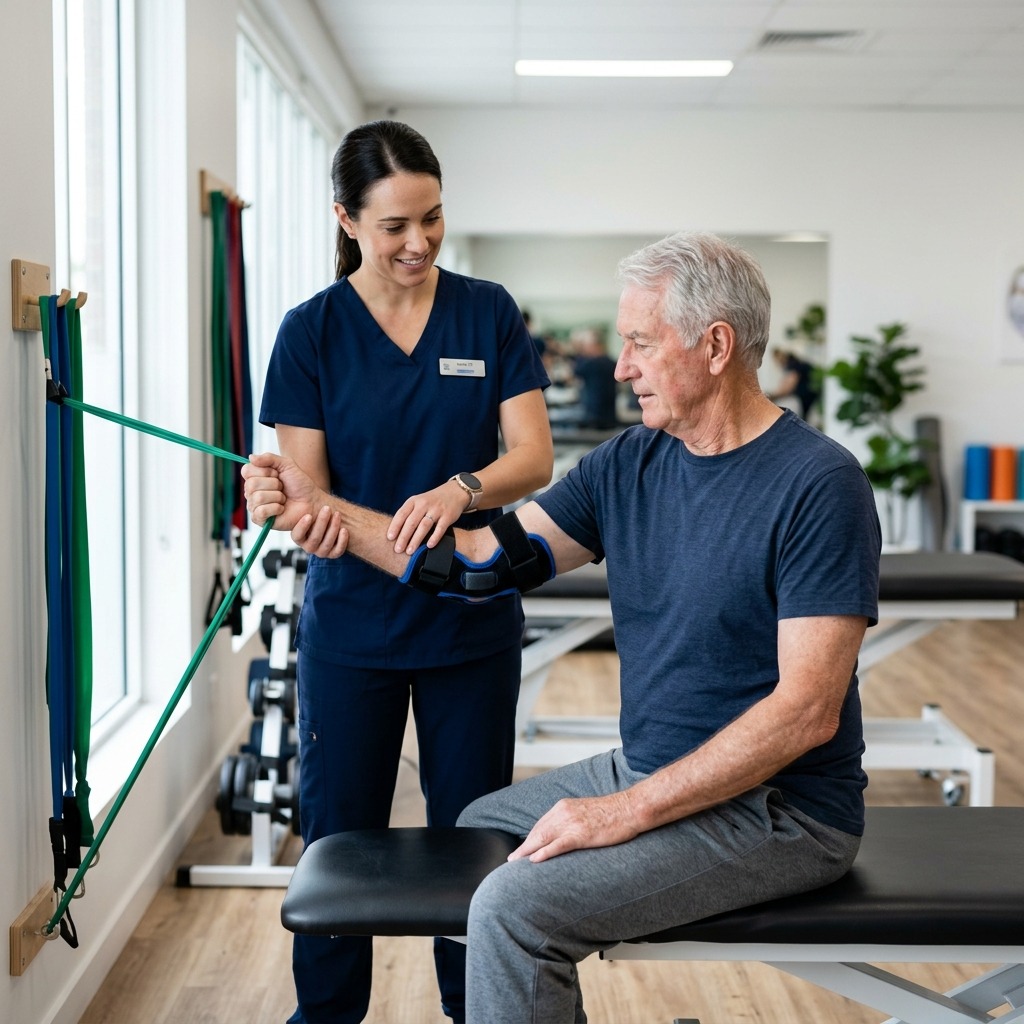
With the help of conservative treatment, it is possible to successfully manage elbow instability in mild cases or partial injuries of the ligaments. Non-surgical treatment helps to relieve pain and discomfort, restore muscular support of the joint and its stability and reduce the chance of recurrent instability.
Non-surgical treatment options include the following:
- Physiotherapy programs increase strength of the muscles surrounding the joint to increase its stability.
- Activity modification reduces stress on injured ligaments and promotes healing.
- Bracing provides additional support during recovery and minimises joint movement.
- Progressive strengthening and flexibility exercises restore joint function.
When is Surgery Needed For Elbow Instability?
Despite the effectiveness of non-surgical treatment, some patients need to undergo surgery in case when there is recurrent elbow instability or severe injury of the ligaments. In these cases, early surgical treatment helps to restore the stability of the joint, to reduce recurrent dislocations and improve functional outcomes.
When is Surgery Needed For Elbow Instability?
Despite the effectiveness of non-surgical treatment, some patients need to undergo surgery in case when there is recurrent elbow instability or severe injury of the ligaments. In these cases, early surgical treatment helps to restore the stability of the joint, to reduce recurrent dislocations and improve functional outcomes.
Surgery is recommended in the following cases:
- Recurrent elbow dislocations or instability
- Severe ligament tears
- Persistent pain or instability despite conservative treatment
- Functional limitations in work, sports or everyday life
SURGERY
What Surgery Options Are There To Treat Elbow Instability?
There are several procedures which can be used to stabilise the elbow joint, depending on the severity of the ligament injury, joint damage and patient's demands. The most suitable procedure will be chosen after a comprehensive evaluation of the patient's health condition and imaging results. At ALIGN ASIA clinic we develop treatment plans according to each patient's needs to restore joint stability and function.
The common surgical options for Elbow Instability are:
Ligament repair
Used in case when the damaged ligament can be restored to normal functioning of the joint.
Ligament reconstruction
In case when the damaged ligament cannot be repaired, reconstruction is performed with the use of graft tissue.
Internal joint stabilisation
Sometimes special stabilisation procedures may be used to stabilise the joint while allowing movement.
Fracture fixation with stabilisation
If the elbow instability is associated with fractures, it is possible to fix the fractured bone and stabilise the joint simultaneously.
SURGERY
What Surgery Options Are There To Treat Elbow Instability?
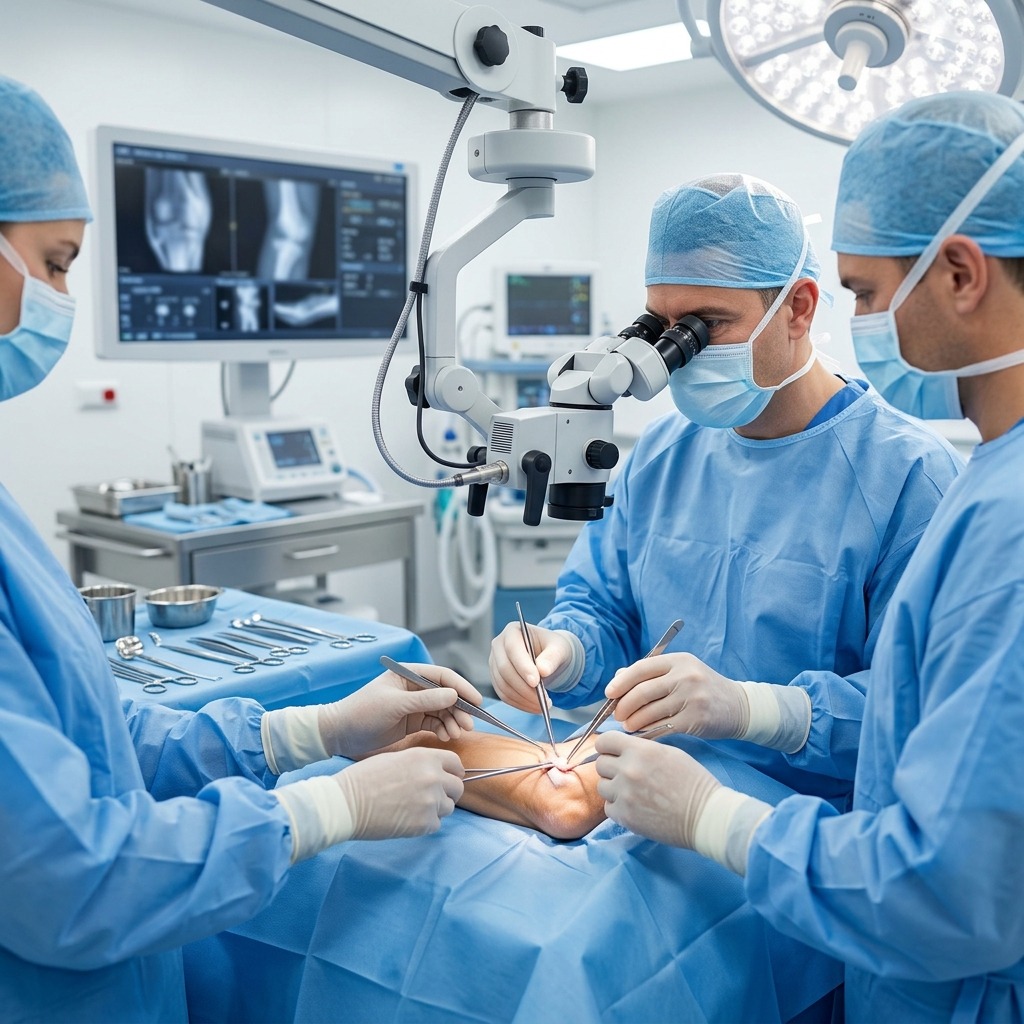
There are several procedures which can be used to stabilise the elbow joint, depending on the severity of the ligament injury, joint damage and patient's demands. The most suitable procedure will be chosen after a comprehensive evaluation of the patient's health condition and imaging results. At ALIGN ASIA clinic we develop treatment plans according to each patient's needs to restore joint stability and function.
The common surgical options for Elbow Instability are:
Ligament repair
Used in case when the damaged ligament can be restored to normal functioning of the joint.
Ligament reconstruction
In case when the damaged ligament cannot be repaired, reconstruction is performed with the use of graft tissue.
Internal joint stabilisation
Sometimes special stabilisation procedures may be used to stabilise the joint while allowing movement.
Fracture fixation with stabilisation
If the elbow instability is associated with fractures, it is possible to fix the fractured bone and stabilise the joint simultaneously.
COMPLICATIONS
What Are The Potential Complications Of Elbow Instability Or Treatment?
Despite successful treatment of many patients with elbow instability, some patients might develop complications if the condition goes untreated or during the recovery period. Proper treatment, adherence to the rehabilitation program and regular consultations with orthopaedic specialists can help to avoid them. Follow-up visits of the patients help doctors to control the healing of the joint, stability and overall progress.
Recurrent instability
Can occur in case of continuing ligament laxity.
Elbow stiffness
Restriction of movement can develop during healing process or due to immobilisation.
Chronic pain
Can occur due to recurrent instability or joint damage.
Progressive joint damage
Can occur due to recurrent instability.
Connect with our experts and get the right guidance for your condition.
RECOVERY & OUTCOMES
Recovery and Aftercare After Elbow Instability Treatment
RECOVERY & OUTCOMES
Recovery and Aftercare After Elbow Instability Treatment
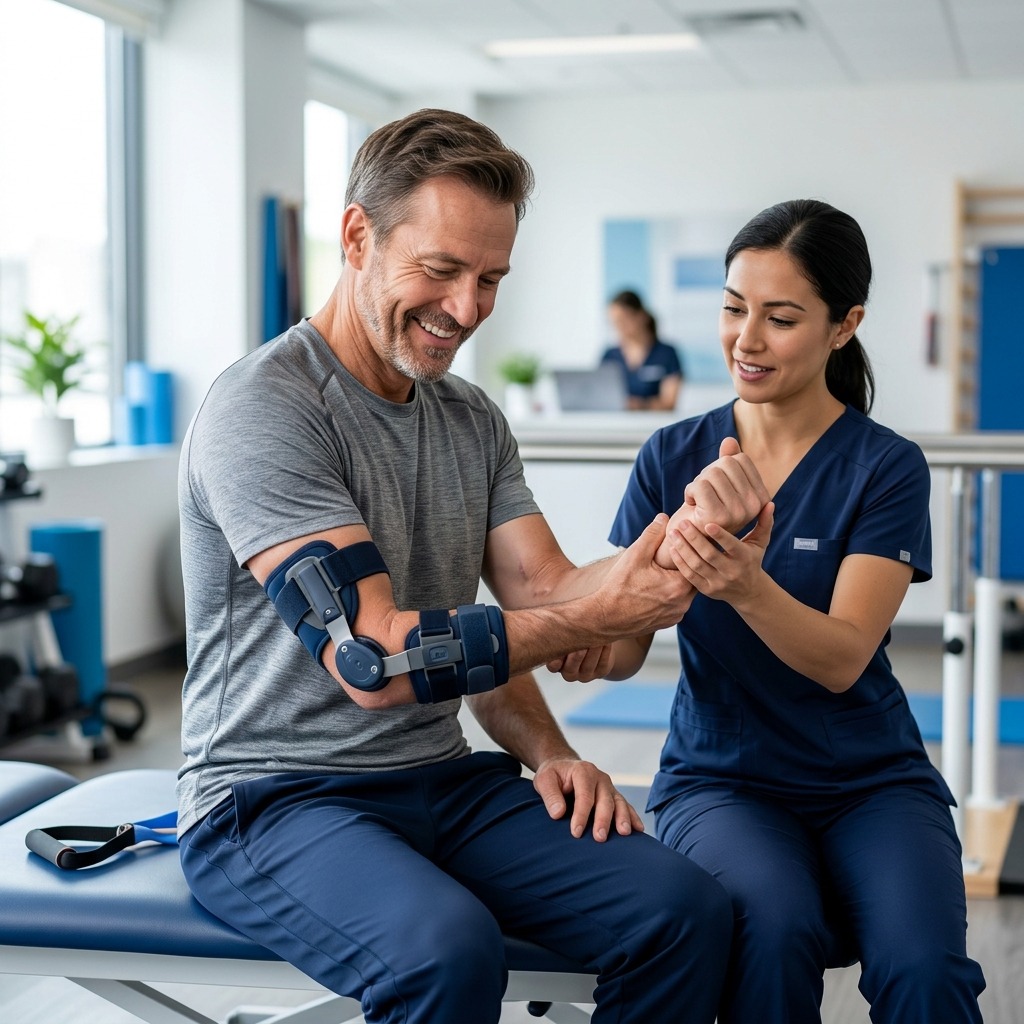
After successful treatment of elbow instability, the main goals are joint stabilisation, restoration of mobility and gradual increase of joint strength. The duration of the recovery depends on the severity of the condition and performed treatment. Rehabilitation program helps to regain joint stability and gradually return to work and sport.
The recovery process after treatment for Elbow Instability usually includes the following stages:
- Proper joint protection with the use of brace or support device if needed
- Range of motion exercises introduced under supervision of specialists
- Gradual strengthening of the joint, forearm and muscles
- Physiotherapy to improve stability, flexibility and upper limb function
- Slow return to work, sport and everyday activities according to the progress
AFTERCARE
Recovery & Aftercare For Elbow Instability

AFTERCARE
Recovery & Aftercare For Elbow Instability
Adequate aftercare and adherence to rehabilitation program is needed to ensure successful recovery. Proper care and rehabilitation helps to restore joint stability, improve joint mobility, reduce risk of recurrent instability and get the best results. Regular follow-up visits ensure adequate recovery and help to adjust treatment to individual needs.
The following aftercare recommendations should be followed for proper recovery:
- Wear prescribed brace or support device if required
- Attend physiotherapy sessions regularly
- Perform exercises as recommended
- Gradually increase activity according to medical instructions
- Attend scheduled follow-up visits
FAQ'S
Do You Have Any Question?
Yes. Mild cases of elbow instability can be treated with physiotherapy, bracing and activity modification. However, severe cases and recurrent elbow instability require surgical treatment.
Recovery time depends on the severity of the condition and performed treatment. Your doctor will provide a personalized rehabilitation timeline based on your progress.
It depends on the restored joint stability and progress of your recovery. Your doctor will tell you when it is safe to return to these activities.
Surgical treatment for elbow instability is a common procedure and is safe in case if it is performed by experienced orthopedic surgeons and followed by rehabilitation program.
Recurrence is rare with proper treatment and rehabilitation but following your rehabilitation program, strengthening the muscles around the joint and avoiding excessive strain can reduce this risk.