
ARTHROSCOPY & SPORTS INJURY ASSOCIATES


OVERVIEW
What is Rotator Cuff Repair?
Rotator Cuff Repair is a surgical operation used to repair damaged or torn rotator cuff tendons.
These tendons allow your shoulder to remain stable and perform motions with your arm. In
case of tear formation, patients experience pain, reduced stability and difficulty of lifting and
rotating the arm. Proper treatment will allow the tendon to recover its functioning, improve
shoulder stability and decrease symptoms.
Here are some important facts about Rotator Cuff Repair:
- Restores functioning of the damaged rotator cuff tendons
- Allows to improve strength, stability and normal shoulder movement
- Recommended in case of significant or persistent tendon tears
- Early treatment allows to improve recovery and health of shoulder
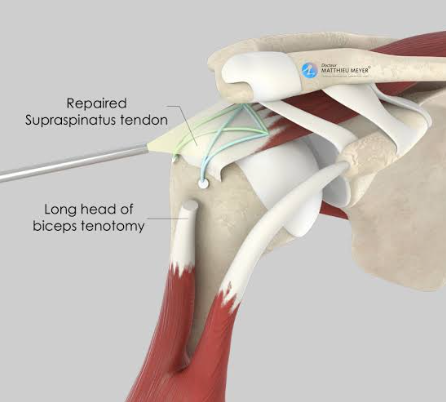
Rotator Cuff Repair is a surgical operation used to repair damaged or torn rotator cuff tendons.
These tendons allow your shoulder to remain stable and perform motions with your arm. In
case of tear formation, patients experience pain, reduced stability and difficulty of lifting and
rotating the arm. Proper treatment will allow the tendon to recover its functioning, improve
shoulder stability and decrease symptoms.
Here are some important facts about Rotator Cuff Repair:
- Restores functioning of the damaged rotator cuff tendons
- Allows to improve strength, stability and normal shoulder movement
- Recommended in case of significant or persistent tendon tears
- Early treatment allows to improve recovery and health of shoulder
Surgeons Available for Consultations

Dr. Karnav Panchal
M.B.B.S, M.S. (Orthopedics),
FAOS (South Korea)
Consultant Arthroscopist & Sports Injury Specialist Consultant Joint Replacement Surgeon

Dr. Aniket Gupta
M.B.B.S, M.S. (Orthopedics),
MRCS (Edinburgh)
Training & Qualifications Fellowship in MRCS (UK) Arthroscopy & Arthroplasty (Milan, Italy)
Consultant Physiotherapist

Dr. Aarsh Bhatt
B.P.T,M.P.T (Cardio-Respiratory Disorders) MIAP , HCPC (UK) , DHA (UAE)
Consultant Physiotherapist

Dr. Hetvi Dimothe
BPT , M.P.T (Rehabilitation) MIAP, HCPC (UK) , DHA (UAE)
Consultant Physiotherapist
Causes
What Causes a Rotator Cuff Tear?
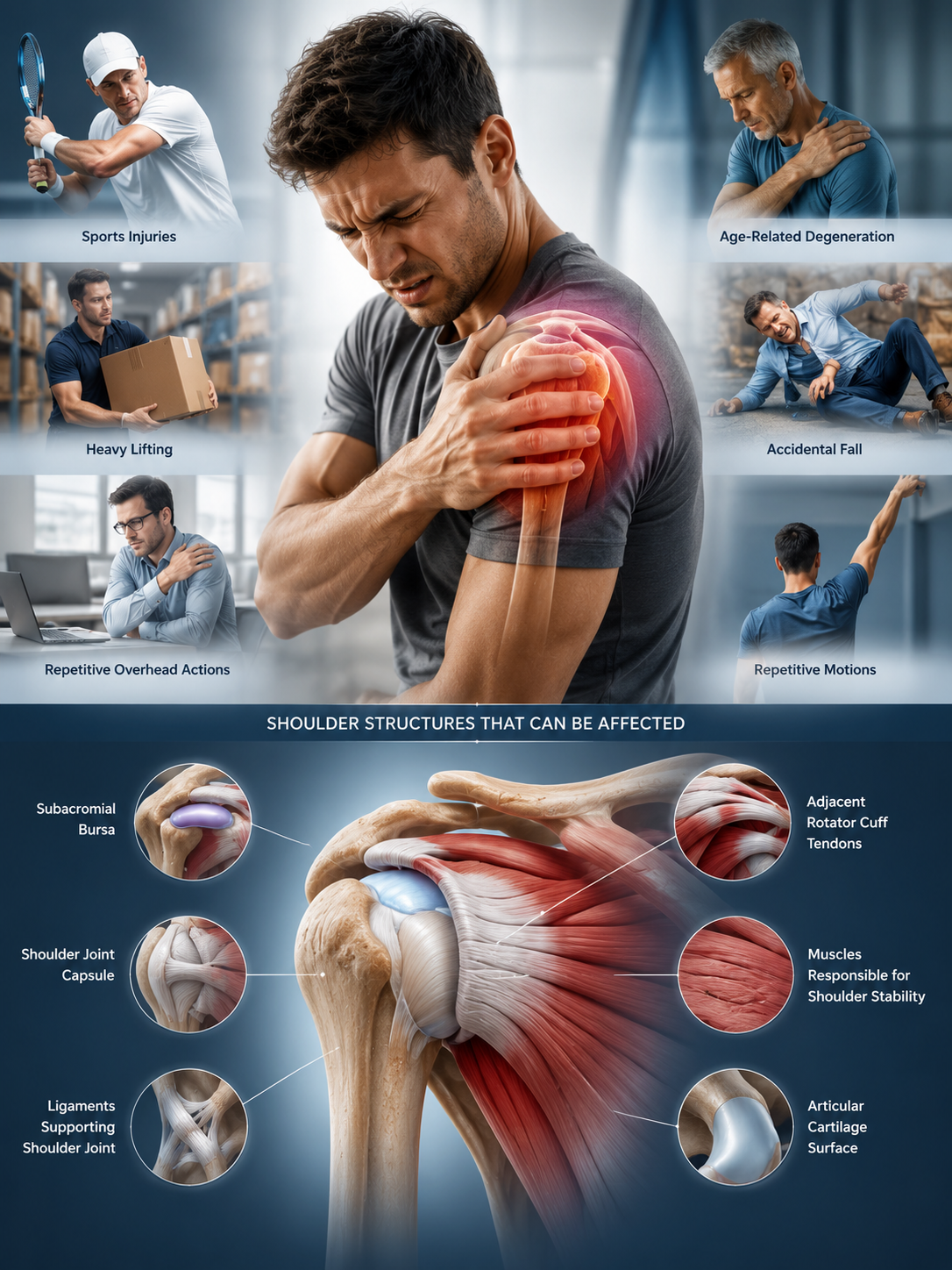
Rotator cuff tear can either appear suddenly after an injury or develop due to age-related degeneration. Sport activities, heavy lifting, frequent repetitive motions and accidental fall can result in the condition. With further development of damage, the strength and mobility of the shoulder tend to decrease. Untreated, the symptoms can worsen affecting the ability to perform certain activities, work and recreational actions.
Causes
What Causes a Rotator Cuff Tear?
Rotator cuff tear can either appear suddenly after an injury or develop due to age-related degeneration. Sport activities, heavy lifting, frequent repetitive motions and accidental fall can result in the condition. With further development of damage, the strength and mobility of the shoulder tend to decrease. Untreated, the symptoms can worsen affecting the ability to perform certain activities, work and recreational actions.
The reasons of Rotator Cuff Tear development include:
- Repetitive overhead actions leading to strain of shoulder tendons
- Sports injuries resulting in tendon damage or tear
- Accidents involving shoulder structures
- Age-related deterioration of the tendon
Other structures that can be involved in rotator cuff tear
When suffering from a rotator cuff tear, other shoulder structures can be strained. The
shoulder consists of a system of different tissues allowing to keep stability and perform
motions. Depending on the severity of a rotator cuff tear, adjacent tendons, bursa, muscles and
ligaments may be damaged as well.
- Subacromial bursa
- Shoulder joint capsule
- Adjacent rotator cuff tendons
- Ligaments supporting shoulder joint
- Muscles responsible for shoulder stability
- Articular cartilage surface
SYMPTOMS
What are the Symptoms of a Rotator Cuff Tear?
Symptoms can start developing slowly or suddenly after the injury. Most of the patients complain about shoulder pain, decreased shoulder strength and difficulties in performing daily arm motions.

Persistent Shoulder Pain
Pain appears during lifting, reaching and performing shoulder movements and impairs normal functioning.
Reduced Shoulder Strength
Damage of the tendons can result in reduction of shoulder stability and strength of the shoulder.
Decreased Range of Motion
Mobility of the shoulder becomes reduced limiting its functioning.
Neglect of symptoms can result in more tendon damage, reduced strength, decreased shoulder functioning and complicated recovery.
Connect with our experts and get the right guidance for your condition.
Pain at Night
Pain may be increased during sleep especially if lying on the affected side.
Weakness of the Arm
Decreased strength of the shoulder may be noted during activity.
Clicking Sensation
Clicking may appear during shoulder movements.
Difficulty Performing Activities
Activities can become limited and painful.
Connect with our experts and get the right guidance for your condition.
BOOK CONSULTATIONDIAGNOSIS
How Do Doctors Diagnose a Rotator Cuff Tear?
At first, doctors examine the symptoms, medical history and impact of shoulder problems on patient’s daily activities. Physical examination involves checking strength, mobility, flexibility and areas of pain. Some additional examinations are performed to detect damaged tendons and extent of the injury. Imaging tests allow to confirm the diagnosis and examine the neighboring structures. At ALIGN ASIA, complete examination is carried out to choose appropriate treatment and ensure long-term recovery.
DIAGNOSIS
How Do Doctors Diagnose a Rotator Cuff Tear?
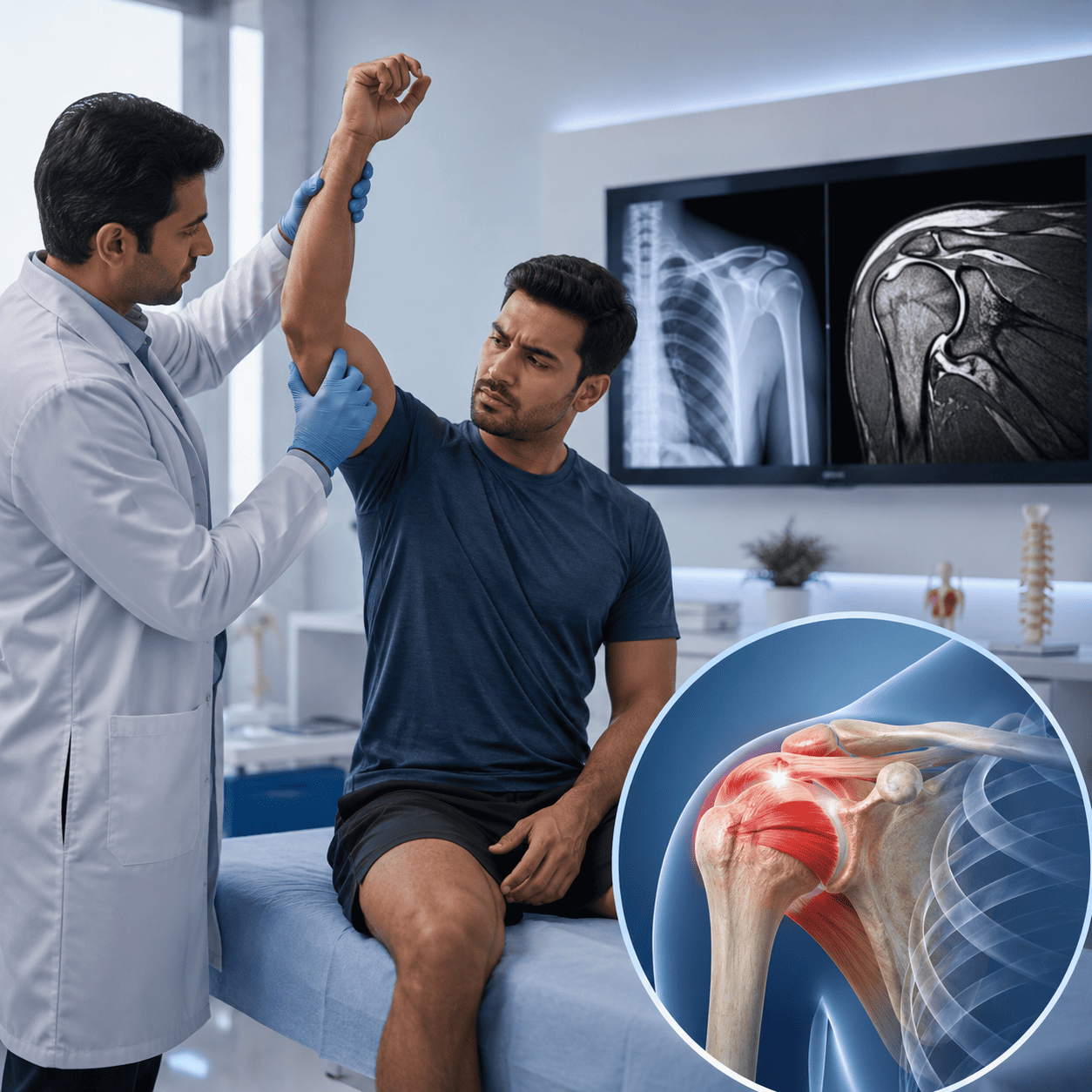
At first, doctors examine the symptoms, medical history and impact of shoulder problems on patient’s daily activities. Physical examination involves checking strength, mobility, flexibility and areas of pain. Some additional examinations are performed to detect damaged tendons and extent of the injury. Imaging tests allow to confirm the diagnosis and examine the neighboring structures. At ALIGN ASIA, complete examination is carried out to choose appropriate treatment and ensure long-term recovery.
The ways to diagnose the Rotator Cuff Tears include:
- Physical examination of shoulder strength, mobility, presence of pain and functions
- Imaging tests to examine tendon damage and related injuries
- MRI
- Ultrasound
TREATMENT
What is the Treatment for a Rotator Cuff Tear?
The treatment depends on the severity of the tendon tear, presence of symptoms, shoulder functioning, patient’s activities and tendon damage.
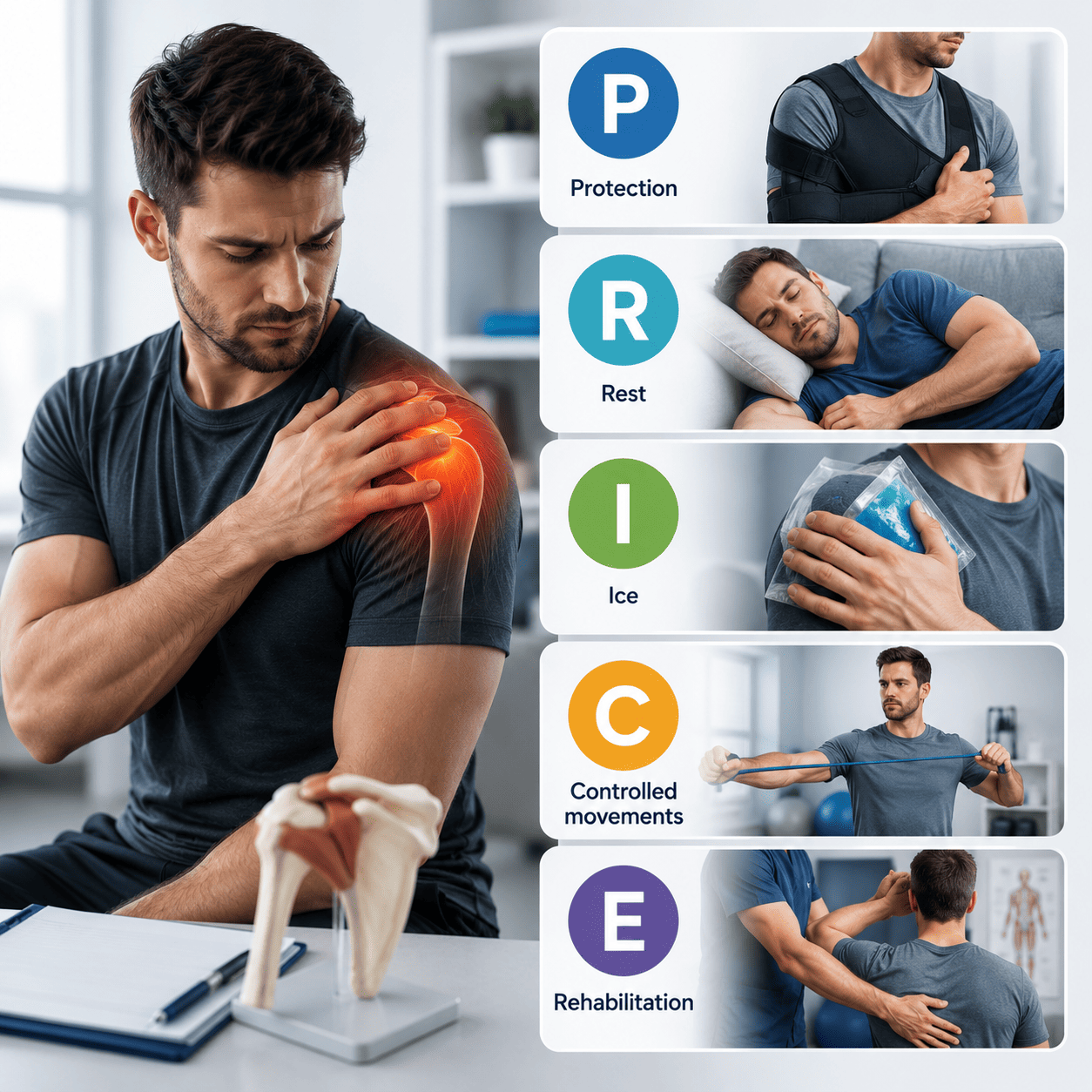
Early start of the treatment allows to decrease symptoms, protect the shoulder structures and promote recovery. Treatment involving rehabilitation, activity modification and gradual recovery is aimed at improvement of the shoulder functioning.
Pain Management
Reduction of pain and inflammation
Activity Modification
Protection of the damaged tendons
Physiotherapy
Improvement of mobility and strengthening of muscles
Tendon Rehabilitation
Promotion of tendon healing
Tendon Repair
Restoration of damaged tendon tissue
NON-SURGICAL CARE
How is a Rotator Cuff Tear Treated Without Surgery?
Not all cases of the rotator cuff tear require surgery. Most of the patients can successfully recover with the help of physiotherapy, change of activities, medications and rehabilitation program. Conservative treatment aims at reduction of pain, improvement of shoulder functioning, strengthening of shoulder muscles and restoration of functioning of the tendons. It allows you to get back to activities protecting your shoulder movement and decreasing the risk of recurrence of the symptoms.

NON-SURGICAL CARE
How is a Rotator Cuff Tear Treated Without Surgery?
Not all cases of the rotator cuff tear require surgery. Most of the patients can successfully recover with the help of physiotherapy, change of activities, medications and rehabilitation program. Conservative treatment aims at reduction of pain, improvement of shoulder functioning, strengthening of shoulder muscles and restoration of functioning of the tendons. It allows you to get back to activities protecting your shoulder movement and decreasing the risk of recurrence of the symptoms.
Conservative methods include:
- Physiotherapy programs that involve improvement of mobility, strengthening of supporting
muscles and restoration of shoulder functions - Activity modification to reduce strain on the damaged tendons and assist in their recovery
- Anti-inflammatory drugs to decrease pain and assist in rehabilitation and daily activities
- Exercise program to improve flexibility and stability of the shoulder and restore shoulder
functioning for long-term recovery
When is Rotator Cuff Repair Required?
Rotator cuff tear should not be neglected as progressive tendon damage will negatively affect your shoulder functioning. Many patients recover with conservative treatment but significant tears and persistent symptoms can require surgery. Timely evaluation helps to choose proper treatment before worsening of the injury.

When is Rotator Cuff Repair Required?
Rotator cuff tear should not be neglected as progressive tendon damage will negatively affect your shoulder functioning. Many patients recover with conservative treatment but significant tears and persistent symptoms can require surgery. Timely evaluation helps to choose proper treatment before worsening of the injury.
Timely treatment can promote recovery, restoration of shoulder functioning and prevention of
complications.
- Large tears significantly reduce shoulder strength
- Persistent pain may disturb sleep and daily activities
- Persistent weakness may limit work and recreational activities
- Delayed treatment may allow injury progression
Rotator cuff repair may be required in case of persistent symptoms despite treatment or
significant tendon damage.
SURGERY
What is Rotator Cuff Repair Surgery?
Rotator Cuff Repair is a surgical procedure involving reattachment of torn or damaged tendons to the shoulder bone to restore normal shoulder functioning. The aim of the surgery is the reduction of pain, improvement of strength and stability and assistance of long-term shoulder mobility. Modern methods often include minimally invasive arthroscopic technique. At ALIGN ASIA, treatment and recovery plan is individually tailored to each injury and patient.
Steps and techniques in Rotator Cuff Repair surgery:
- Creation of small incisions for safe access to the shoulder joint
- Arthroscope for detailed examination of the torn tendon
- Single row or double row tendon repair techniques
- Preparation of damaged tendon tissue for reattachment
- Special anchors for tendon reattachment to the bone
- Control of tendon tension and repair stability
- Closure of the incisions and recommendations for post-op rehabilitation
SURGERY
What is Rotator Cuff Repair Surgery?
Rotator Cuff Repair is a surgical procedure involving reattachment of torn or damaged tendons to the shoulder bone to restore normal shoulder functioning. The aim of the surgery is the reduction of pain, improvement of strength and stability and assistance of long-term shoulder mobility. Modern methods often include minimally invasive arthroscopic technique. At ALIGN ASIA, treatment and recovery plan is individually tailored to each injury and patient.
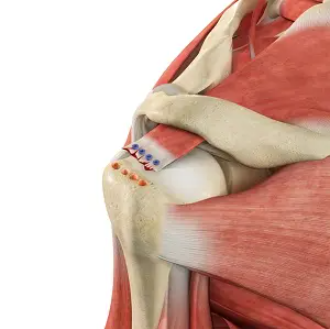
Steps and techniques in Rotator Cuff Repair surgery:
- Creation of small incisions for safe access to the shoulder joint
- Arthroscope for detailed examination of the torn tendon
- Single row or double row tendon repair techniques
- Preparation of damaged tendon tissue for reattachment
- Special anchors for tendon reattachment to the bone
- Control of tendon tension and repair stability
- Closure of the incisions and recommendations for post-op rehabilitation
COMPLICATIONS
What are the Possible Complications of a Rotator Cuff Tear or Its Treatment?
Complications can appear but do not occur in each patient. They can develop in case of the injury progression or during the treatment and rehabilitation period. Most of the problems can be effectively managed if detected in time and properly treated. Regular follow-ups, adherence to rehabilitation and timely treatment help to reduce the risk of complications and promote shoulder movement and functioning.
Persistent Shoulder Pain
Persistent pain may affect sleep, daily activities and quality of life.
Reduced Shoulder Strength
Tendon damage or delayed healing process reduces the strength of the shoulder.
Shoulder Stiffness
Limited mobility may be observed during healing and rehabilitation period.
Recurrence of the Tendon Injury
Excessive strain increases the risk of future tendon injury.
Connect with our experts and get the right guidance for your condition.
RECOVERY & OUTCOMES
What is the Recovery Process after Rotator Cuff Repair?

RECOVERY & OUTCOMES
What is the Recovery Process after Rotator Cuff Repair?
Recovery period after the Rotator Cuff Repair develops gradually and requires adherence to the rehabilitation, physiotherapy and follow-up treatment. Healing period differs depending on the severity of the tendon tear, surgery complexity and individual characteristics of each patient. The aim is to protect the repaired tendon, restore shoulder mobility, strength and function. Regular rehabilitation promotes safe return to the activities and shoulder recovery.
Recovery stages include:
- Protection of the shoulder with prescribed supportive devices
- Gradual increase of mobility under professional supervision
- Progressive strengthening of the shoulder muscles and repaired tendons
- Physiotherapy for restoration of mobility and joint function
- Return to the activities according to healing process
AFTERCARE
Recovery & Aftercare for Rotator Cuff Repair
AFTERCARE
Recovery & Aftercare for Rotator Cuff Repair
Appropriate aftercare is essential for the successful long-term outcome of surgery. Adherence to rehabilitation program promotes tendon healing, restores mobility of the shoulder, strengthens the shoulder and reduces the risk of recurrence. Compliance with doctor's recommendations during the recovery helps to protect repaired structures, improve outcome and safely return to the activities while maintaining shoulder function and stability.
Aftercare steps:
- Wearing of the prescribed shoulder supports during the initial recovery period
- Regular visits to physiotherapist for shoulder function restoration
- Performance of rehabilitation exercises according to doctor’s recommendations
- Gradual increase of activity according doctor’s recommendations
- Regular follow-up visits to assess the healing process
FAQ'S
Do You Have Any Question?
Most of the smaller tendon tears heal with physiotherapy and rehabilitation but significant
tears may require surgery.
Recovery period depends on the severity of the tendon tear, type of surgery and rehabilitation
progress.
Return to activities depends on the healing process, shoulder strength and specialist's
recommendations.
Rotator cuff repair surgery is common and relatively safe procedure if performed by
experienced shoulder specialists.
Adherence to rehabilitation instructions and avoidance of excessive strain may reduce the risk
of the recurrence.