
ARTHROSCOPY & SPORTS INJURY ASSOCIATES
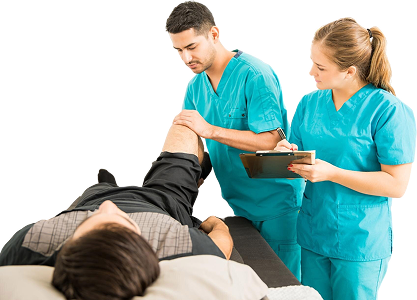

OVERVIEW
What is ACL (Anterior Cruciate Ligament)?
The ACL (Anterior Cruciate Ligament) is one of the most important ligaments in the knee that helps in keeping the joint stable during movement. It plays a key role in activities like walking, running, and sudden direction changes. Understanding what ACL is can help you better know how knee injuries happen and why proper treatment is important.
Here are some key points to understand the ACL better:
- The ACL (Anterior Cruciate Ligament) is one of the ligaments in the knee joint.
- Ligaments are strong tissues that connect bones to each other.
- The ACL connects the femur (thigh bone) to the tibia (shin bone).
- The ACL helps in maintaining the stability of the knee joint.
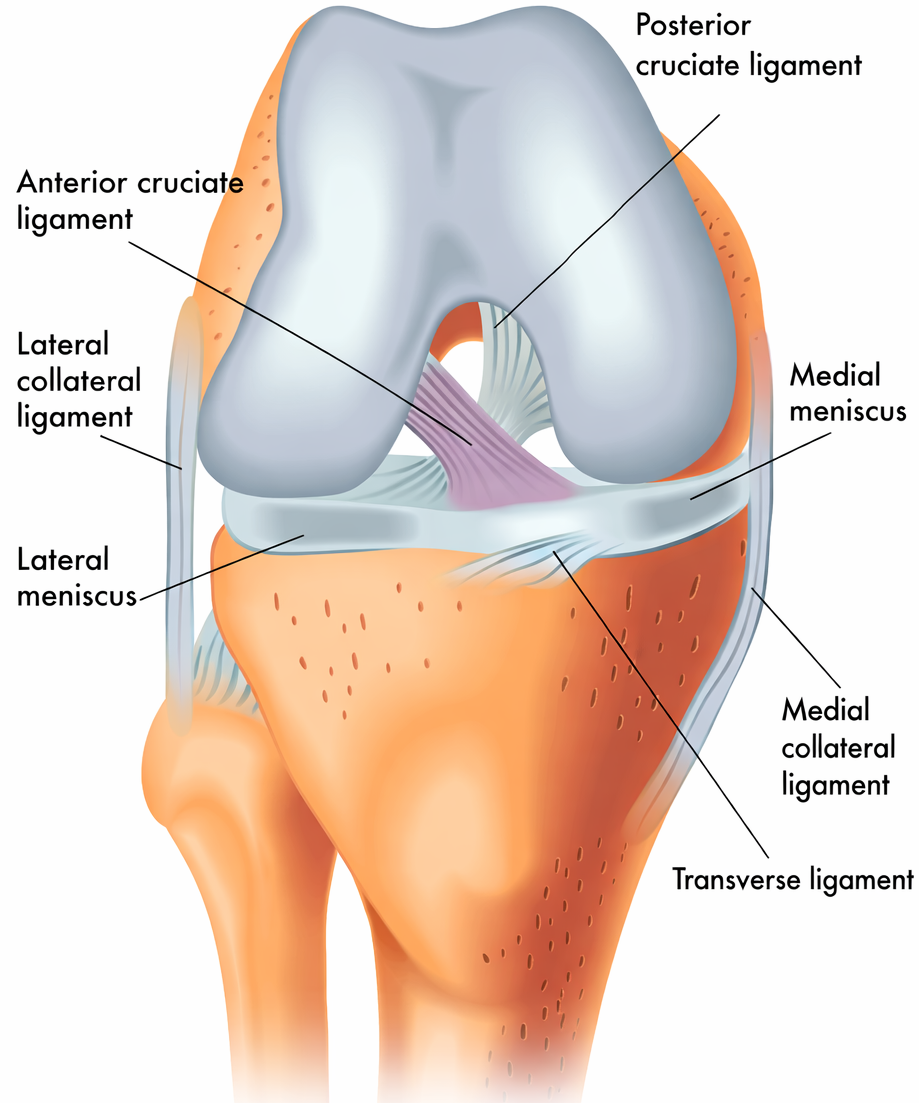
The ACL (Anterior Cruciate Ligament) is one of the most important ligaments in the knee that helps in keeping the joint stable during movement. It plays a key role in activities like walking, running, and sudden direction changes. Understanding what ACL is can help you better know how knee injuries happen and why proper treatment is important.
Here are some key points to understand the ACL better:
- The ACL (Anterior Cruciate Ligament) is one of the ligaments in the knee joint.
- Ligaments are strong tissues that connect bones to each other.
- The ACL connects the femur (thigh bone) to the tibia (shin bone).
- The ACL helps in maintaining the stability of the knee joint.
Surgeons Available for Consultations

Dr. Karnav Panchal
M.B.B.S, M.S. (Orthopedics),
FAOS (South Korea)
Consultant Arthroscopist & Sports Injury Specialist Consultant Joint Replacement Surgeon

Dr. Aniket Gupta
M.B.B.S, M.S. (Orthopedics),
MRCS (Edinburgh)
Training & Qualifications Fellowship in MRCS (UK) Arthroscopy & Arthroplasty (Milan, Italy)
Consultant Physiotherapist

Dr. Aarsh Bhatt
B.P.T,M.P.T (Cardio-Respiratory Disorders) MIAP , HCPC (UK) , DHA (UAE)
Consultant Physiotherapist

Dr. Hetvi Dimothe
BPT , M.P.T (Rehabilitation) MIAP, HCPC (UK) , DHA (UAE)
Consultant Physiotherapist
Causes
What Causes ACL Injury
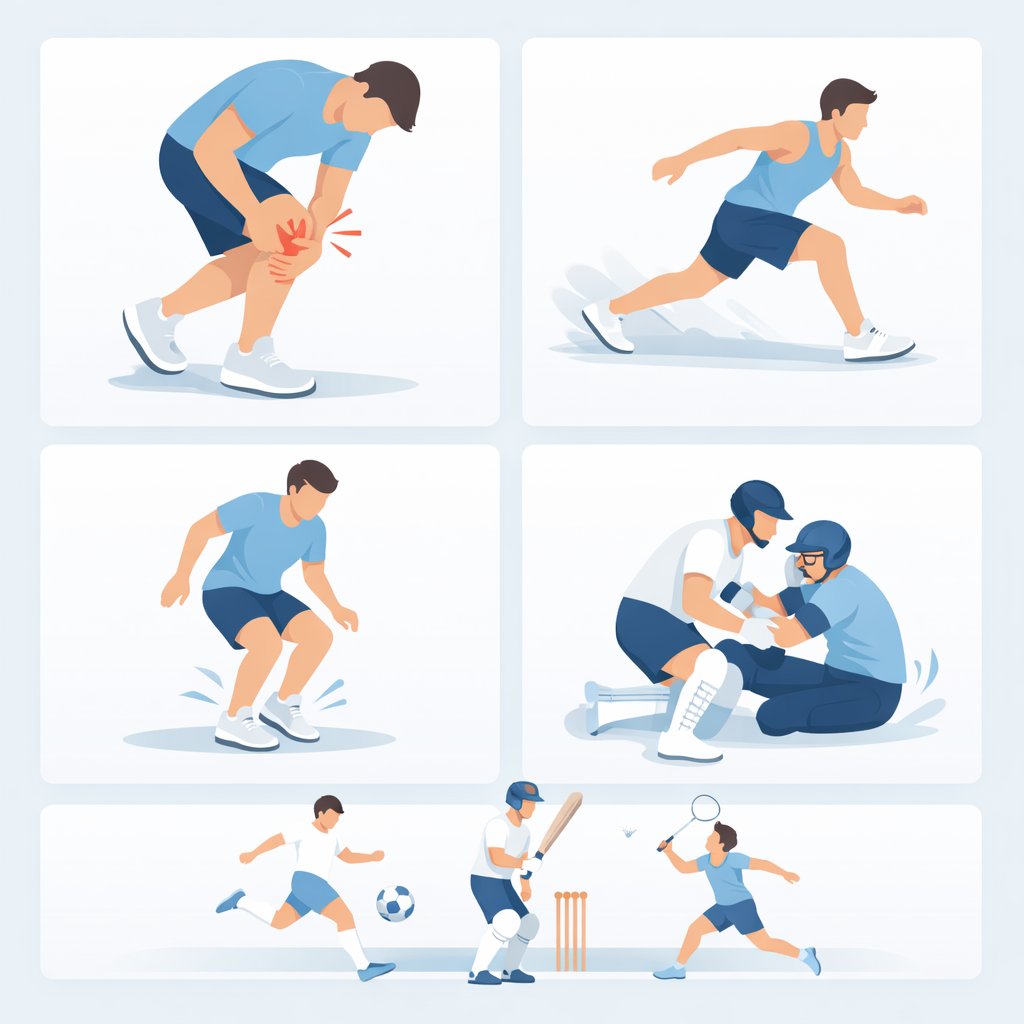
ACL injury usually happens during sudden or high-impact movements, especially while playing sports or doing physical activities. These injuries are common in people who are active in games like football, cricket, or badminton. Knowing the main causes of ACL injury can help you take the right precautions and avoid serious knee damage.
Causes
What Causes ACL Injury
ACL injury usually happens during sudden or high-impact movements, especially while playing sports or doing physical activities. These injuries are common in people who are active in games like football, cricket, or badminton. Knowing the main causes of ACL injury can help you take the right precautions and avoid serious knee damage.
ACL injury can occur due to the following activities:
- Sudden twisting or turning of the knee
- Sudden stopping while running
- Jumping and landing incorrectly
- Direct injury during sports activities
- Activities such as football, cricket, badminton, etc.
What Other Structures Inside the Knee Can Be Injured Along with ACL?
When an ACL injury happens, it often does not affect just one ligament. In many cases, other important structures inside the knee can also get damaged at the same time. Understanding these related injuries is important for proper diagnosis and complete treatment of the knee.
- Meniscus
- Knee joint capsule
- Articular cartilage
- Medial Collateral Ligament (MCL)
- Lateral Collateral Ligament (LCL)
- Posterior Cruciate Ligament (PCL)
SYMPTOMS
What are the Symptoms of ACL Injury?
When the ACL tears, you may hear a "popping" sound or feel that your knee is not supporting you properly.

Pain and swelling
Swelling may develop in the knee within 24 hours. If ignored or if you resume activities or sports too early, the knee may not support you and may also cause damage to the cushioning (meniscus) inside the knee.
Reduced knee movement
Difficulty in walking, pain while walking, knee getting stuck or locked.
Feeling of instability
You may feel that the knee is giving way.
After the initial injury, pain and swelling may reduce within a few weeks, but the knee may still not feel stable. Due to these symptoms, surgery may be required.
Connect with our experts and get the right guidance for your condition.
Popping Sound
You may hear a "popping" sound at the time of ACL injury.
Swelling in 24hrs
Swelling may develop in the knee within 24 hours of the injury.
Knee Locking
Difficulty in walking, pain while walking, knee getting stuck or locked.
Knee Giving Way
You may feel that the knee is giving way and not supporting you properly.
Connect with our experts and get the right guidance for your condition.
BOOK CONSULTATIONDIAGNOSIS
How Does the Doctor Diagnose an ACL Injury?
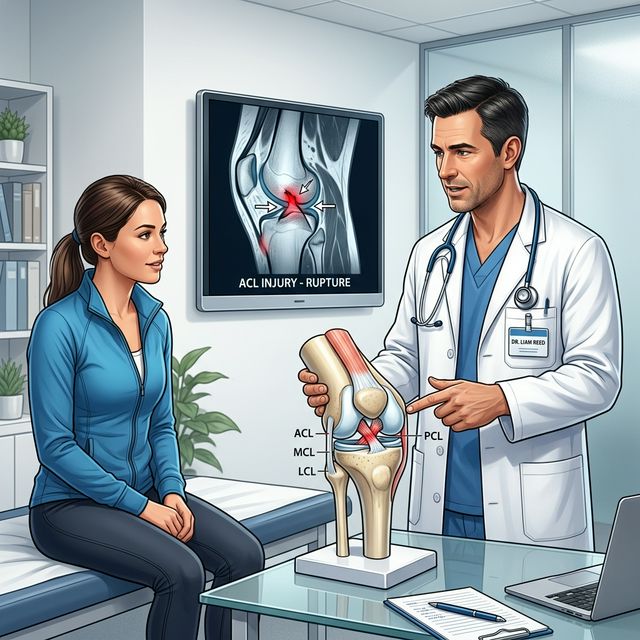
To diagnose an ACL injury, doctors usually start by understanding how the injury happened and checking the knee physically. In some cases, they may recommend imaging tests to get a clear view of the damage. Proper diagnosis is important to plan the right treatment and ensure faster recovery.
DIAGNOSIS
How Does the Doctor Diagnose an ACL Injury?
To diagnose an ACL injury, doctors usually start by understanding how the injury happened and checking the knee physically. In some cases, they may recommend imaging tests to get a clear view of the damage. Proper diagnosis is important to plan the right treatment and ensure faster recovery.
An ACL injury can be diagnosed using the following methods:
- Based on injury history and physical examination
- Other investigations such as:
- X-rays
- MRI
TREATMENT
What is the Treatment for ACL Injury?
Treatment for ACL injury usually depends on the severity of the injury and the patient’s activity level. In most cases, doctors first recommend initial treatment to reduce pain and swelling before moving to advanced options.
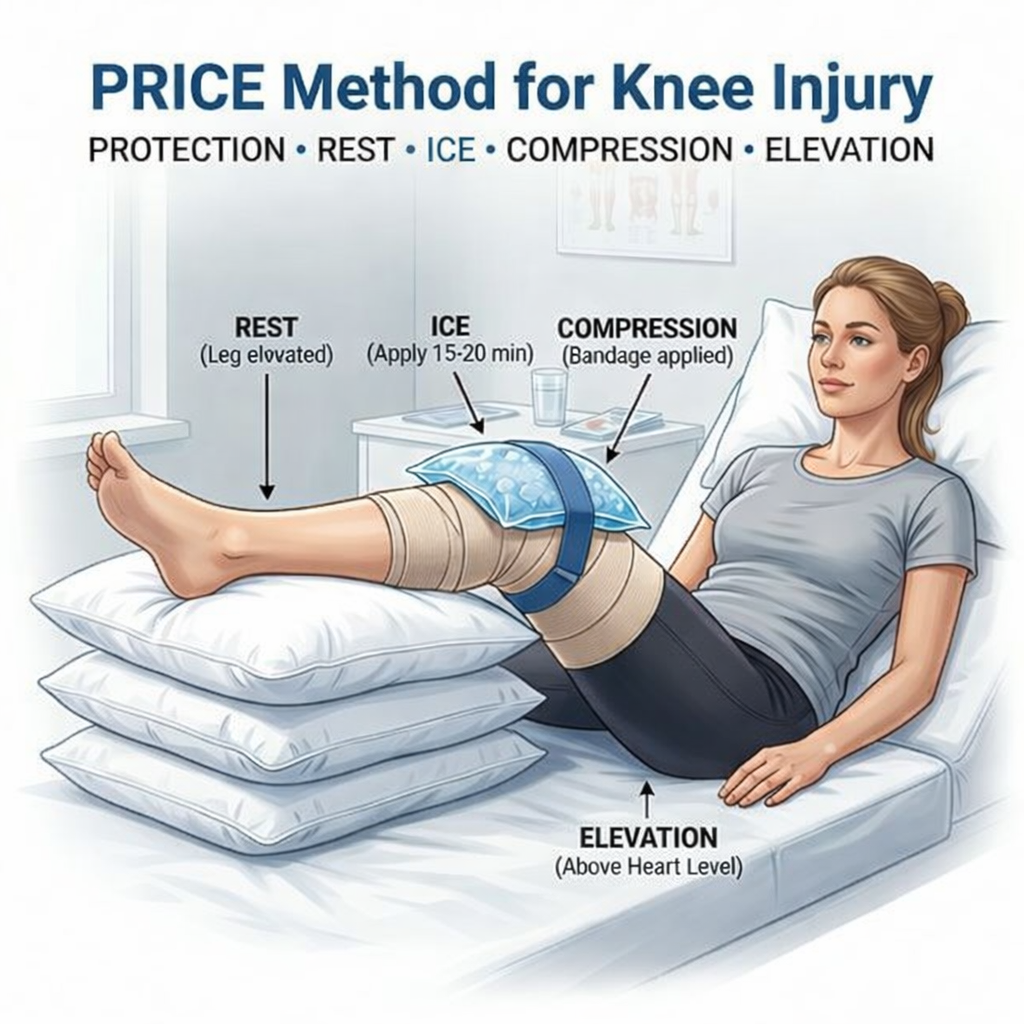
Early care plays an important role in faster recovery and preventing further damage. The initial treatment for ACL injury includes the following "PRICE" method:
P
Pain Killers
Pain-relief medicines
R
Rest
Complete rest to the joint
I
Ice
Cold therapy application
C
Compression
Knee support bandage
E
Elevation
Keeping the leg elevated
NON-SURGICAL CARE
How is ACL Injury Treated without Surgery?
Not all ACL injuries require surgery, especially in mild to moderate cases. Many patients can recover well with proper care, rest, and guided exercises. Non-surgical treatment mainly focuses on reducing pain, improving knee strength, and helping you return to normal activities safely.
NON-SURGICAL CARE
How is ACL Injury Treated without Surgery?
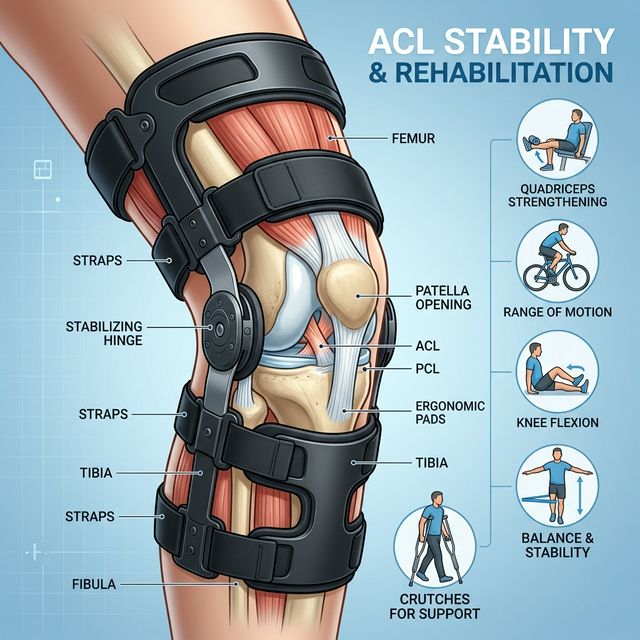
Not all ACL injuries require surgery, especially in mild to moderate cases. Many patients can recover well with proper care, rest, and guided exercises. Non-surgical treatment mainly focuses on reducing pain, improving knee strength, and helping you return to normal activities safely.
Non-surgical methods include:
- Avoid putting weight on the affected leg while walking until you are able to walk without limping. You may need to use crutches.
- In some cases, the blood collected inside the knee may need to be removed using a needle.
- Start exercises as advised by your doctor to improve movement and strengthen muscles.
- Sometimes, an ACL brace (knee support brace) may also be helpful.
RISKS OF NO TREATMENT
Can I Manage Without Surgery Even if My Knee Feels Unstable?
If your knee feels unstable after an ACL injury, it is important not to ignore the symptoms. While some cases can be managed without surgery, an unstable knee can lead to long-term problems if not treated properly.
RISKS OF NO TREATMENT
Can I Manage Without Surgery Even if My Knee Feels Unstable?
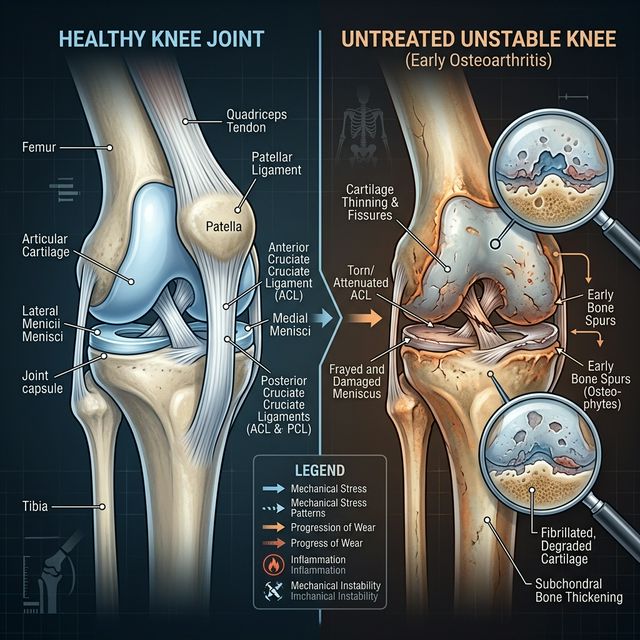
If your knee feels unstable after an ACL injury, it is important not to ignore the symptoms. While some cases can be managed without surgery, an unstable knee can lead to long-term problems if not treated properly.
Getting the right treatment at the right time helps prevent further damage and ensures better recovery. If untreated, instability may lead to:
- Permanent affect on the movement of the knee joint.
- Damage to other structures inside the knee (meniscus, cartilage).
- Early wear and tear (Osteoarthritis) of the knee joint.
- Therefore, if there is an ACL injury with knee instability, surgery is usually required.
SURGERY
What is ACL Reconstruction Surgery?
ACL reconstruction surgery is a commonly performed procedure to restore stability in a knee with a torn ligament. With advancements in medical technology, this surgery is now done using minimally invasive techniques, which help in faster recovery and less pain. Understanding the procedure can help patients feel more confident and prepared for the treatment.
ACL reconstruction surgery is performed using the following steps and techniques:
- In modern medical practice, this surgery is performed using a minimally invasive technique called arthroscopic ACL reconstruction.
- In this procedure, a healthy tendon (tissue) from the patient’s own body is used, which is called an autograft.
- Autograft options include: Hamstring tendon, Quadriceps tendon, Patellar tendon
- Using arthroscopy, the torn ACL is removed and replaced with the autograft.
- A small camera and light source are inserted into the knee through a small incision.
- Surgical instruments are inserted through another small incision to place the graft in the correct position.
- The graft is fixed to the bone using screws or other specialized implants.
- After dressing, a support bandage is provided to help the patient move comfortably.
SURGERY
What is ACL Reconstruction Surgery?
ACL reconstruction surgery is a commonly performed procedure to restore stability in a knee with a torn ligament. With advancements in medical technology, this surgery is now done using minimally invasive techniques, which help in faster recovery and less pain. Understanding the procedure can help patients feel more confident and prepared for the treatment.
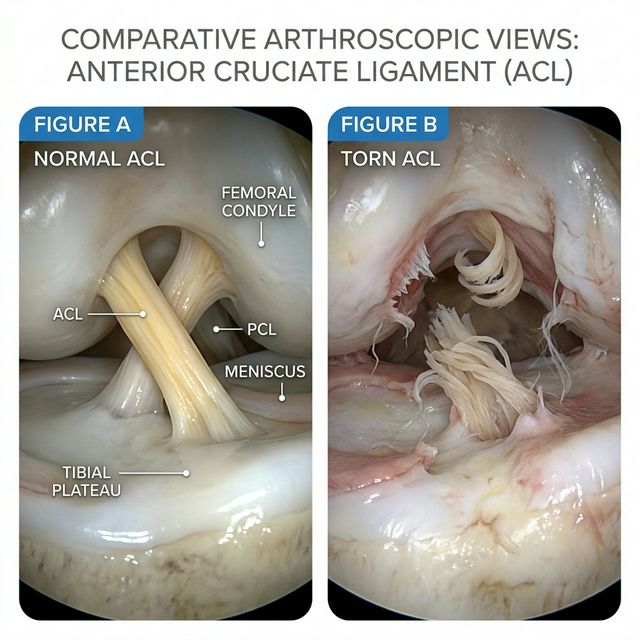
ACL reconstruction surgery is performed using the following steps and techniques:
- In modern medical practice, this surgery is performed using a minimally invasive technique called arthroscopic ACL reconstruction.
- In this procedure, a healthy tendon (tissue) from the patient’s own body is used, which is called an autograft.
- Autograft options include: Hamstring tendon, Quadriceps tendon, Patellar tendon
- Using arthroscopy, the torn ACL is removed and replaced with the autograft.
- A small camera and light source are inserted into the knee through a small incision.
- Surgical instruments are inserted through another small incision to place the graft in the correct position.
- The graft is fixed to the bone using screws or other specialized implants.
- After dressing, a support bandage is provided to help the patient move comfortably.
COMPLICATIONS
What are the Possible Complications of ACL Injury or Surgery?
Like any injury or surgical procedure, ACL injury and its treatment may have some possible complications. Although most patients recover well, it is important to be aware of these risks so that early care and proper follow-up can prevent serious issues. Timely medical attention helps in managing these complications effectively.
Knee Stiffness
Arthrofibrosis — stiffness in the knee joint that may limit movement after surgery.
Graft Failure
In rare cases, the grafted tissue may not heal properly, requiring further treatment.
Knee Swelling
Effusion — fluid buildup in the knee causing swelling post-surgery.
Blood Clot (DVT)
Deep Vein Thrombosis — a blood clot that may form in the leg veins after surgery.
Connect with our experts and get the right guidance for your condition.

RECOVERY & OUTCOMES
What is the Recovery Process after ACL Surgery?
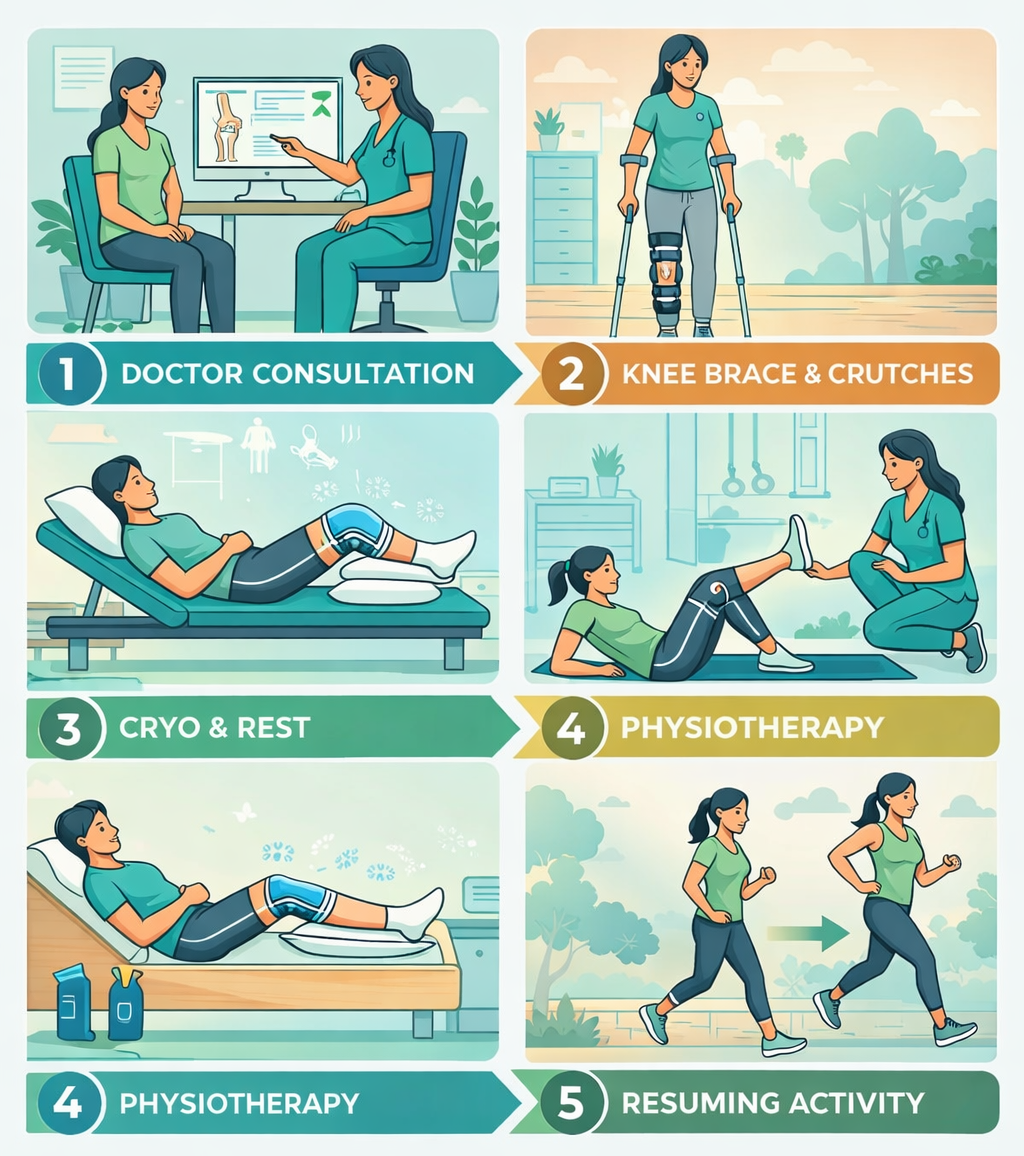
Recovery after ACL surgery is a gradual process that requires proper care, patience, and regular follow-up. Following your doctor’s advice and completing physiotherapy on time plays a key role in regaining strength and mobility. A well-planned recovery process helps you return to normal activities safely and effectively.
The recovery process after ACL surgery generally includes the following steps:
- Use of knee brace for support
- Use of crutches initially
- Gradual return to walking
- Physiotherapy is important for recovery
- Full recovery may take several months
Recovery & Aftercare
Proper recovery and aftercare are very important after an ACL injury or surgery to ensure long-term knee health. Following the right routine helps in faster healing and reduces the risk of complications. Consistency in care and exercises plays a key role in getting back to normal activities safely.
The following aftercare steps should be followed for better recovery:
- Follow your doctor’s advice
- Use knee brace and crutches as recommended
- Use cold therapy (ice packs)
- Continue physiotherapy regularly
- Gradually increase movement and strength
FAQ'S
Do You Have Any Question Please?
Exercises should be started as early as possible after the operation, as advised by your doctor.
In most cases, crutches are used for about one week. After that, a walking stick may be used for the next two weeks. However, this protocol may vary depending on the type of injury. For example, if the meniscus is also repaired, crutches may be required for 4–6 weeks.
Many cold pack devices are available in the market. However, using a simple ice pack is usually recommended as it is easily available and effective.
Since the surgery is performed using arthroscopy, there are usually 2–3 small stitches. Additional 2–3 stitches may be present at the graft site. These are covered with a bandage, and the stitches are typically removed after 12–14 days.
You should visit your doctor 12–14 days after surgery. During this visit, stitches will be removed and the knee will be examined. It is advisable to take an appointment before discharge from the hospital.